
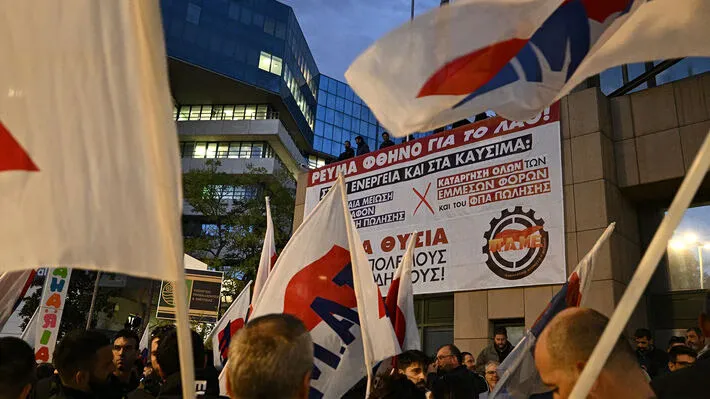
What are the primary demands of the energy price protests in Greece?
The central demands of the protesters focus on direct state intervention to lower the costs of electricity and fuel. Labor unions and workers participating in the demonstration at the Ministry of Environment and Energy are calling for a significant reduction in retail prices and the establishment of a strict price ceiling for energy and fuel sales.
Beyond price controls, the movement is targeting the fiscal structure of energy consumption. Specifically, the protesters are demanding the total abolition of all indirect taxes and Value Added Tax (VAT) applied to energy and fuel products. The protesters argue that these fiscal burdens exacerbate the cost-of-living crisis and prevent families from meeting basic needs such as heating and transportation.
Specific fiscal and structural demands
The demonstrators have outlined a specific set of structural changes they wish to see implemented by the Greek government. These include:
- The abolition of indirect taxes and VAT on energy and fuel.
- The dismantling of the current energy stock exchange model.
- The utilization of domestic lignite production to generate cheaper electricity.
- A refusal to follow European fiscal constraints or "austerity" measures regarding energy costs.
By targeting these specific areas, the unions aim to shift the economic burden away from the consumer and toward systemic reform.
How is PAME influencing the protest movement?
PAME (All-Workers Militant Struggle) has emerged as a leading force in the demonstrations, using large-scale visual messaging to communicate their platform. During the protest at the Ministry, the organization displayed massive banners with the slogan "Cheap electricity for the people!" to draw public and political attention to the crisis.
The organization's messaging is designed to link energy costs to broader political and social issues. Their banners explicitly state that there should be "no sacrifice for wars and their profits," suggesting a critique of how national or international spending priorities affect domestic energy security. PAME is also calling for a broader mobilization, urging workers and the general population to organize and engage in active struggle to achieve their economic goals.
What is the impact of rising energy costs on Greek households?
Rising energy costs are significantly eroding the disposable income of Greek workers and families. The protesters emphasized that the current price levels for electricity and fuel are making it increasingly difficult for households to cover essential expenses, including heating and basic mobility.
The social tension is reflected in the slogans used during the demonstration. Protesters used phrases such as "We will not freeze all winter" and "Electricity is too expensive, life is too expensive," to illustrate the direct link between energy inflation and the overall decline in living standards. The movement argues that without immediate government action, the ability of the working class to maintain a basic standard of living will continue to diminish.
The economic strain on the working class
The economic pressure is not limited to just the monthly utility bills. The protesters highlighted a cumulative effect where the rising costs of fuel and electricity act as a multiplier for inflation across all sectors of the economy. This "vanishing income" effect is the primary driver behind the call for collective bargaining and wage increases to match the rising costs of essential services.
What structural reforms are being proposed by the unions?
The protesters are not only asking for temporary price relief but are also advocating for a fundamental overhaul of the Greek energy sector. A key part of their proposal involves the abolition of the energy stock exchange, which they view as a mechanism that prioritizes market volatility over consumer stability.
Furthermore, the unions are calling for a strategic shift in how energy is produced and distributed in Greece. They have proposed the increased utilization of domestic lignite production as a means to provide more stable and affordable electricity. This stance represents a direct challenge to current energy transition policies and European-led regulatory frameworks. The protesters are calling for "disobedience" toward European fiscal mandates that they believe restrict the government's ability to subsidize or cap energy prices for the benefit of the population.
Why are the protesters targeting the Ministry of Environment and Energy?
The Ministry of Environment and Energy was chosen as the site of the protest because it holds the direct regulatory authority required to implement the requested changes. By staging a "gigantic" demonstration at this specific location, the unions aim to exert direct political pressure on the officials responsible for energy policy and pricing regulations.
The demonstration serves as a visible signal to the government that the current energy policy is insufficient to protect the citizenry from economic hardship. The protesters' presence at the Ministry is intended to demand "measures here and now," rather than long-term promises or delayed policy shifts. This sense of urgency is driven by the immediate need for families to secure affordable heating and fuel as seasonal demands change.
Key takeaways
- Labor unions in Greece are demanding immediate price ceilings on electricity and fuel.
- Protesters are calling for the total removal of VAT and indirect taxes on energy products.
- PAME is leading the movement, advocating for the use of domestic lignite for cheaper power.
- The movement seeks the abolition of the energy stock exchange to stabilize consumer costs.
- Demonstrators are urging widespread social organization to combat rising living costs.
FAQ: Energy price protests in Greece
What are the main demands of the Greek energy protests?
The main demands include implementing price ceilings on electricity and fuel, removing VAT and indirect taxes from energy products, and reforming the energy market by abolishing the energy stock exchange and utilizing domestic lignite production for cheaper electricity.
Who is leading the protests in Greece?
The protests are being led by various labor unions and workers' organizations, with PAME (All-Workers Militant Struggle) playing a prominent role through large-scale demonstrations and highly visible political messaging at government ministries.
Why are energy prices a major issue for Greek citizens?
High energy and fuel prices are significantly reducing the disposable income of Greek households. This makes it difficult for families to afford essential needs such as heating, electricity, and transportation, leading to widespread social and economic distress.
What is the protesters' stance on European fiscal rules?
The protesters are calling for disobedience toward European fiscal constraints. They argue that these rules prevent the Greek government from taking the necessary steps to subsidize energy costs and protect citizens from the effects of inflation and market volatility.
How do the unions propose to lower electricity costs?
Unions propose several structural changes, including the abolition of the energy stock exchange, the removal of all indirect taxes on energy, and the strategic utilization of domestic lignite production to provide more affordable and stable electricity to the population.
Conclusion
The recent demonstrations at the Ministry of Environment and Energy underscore a growing crisis of affordability in Greece. By demanding price ceilings, tax removals, and significant structural reforms to the energy market, labor unions and PAME are highlighting the disconnect between current energy policies and the economic reality of Greek households. The movement's focus on both fiscal relief and systemic changes, such as the use of domestic lignite and the abolition of the energy exchange, suggests a deep-seated dissatisfaction with the existing energy framework. As the cost of living continues to rise, the pressure on the Greek government to implement meaningful intervention remains high.







