
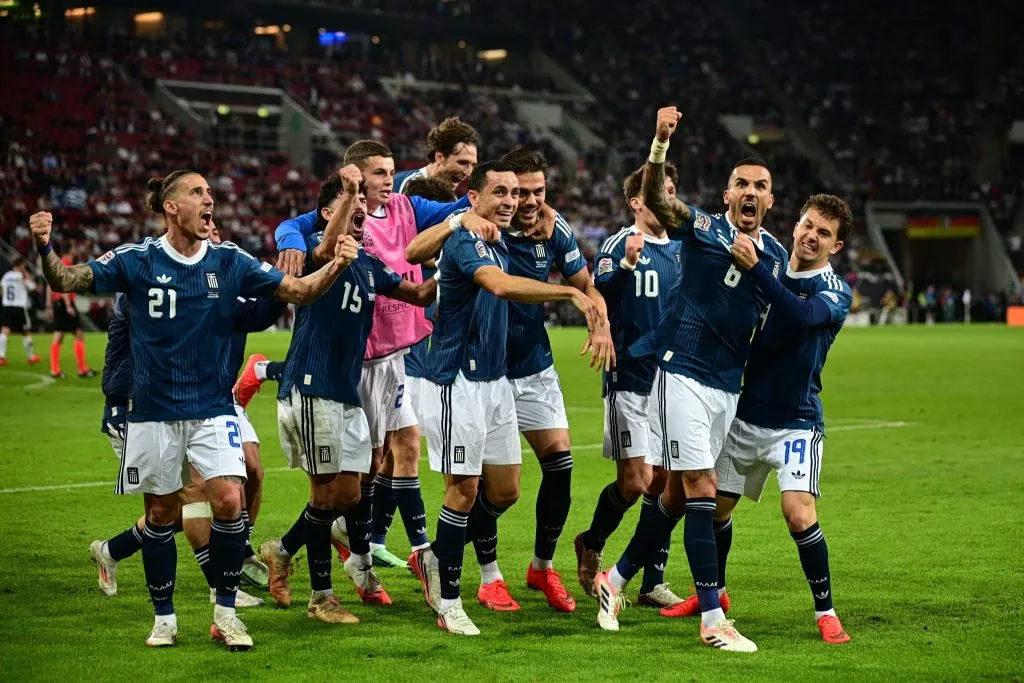
What is at stake in the Greece vs Germany match?
The upcoming fixture between Greece and Germany serves as a critical turning point for the Greek national team's standing in the Nations League League A. Currently sitting at the top of the group standings, Greece has accumulated 7 points, establishing a two-point cushion over their immediate rivals, the Netherlands and Germany. The primary objective for Ivan Jovanovic's squad is to secure a result that mathematically confirms a top-two position in the group.
Securing one of the top two spots is the gateway to the Nations League quarterfinals. This stage represents a significant step toward the 'Final Four' of the competition. For the Greek side, this match is not merely about a single result but about consolidating their position among the European elite and ensuring they remain in the top tier of international football. The stakes are heightened by the fact that this is the 4th matchday of the second group of League A, making every point vital for the final standings.
The mathematical path to the quarterfinals
If Greece defeats Germany, they will officially clinch a place in the quarterfinals. Under the current tournament structure, the top two teams from each League A group advance to a two-legged knockout phase. This victory would eliminate the mathematical possibility of falling out of the top two, regardless of subsequent results in the group.
The path to the quarterfinals is clearly defined: by finishing in the top two, the team moves into a knockout stage where they will play home-and-away matches against either the first or second-placed team from another League A group. This structure ensures that only the most consistent performers in the group stage progress to the high-stakes knockout rounds.
What are the statistical probabilities for qualification?
Advanced data modeling suggests that Greece is in a very strong position to progress. According to Football Meets Data, Greece holds a 79% probability of qualifying for the Nations League quarterfinals, closely trailing the Netherlands, who sits at 79.2%. These figures reflect the current momentum and the favorable points gap maintained by the Greek side.
While Greece is currently leading the group, the race for the top spot remains competitive. Projections indicate a tight contest for the first and second positions, with the algorithms providing a detailed breakdown of the expected final standings:
- First Place Probability: The Netherlands holds a 43.5% chance of finishing top, while Greece follows with a 40.7% probability.
- Second Place Probability: The Netherlands is favored to take second place with a 38.2% chance.
- Germany's Outlook: Germany is projected to finish third in the group with a 55.2% probability.
- Serbia's Outlook: Serbia is almost certain to finish in fourth place, with a 95% probability.
These statistical models highlight that while Greece is a frontrunner, the margin between them and the Netherlands is slim. The data suggests that while Greece is currently the leader, the Netherlands remains a significant threat for the top spot, making tonight's performance against Germany vital for securing the group lead and psychological momentum.
Who are the potential opponents in the quarterfinals?
Should Greece successfully navigate the group stage and reach the quarterfinals, their path will involve high-caliber European opposition. The tournament format dictates that the top two teams from one group will face the top two teams from another group in a two-legged series.
Based on current algorithmic projections from Football Meets Data, the most likely opponents for the Greek national team in the knockout stages are two of Europe's most prominent sides:
- Spain: 12.8% probability.
- Portugal: 12.7% probability.
The probabilities for these specific matchups are relatively low individually, reflecting the wide range of possible outcomes in the other groups, yet Spain and Portugal emerge as the most statistically probable hurdles. Facing powerhouses like Spain or Portugal in the quarterfinals would represent a significant test for the Jovanovic era, but it also offers the opportunity for Greece to prove its mettle against the world's most decorated footballing nations.
How does this match impact Euro 2028 prospects?
The implications of tonight's match extend far beyond the current Nations League cycle, directly influencing Greece's trajectory for the Euro 2028 tournament. Success in the Nations League provides both a competitive boost and a structural advantage for future qualification campaigns.
One of the most significant benefits of finishing in the top two of League A is the seeding advantage. By securing a high ranking, Greece will be placed in the top potency group during the draw for the Euro 2028 qualifiers. This strategic positioning is designed to help elite teams avoid the most difficult paths in the qualification process, effectively smoothing the road to the tournament.
Long-term benefits of League A stability
Maintaining status within League A ensures that the Greek national team remains in the upper echelon of European football. This stability provides several key advantages that contribute to the long-term health of the national program:
- Avoidance of 'Giants': High seeding helps avoid early encounters with major footballing nations during the qualifying stages.
- Competitive Consistency: Regular matches against top-tier opponents accelerate the development of the squad.
- High Qualification Probability: Data models are highly optimistic about the future, with Greece holding an 84.8% probability of qualifying for Euro 2028.
Ultimately, the match against Germany acts as a foundation for the next several years of Greek football, linking immediate tactical success to long-term tournament accessibility. The 84.8% probability of Euro 2028 qualification underscores the massive potential currently held by the squad.
FAQ: Greece vs Germany Nations League
Will a win against Germany guarantee qualification?
Yes, a victory for Greece against Germany would mathematically secure a top-two finish in the group. According to current standings, this result would officially move the team into the Nations League quarterfinals, one step away from the Final Four.
What are the chances of Greece qualifying for Euro 2028?
The outlook for the future is very positive. According to Football Meets Data, the Greek national team has an 84.8% probability of qualifying for the Euro 2028 tournament, supported by their current strong performance in League A.
Who is the most likely opponent in the quarterfinals?
If Greece advances, the most probable opponents are Spain and Portugal. Statistical models give Spain a 12.8% chance and Portugal a 12.7% chance of being the team Greece faces in the knockout stage.
How does the Nations League affect Euro 2028 seeding?
Finishing in the top two of the Nations League group ensures Greece will be placed in the first potency group for the Euro 2028 qualifying draw. This helps the team avoid the most difficult opponents during the qualification phase.
Where does Greece currently stand in the group?
Greece is currently at the top of Group A in the Nations League. They have accumulated 7 points, which places them two points ahead of both the Netherlands and Germany.
Key takeaways
- A win against Germany mathematically secures Greece's place in the Nations League quarterfinals.
- Greece holds a 79% probability of qualifying for the quarterfinals, according to Football Meets Data.
- The Netherlands is the slight favorite to finish first in the group with a 43.5% probability.
- High Nations League placement ensures top-tier seeding for the Euro 2028 qualifiers.
- Greece has an 84.8% projected probability of qualifying for Euro 2028.
Conclusion
The clash between Greece and Germany is more than a standard group stage match; it is a decisive moment for the national team's standing in European football. By aiming for a victory, Ivan Jovanovic's side is fighting for more than just a quarterfinal spot. They are securing a strategic advantage that will protect their path toward Euro 2028. As the statistical models suggest, the current momentum places Greece on the verge of significant long-term success, provided they can navigate the challenges posed by the elite competition in League A.







