The statistical reality of the Group 2 standings
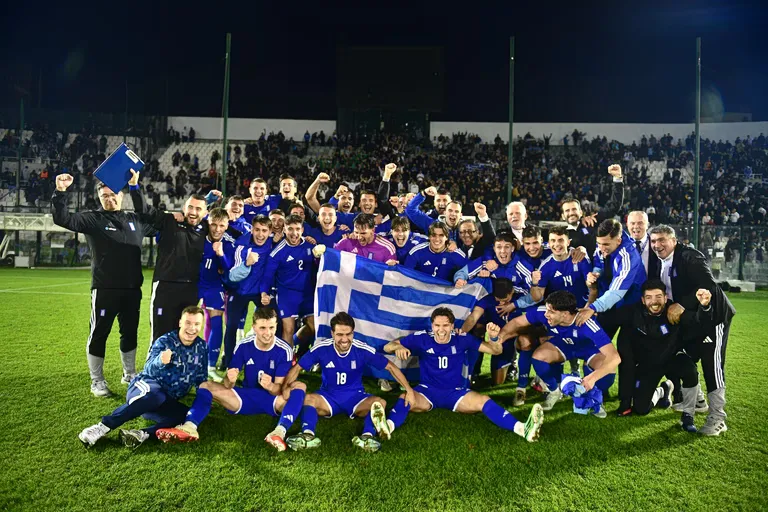
Greece enters the Amsterdam encounter as a legitimate competitor rather than an underdog merely seeking to limit damage. The team currently holds eight points in League A, Group 2, matching the total accumulated by the Netherlands over four matchdays. This parity is underpinned by an undefeated streak and a high-profile victory against Germany, establishing a foundation of confidence for the squad.
The current competitive landscape suggests that the gap between the Greek national team and traditional European giants is narrowing. Instead of approaching the "Oranje" as an insurmountable force, the tactical setup under Ivan Jovanović is designed to compete on equal terms. The objective in Amsterdam is to secure a result that validates Greece's position at the top of the group and facilitates a direct path to the quarter-finals.
Current Group 2 Standings Overview
| Team | Points | Matches Played | Status |
|---|---|---|---|
| Greece | 8 | 4 | Undefeated |
| Netherlands | 8 | 4 | Contender |
Lessons from the 2-2 draw in Thessaloniki
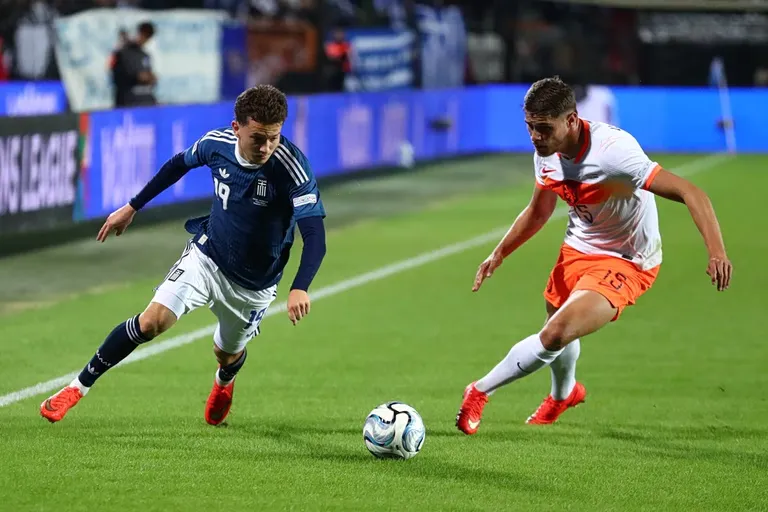
The previous encounter between these two sides in Thessaloniki provides a tactical blueprint for the upcoming match in the Netherlands. Although the 2-2 result was viewed with frustration by the Greek side—having led 2-0 and come close to a major victory—the performance demonstrated significant qualitative growth. Greece managed to dictate the tempo for large portions of the game and successfully exploited weaknesses in the Dutch defensive structure.
The Thessaloniki match proved that Greece can create pressure against teams with superior individual talent pools. However, the second half also highlighted the dangers of playing the Netherlands; once the Dutch side found space and regained control, their ability to change the momentum of a match became evident. This volatility is the primary lesson for the Greek squad as they prepare for the away environment in Amsterdam.
Tactical assets and player profiles
The Greek national team possesses a diverse range of attacking solutions that prevent them from being a purely defensive unit. The squad's ability to threaten through various channels is driven by players with experience in high-level European leagues. This depth allows the team to adapt their offensive approach depending on the defensive posture of the opponent.
Key players identified as central to this attacking dynamism include:
- Christos Tzolis: Providing creativity and width.
- Konstantinos Karetsas: Contributing to the technical buildup.
- Babis Kostoulas: Offering stability and support in advanced areas.
- Fotis Ioannidis: Acting as a focal point for the attack.
- Vangelis Pavlidis: Providing clinical finishing and movement.
These players enable Greece to win individual duels and penetrate high-level defensive lines, moving beyond a reliance on reactive football.
Strategic requirements for the Amsterdam match
Success in the Netherlands will depend on Greece's ability to manage space and transition speed rather than attempting to dominate possession. The Dutch tactical identity relies on ball retention and pushing numerous players into the attacking third. For the Greek side, the priority lies in maintaining compact distances and high intensity during defensive transitions.
To exploit the Dutch system, Greece must focus on the following tactical pillars:
- Exploiting high defensive lines: Utilizing the speed of wide attackers to target the space left behind by advancing Dutch full-backs.
- Rapid transitions: Converting defensive recoveries into immediate attacking movements before the Dutch defense can reorganize.
- Positional discipline: Maintaining a compact shape to deny the Netherlands the space they require to manipulate the tempo.
- Passing precision: Avoiding errors in the first phase of buildup, as the Dutch quality allows for immediate punishment of turnovers in dangerous zones.
By focusing on these areas, Greece aims to turn the match into a contest of efficiency rather than a battle of attrition.
A generational shift in Greek football
The upcoming match is viewed as a litmus test for a new generation of Greek footballers. The goal is not merely to leave Amsterdam with a respectable performance, but to secure a result that confirms Greece's return to the forefront of European football. The current squad has developed a reliable core capable of challenging the continent's elite consistently.
If the team can successfully navigate the challenges posed by the Netherlands, it will serve as a definitive statement. The ambition is to move past being a team that merely competes and become a team that dictates terms against the traditional powers of the game.