What is the 'Housing for All' Initiative?
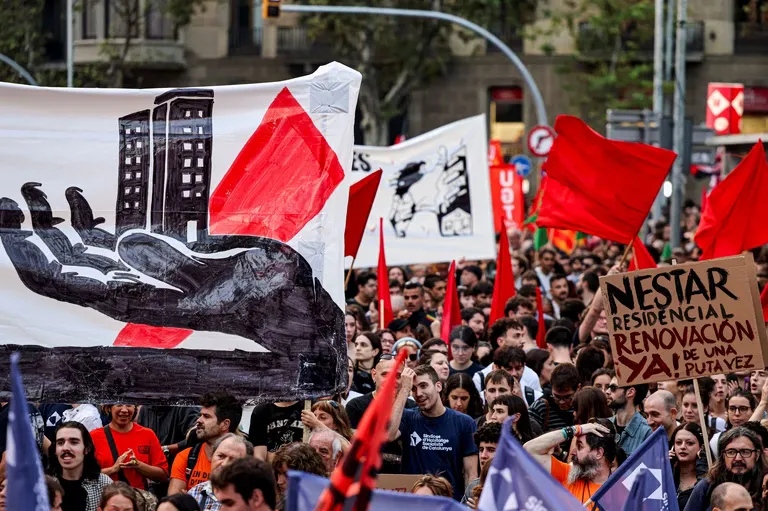
The 'Housing for All' Initiative is a newly formed movement designed to unify various social groups struggling with the Greek housing crisis. Established in late October 2026, the movement seeks to bridge the gap between disparate activist fragments, such as student groups, refugee rights advocates, and anti-foreclosure campaigners. Rather than addressing isolated issues, the initiative aims to create a cohesive political force capable of demanding structural changes to the national housing policy.
According to Petros Konstantinou, a municipal councilor in Athens, the crisis is not merely about unaffordable rents but encompasses a wide spectrum of social failures. This includes students unable to find lodging, workers facing homelessness, and even educators forced to live in tents due to the lack of available rental properties. The initiative draws inspiration from recent large-scale housing mobilizations in Spain, attempting to translate local grievances into a broad, organized social demand.
A multi-faceted crisis
The movement identifies several critical areas where the right to housing is being violated. Beyond the financial burden of rent, the initiative points to physical dangers, such as building collapses in neighborhoods like Petralona and the conversion of residential spaces into short-term tourist rentals (Airbnb), which further depletes the long-term housing stock for locals.
What are the primary demands of the movement?
The 'Housing for All' Initiative has outlined several specific policy reversals and institutional reconstructions to combat the crisis. Their primary objective is the restoration of state-led housing management, which they argue has been systematically dismantled over the last decade. The movement's platform focuses on long-term stability rather than temporary financial relief.
- Reconstitution of the Labour Housing Organization (O.E.K.): The movement demands the return of this body, which was abolished in 2012 during the economic crisis, to manage vacant properties and provide social housing.
- Reform of the School Building Organization (O.S.K.): Activists call for the revitalization of this entity to ensure the maintenance and construction of safe educational facilities.
- Abolition of short-term rentals: The initiative seeks to limit the proliferation of short-term holiday lets in residential buildings to protect the local rental market.
- Expansion of social housing: There is a call for massive programs to increase the availability of student dormitories and worker housing.
The movement is composed of diverse stakeholders, including the Kypseli Residents' Initiative, student unions, public and private sector trade unions, and the Association of Public Engineers (EMDYMAS). By bringing these groups together, the initiative hopes to exert significant pressure on the Ministry of Finance and other government bodies.
How has the Greek housing landscape changed since 2012?
The current housing crisis is described by activists as the long-term result of the state withdrawing from the production and management of affordable housing. Konstantinos Liveris, President of PAN SYPO, noted that the abolition of the Labour Housing Organization and the Labour Housing Hostel in 2012 marked a turning point where housing protection was effectively de-prioritized by the state.
Since the 2012 reforms, government interventions have largely focused on subsidies, subsidized housing loans, and tax incentives for private developers. However, critics argue these measures have failed to create a new stock of public housing. Instead, these resources have been funneled into a market characterized by limited supply and high prices, often benefiting private contractors rather than the general population. This shift has moved the focus from state-provided stability to a market-dependent model that leaves vulnerable populations exposed.
What do the statistics reveal about the crisis?
Statistical data highlights a growing trend of housing insecurity across different demographics in Greece. While much of the political discourse focuses on younger generations, the data suggests that the elderly are increasingly bearing the brunt of rising costs. The shift in housing ownership and the rising cost-of-living burden are clearly visible in recent figures.
| Metric | 2019/2021 Data | 2025 Data |
|---|---|---|
| Elderly spending >40% of income on housing | 19.3% (in 2021) | 31.8% |
| Homeownership rate | 75.4% (in 2019) | 69.4% |
The decline in homeownership is significant, with approximately 500,000 properties previously owned by individuals being sold off. Furthermore, the quality of available housing is a concern; for example, some programs have resulted in the distribution of homes with an average age of 40 years, raising questions about the long-term sustainability and safety of the current housing stock.
FAQ: Housing crisis in Greece
What is the main goal of the 'Housing for All' Initiative?
The main goal is to unify various activist groups into a single, cohesive movement to fight the housing crisis. It seeks to move beyond isolated protests and demand systemic changes, such as the return of state-managed social housing and stricter regulations on short-term rentals.
Why was the Labour Housing Organization abolished?
The Labour Housing Organization was abolished in 2012 during the Greek economic crisis as part of the austerity measures mandated by the memoranda. At the time, the law cited that these organizations provided "low-priority services," leading to a significant withdrawal of state support for affordable housing.
How are rents affecting elderly citizens in Greece?
Elderly citizens are facing increasing financial pressure. According to data cited by the movement, the proportion of people over 65 spending more than 40% of their income on housing rose from 19.3% in 2021 to 31.8% by 2025.
What role do short-term rentals play in the crisis?
Short-term rentals, such as those on platforms like Airbnb, are seen as a major contributor to the crisis. They reduce the available long-term housing stock for residents, driving up prices and contributing to the displacement of local populations from urban centers.
What are the next planned actions by the movement?
The movement has scheduled several mobilizations, including a protest at the Ministry of Finance in late October 2026, a large rally in Athens in November 2026, and a nationwide 24-hour strike called by ADEDY in late November 2026.
Key takeaways
- The 'Housing for All' Initiative seeks to unify diverse Greek social groups to combat rising housing costs.
- Demands include reinstating the Labour Housing Organization and limiting short-term tourist rentals.
- Elderly housing costs have surged, with 31.8% spending over 40% of income on housing by 2025.
- Homeownership in Greece has dropped from 75.4% in 2019 to 69.4% in 2025.
The future of social housing in Greece
The emergence of the 'Housing for All' Initiative signals a growing recognition that the Greek housing crisis is a systemic issue requiring more than just temporary subsidies. As the gap between income and housing costs continues to widen, the movement's success will likely depend on its ability to maintain a broad coalition of students, workers, and the elderly. The tension between the market-driven rental model and the demand for state-guaranteed housing remains the central conflict in Greece's evolving social landscape.