Why did the New York City Council vote to ban horse-drawn carriages?
The New York City Council approved the ban to address long-standing animal welfare concerns and recent fatal accidents involving the carriage industry. The vote was decisive, with 40 members supporting the measure against 7 opponents, a move backed by Mayor Zohran Mamdani. For decades, animal rights activists have criticized the use of horses for tourism in dense urban environments, arguing that the practice is inherently inhumane.
The momentum for the ban reached a breaking point following a tragic incident in the summer of 2026. An 18-year-old Indian tourist, Romants Mahazan, was killed after falling from a carriage. The accident occurred when the horse spooked and bolted while the driver had momentarily stepped away to allow the victim's family to take photographs. This specific event catalyzed political support for the phase-out, transforming a long-standing debate into an urgent legislative priority.
What is the timeline and the proposed transition plan?
The ban is scheduled to become fully effective in June 2028, providing a two-year window for the industry to wind down operations. The City Council has not implemented an immediate shutdown, recognizing the complexity of removing a century-old industry from the city's cultural fabric.
The transition framework for workers and animals
To mitigate the sudden loss of livelihood, the proposal mandates that New York City authorities develop a formal transition plan by April 2028. This plan is intended to address two critical areas: the welfare of the workforce and the fate of the animals involved. For the drivers and owners, the city will examine compensation programs to assist with the closure of their businesses. For the horses, the legislation includes a specific humanitarian clause: the city must ensure that the animals are not sent to slaughter as a result of the ban.
How will the ban affect the local economy and workers?
Approximately 200 drivers, who reportedly earn between $60,000 and $70,000 annually, face the loss of their livelihoods due to this legislation. The economic impact extends beyond individual drivers to the owners of the carriage businesses, who have invested significant capital into their operations and the specific medallions required to operate in the city.
The financial fallout is a central point of contention between the city government and the labor unions. While the city has promised to look into compensation, the immediate reality for many workers is a loss of assets that they believe are being rendered worthless by government decree. This tension highlights the conflict between social policy shifts and the economic stability of specialized urban trades.
What are the legal challenges facing the City Council?
The Transport Workers Union, representing both carriage owners and drivers, has signaled its intent to challenge the ban in court. The union's strategy involves seeking immediate injunctions to halt the implementation of the law, arguing that the ban constitutes an unconstitutional seizure of professional rights and property.
The union's primary legal argument rests on the fact that this is the first time in New York's history that a licensed profession is being abolished by the city. In a letter sent to City Council member Steve Banks, the union argued that the proposal strips owners of any economically beneficial or productive use of their property. They specifically highlighted the medallions—licenses that owners paid thousands of dollars for—noting that the current proposal offers zero guaranteed compensation for these assets.
What has been the political reaction to the decision?
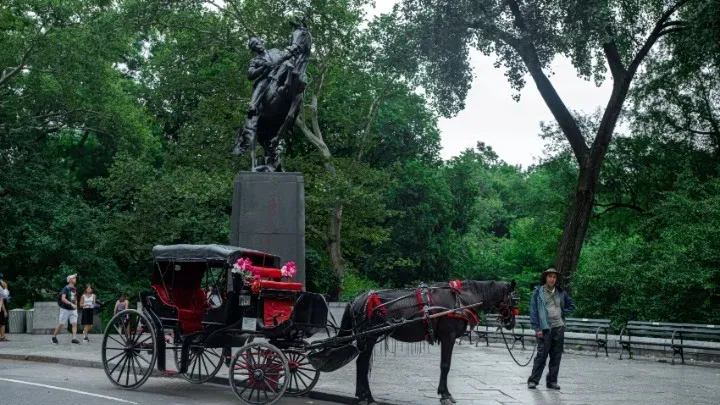
The decision has drawn sharp criticism from political figures who view the ban as an unnecessary loss of cultural heritage. Former President Donald Trump reacted to the news via Truth Social, characterizing the move as a loss of a "quintessential New York experience" and a piece of history that will be missed.
Trump compared the carriage ban to the continued presence of automobiles in Central Park, arguing that if car accidents occur in the park without resulting in a ban on vehicles, then horse-drawn carriages should not be singled out. He further suggested that the decision was driven by political motivations rather than practical safety concerns, adding that the move marks the end of a beloved tradition that has spanned over a century.
FAQ: New York horse-drawn carriage ban
When will the horse-drawn carriage ban officially start?
The ban is set to take effect in June 2028. The City Council has provided this timeline to allow for a transition period for the drivers, the business owners, and the animals involved in the industry.
Will the horses be sent to slaughter after the ban?
No, the proposed legislation specifically includes protections for the animals. The city is required to create a plan that ensures the horses are not sent to slaughter, providing for their welfare following the end of their working lives.
How many people will lose their jobs because of this ban?
It is estimated that approximately 200 drivers will be out of work once the ban is implemented. These drivers currently earn an estimated annual income of between $60,000 and $70,000.
Is there any compensation for carriage owners?
The city is tasked with examining a compensation program for business owners by April 2028. However, the Transport Workers Union has criticized the current proposal, claiming it does not adequately address the value of the expensive medallions held by owners.
Why was this ban introduced now?
While animal rights concerns have existed for decades, the legislative push was intensified by a fatal accident in June 2026 involving an 18-year-old tourist. This tragedy highlighted the safety risks associated with the practice in high-traffic areas.
Key takeaways
- The NYC City Council voted 40-7 to ban horse-drawn carriages by June 2028.
- The decision follows the fatal accident of an 18-year-old tourist in June 2026.
- Approximately 200 drivers earning $60k-$70k annually face job losses.
- Legislation includes a mandate to prevent horses from being sent to slaughter.
- The Transport Workers Union intends to challenge the ban in federal court.
The end of a century-old tradition
The decision to phase out horse-drawn carriages in New York City represents a profound shift in the city's approach to urban tourism and animal welfare. While the move addresses critical safety concerns and long-standing ethical debates, it simultaneously dismantles a historic industry and threatens the livelihoods of hundreds of workers. As the city prepares for the June 2028 deadline, the coming years will likely be defined by legal battles over compensation and the complex task of transitioning both the workforce and the animals into a new era for Central Park.