
How extensive is the flooding in the Lasithi Plateau?
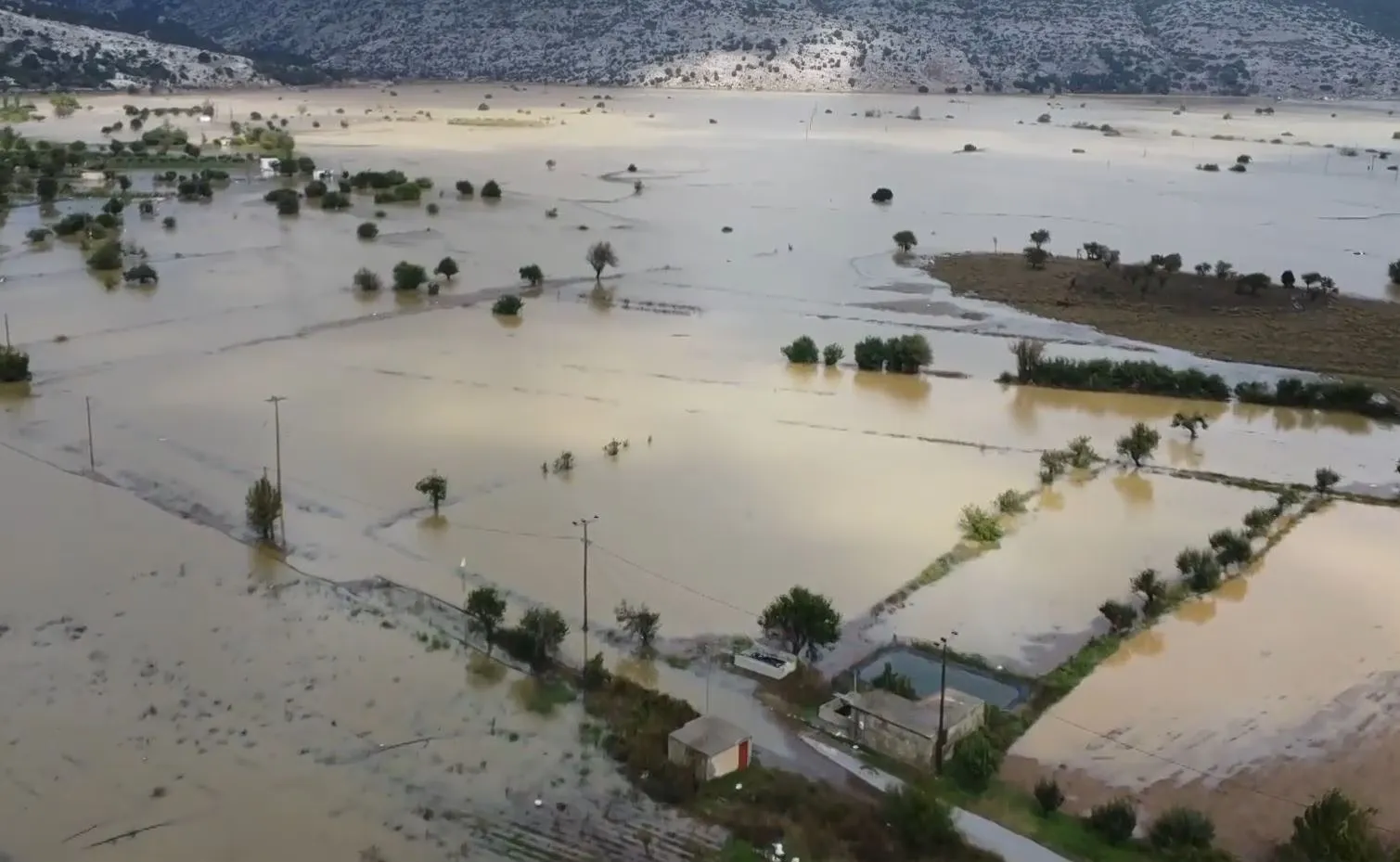
The recent extreme weather event that struck Crete has caused what local officials are describing as a "biblical disaster" in the Lasithi Plateau. The flooding has effectively converted the entire plain into a vast, continuous lake. Drone imagery captured during the height of the event reveals the sheer scale of the inundation, showing that the water has swallowed an unprecedented area of more than 25,000 stremmata.
The depth of the water across the plateau is highly variable but remains dangerously high in many sectors. While much of the plain was covered by at least 30 centimeters of water, certain locations experienced much more severe inundation. In some specific areas, water depths are currently measured between 3 and 4 meters. This extreme depth makes the terrain virtually impassable and ensures that crops are not just damaged, but entirely unreachable and submerged under heavy pressure.
Comparing the scale of the disaster
To grasp the magnitude of this environmental catastrophe, one must look at the geographic footprint of the submerged land. The 25,000 stremmata currently underwater represents an area larger than the entire Greek island of Spetses. This comparison highlights that the flooding is not a localized incident affecting a few individual farms, but a regional crisis that has overwhelmed the entire agricultural infrastructure of the plateau.
The uniformity of the impact is particularly concerning. As the water covers the entire expanse, it ensures that the disaster is felt across the whole community, leaving no corner of the plateau untouched by the rising waters.
What is the economic impact on agricultural production?
The economic consequences for the region are staggering, with estimated losses ranging between €15 million and €20 million. This figure represents the direct loss of income for producers who were at the very end of their growing cycle. The timing of the weather event has proven particularly cruel; the vast majority of the season's produce—approximately 80%—was scheduled to be harvested within the ten days immediately following the flood.
The destruction is concentrated in two primary agricultural sectors that form the backbone of the local economy:
- Potato Production: Approximately 4,000 to 5,000 stremmata of potato crops are currently submerged. This represents a catastrophic loss of 15 to 20 million kilograms of potatoes that will never be harvested or brought to market.
- Vegetable Crops: An additional 3,000 stremmata of essential vegetables, including tomatoes, peppers, lettuce, and cabbage, have been completely destroyed by the water.
Giannis Smyrnaki, Vice President of the Agricultural Association of the Lasithi Plateau, described the situation as an "economic disaster for all farmers." He noted that because the producers had only managed to harvest about 20% of their total production before the deluge, the vast majority of their annual labor and investment has been lost to the floodwaters.
What secondary damages are affecting local farmers?
The crisis extends far beyond the loss of standing crops. The flooding has inflicted heavy damage on the fixed assets and essential production means that farmers rely on to operate. This secondary damage threatens to cripple the region's ability to recover even after the waters recede.
The damage includes several critical categories of agricultural infrastructure:
- Machinery and Vehicles: Tractors and various private vehicles used for daily farming operations have been submerged, likely suffering significant mechanical damage.
- Storage and Infrastructure: Pumping stations, warehouses, and greenhouses have been hit directly by the rising waters, compromising the storage and protection of future yields.
- Irrigation and Protection: Net houses and specialized greenhouse structures have been compromised, further stripping farmers of the tools needed for controlled cultivation.
Because the flooding is an ongoing phenomenon, the full extent of the damage to machinery and equipment cannot yet be fully estimated. However, the loss of these vital tools creates a massive hurdle for the next planting season.
The cycle of debt and recovery
The destruction of equipment and crops creates a perilous financial loop for the local producers. Many farmers are already operating under significant financial pressure, carrying debts to agronomists, fuel providers, and other essential suppliers incurred during the current growing season. With their primary source of income—the harvest—gone, and their tools for the next season damaged or destroyed, the path to solvency is unclear.
The loss of capital is not just a matter of this year's profit, but of future viability. Without the ability to pay back current debts or invest in new seeds and equipment, many farmers face an existential threat. Experts and local representatives suggest that without immediate and decisive state intervention, the economic fallout from this event will be felt for the next three to five years.
What are the primary demands from the agricultural community?
The central demand from the approximately 500 affected farming families is the immediate activation of the State Aid Fund. The community is calling for a comprehensive financial rescue package to prevent a total collapse of the local agricultural economy. The goal is to secure enough liquidity to manage existing debts and provide the means to survive the coming years.
The specific requests from the Agricultural Association include:
- 100% Compensation: Full reimbursement for the lost production to cover the estimated €15–€20 million deficit.
- Immediate Disbursement: Rapid access to funds to address the immediate loss of income and the replacement of damaged equipment.
- Long-term Support: Sustained assistance to ensure that the 500 families impacted can continue to live and work in the region.
The community emphasizes that this is not a standard seasonal setback, but a catastrophe that requires a state-level response to ensure the long-term survival of the Lasithi Plateau's agricultural heritage.
Frequently asked questions
How much money has the Lasithi Plateau lost due to the floods?
The estimated economic loss is between €15 million and €20 million. This total accounts for the loss of 15 to 20 million kilograms of potatoes and several thousand stremmata of various vegetable crops that were scheduled for harvest within ten days of the event.
How many people are affected by this disaster?
Approximately 500 farming families in the Lasithi Plateau region have been impacted. Because the flooding covered nearly the entire 25,000-stremmata plateau, almost every agricultural producer in the area has suffered some degree of loss or damage to their livelihood.
What crops were most heavily damaged?
Potato production saw the most significant impact, with 4,000 to 5,000 stremmata submerged. Additionally, 3,000 stremmata of vegetables, including tomatoes, peppers, lettuce, and cabbage, were destroyed by the floodwaters, which reached depths of up to 4 meters in some areas.
Is the damage limited only to the crops?
No, the damage includes vital agricultural infrastructure and equipment. Submerged assets include tractors, vehicles, pumping stations, warehouses, greenhouses, and net houses. These losses to fixed assets complicate the ability of farmers to recover and restart their operations in subsequent years.
What is the agricultural community asking the government for?
The farmers are requesting the immediate activation of the State Aid Fund. They are specifically asking for 100% compensation for their lost production and direct financial support to help them manage existing debts and ensure their long-term survival in the region.
Key takeaways
- Over 25,000 stremmata of the Lasithi Plateau were submerged by extreme flooding.
- Total agricultural income losses are estimated between €15 million and €20 million.
- Approximately 15 to 20 million kilograms of potatoes were lost in the disaster.
- Around 500 farming families face significant economic and infrastructural damage.
- Farmers are demanding 100% compensation via the State Aid Fund.
Conclusion
The flooding of the Lasithi Plateau represents a catastrophic intersection of environmental crisis and economic vulnerability. With 25,000 stremmata submerged and millions of euros in crops lost, the immediate impact is devastating for the 500 families involved. However, the secondary damage to machinery and infrastructure suggests a much longer recovery period, potentially lasting up to five years. The future stability of this Cretan agricultural hub now depends on the speed and scale of the state's response through the State Aid Fund to prevent a permanent economic decline in the region.







