
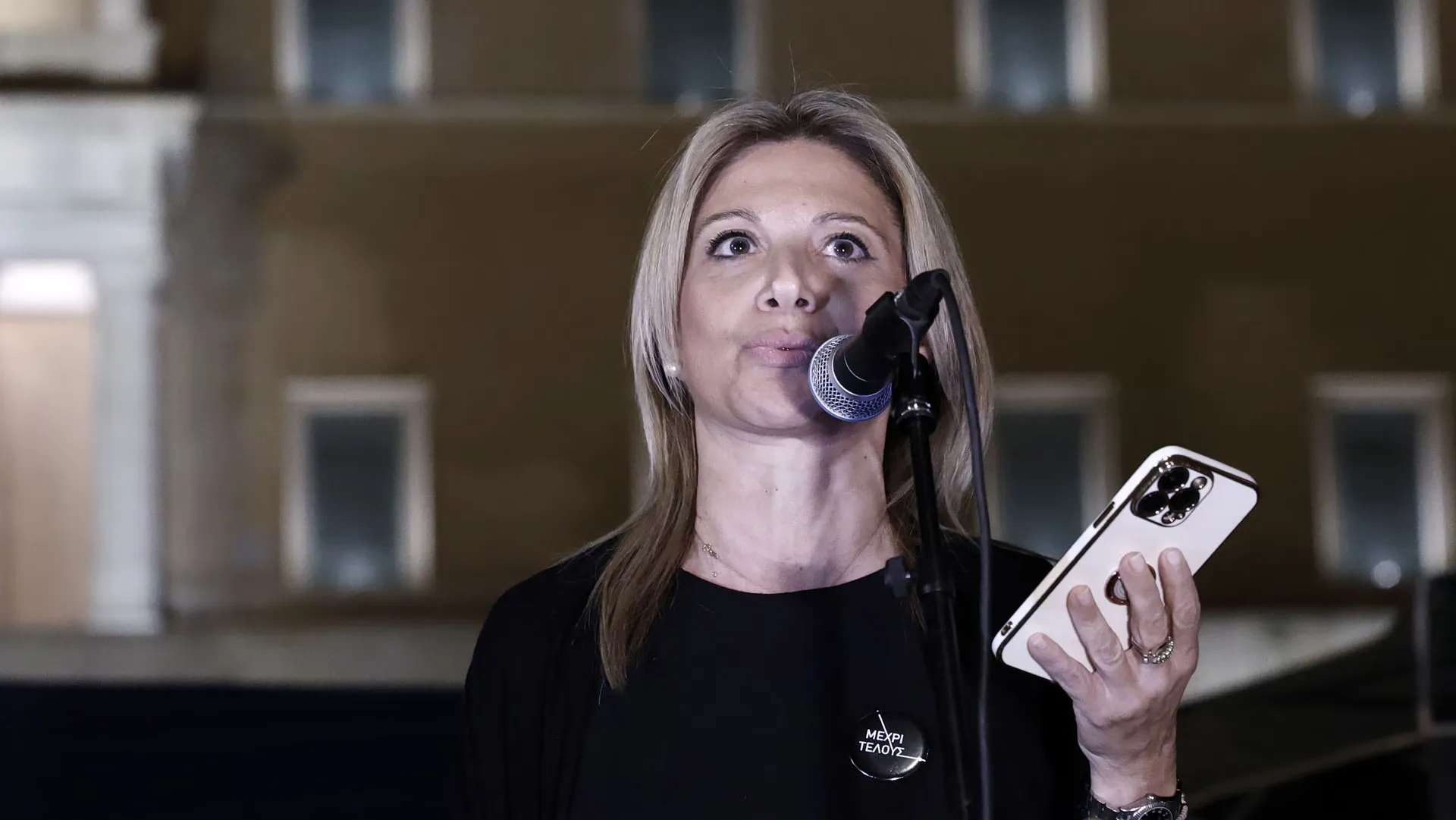
Why is Maria Karystianou facing such intense political isolation?
The isolation of Maria Karystianou stems from a profound disconnect between her optimistic public messaging and the rapidly deteriorating internal stability of her party. While Karystianou has recently utilized media appearances to project an image of unshakeable confidence—even suggesting that electoral self-sufficiency is a highly probable outcome—this rhetoric stands in stark contrast to the party's actual standing. The structural crisis within Elpida gia ti Dimokratia is no longer a theoretical risk but a visible reality that threatens to dissolve the organization before the next electoral cycle can even begin.
This tension is characterized by a reliance on "communication fireworks" to mask deep-seated institutional weaknesses. Instead of addressing the core issues of party cohesion, the leadership has opted for a strategy of high-visibility optimism. This approach has failed to bridge the gap between the party's founding momentum and its current state of fragmentation, leaving Karystianou to navigate a shrinking political landscape largely on her own. The disconnect between her claims of potential victory and the reality of a crumbling organization creates a vacuum of credibility that is increasingly difficult to fill.
How did Elpida gia ti Dimokratia become a "lightning party"?
Elpida gia ti Dimokratia has experienced the lifecycle of a "lightning party," characterized by a rapid ascent followed by an equally swift decline. Established in May 2026, the party initially rode a powerful wave of social momentum, fueled by the intense emotional and ethical concerns of the electorate at that time. However, this initial energy was consumed with unprecedented speed by internal disputes and ideological friction.
The consequences of this rapid burnout are evident in the party's current performance. What was once a burgeoning social movement has been reduced to struggling with single-digit percentages in recent opinion polls. The transition from a high-momentum movement to a fractured organization highlights the difficulty of sustaining political capital when internal governance fails to keep pace with external popularity. The "lightning" nature of the movement suggests that while the initial spark was powerful, the lack of a sustained organizational structure prevented it from becoming a permanent fixture in the political landscape.
The lifecycle of rapid political movements
Political movements born from sudden social surges are often prone to extreme volatility. For Elpida gia ti Dimokratia, the lack of a stable institutional framework meant that the initial "ethical charge" could not be converted into long-term political power. Instead, the energy was diverted inward, fueling the very conflicts that are now driving voters away. When a movement is built primarily on emotion and a specific moment in time, it faces the constant danger of being consumed by its own internal contradictions once the initial external excitement wanes.
In the case of Karystianou's party, the speed of this consumption has been particularly noteworthy. The party's inability to transition from a reactive social force into a disciplined political entity has left it vulnerable to the very internal erosions that typically follow a period of rapid growth. This pattern underscores the fundamental challenge facing modern political movements: the struggle to transform temporary social fervor into a lasting institutional presence.
What is the impact of the mass exodus of party leaders?
The most critical threat to the party's survival is not the declining poll numbers, but the total absence of experienced political leadership to support Karystianou. Aside from Maria Gratsia, nearly all of Karystianou's primary collaborators and strategic partners have departed the party. This mass departure has left the organization without the "generals" necessary to manage a national political entity.
The loss of these figures is not merely a matter of personnel but a symptom of a fundamental failure in leadership. Analysts have noted that the departure of central figures—many of whom were instrumental in the party's founding—reveals a significant deficit in the ability to build a cohesive coalition. This inability to maintain the necessary balance between different internal factions has turned a collective project into a solitary endeavor for Karystianou. The absence of these "generals" means that the party lacks the strategic depth required to navigate complex political environments or to manage the diverse interests of a broad voter base.
How is Karystianou attempting to reverse the crisis?
In an attempt to stave off total collapse, Maria Karystianou has launched a three-pronged strategy designed to reclaim her political capital and re-engage the party's base. This "all in" approach represents a high-stakes gamble to maintain relevance in a political environment that is increasingly turning against her. By doubling down on her personal brand, she is attempting to bypass the structural failures of the party through sheer force of personality.
The strategy involves the following tactical moves:
- Media Saturation: Karystianou plans to significantly increase her television appearances, operating on the assumption that her personal political brand remains intact and can still carry the party's weight.
- Rapid Organizational Restructuring: She intends to accelerate the formal consolidation of the party to signal to disgruntled members that their concerns regarding the lack of structure are being addressed.
- Nationwide Outreach: A move toward the "forward" involves scheduling open events across Greece and holding meetings with various institutional bodies to rebuild external legitimacy.
However, the effectiveness of these measures remains highly questionable. By using aggressive rhetoric—including accusations of "betrayal" against former colleagues—Karystianou may be inadvertently highlighting her inability to inspire loyalty or manage internal diversity. Rather than providing political cover, her recent statements may actually be reinforcing the perception of a leadership in crisis, as she struggles to reconcile her vision with the reality of her shrinking circle of supporters.
FAQ: Maria Karystianou and Elpida gia ti Dimokratia
What is the current status of the Elpida gia ti Dimokratia party?
The party is currently facing a severe structural crisis and is experiencing a significant decline in political influence. After a strong start in May 2026, it is now struggling with single-digit polling numbers and a mass exodus of key leadership figures, threatening its survival before the next elections.
Why are poll numbers declining for Karystianou's party?
The decline is attributed to the rapid exhaustion of the party's initial social momentum. Internal conflicts, a lack of organizational cohesion, and the departure of founding members have turned the initial surge of support into political fragmentation, leaving the party unable to sustain its early popularity.
Who remains in the party's leadership?
The leadership structure has been severely depleted. Most of the original core members and strategic partners have left the party, leaving Maria Karystianou largely isolated. Currently, Maria Gratsia is noted as the primary remaining key figure within the leadership circle.
What is Karystianou's strategy to save the party?
Karystianou is pursuing a three-fold strategy: increasing her media presence to leverage her personal brand, accelerating the formalization of the party structure to appease the base, and launching a nationwide tour of events and institutional meetings to regain momentum.
How has Karystianou responded to the departure of her colleagues?
Karystianou has responded with intense rhetoric, characterizing the departure of former associates as "betrayal." While this is intended to show strength, analysts suggest it may actually demonstrate a failure to maintain a unified team and manage the diverse voices within her political movement.
Key takeaways
- The Elpida gia ti Dimokratia party is facing a structural crisis that threatens its existence before upcoming elections.
- Maria Karystianou is experiencing political isolation due to the mass departure of almost all key strategic leaders.
- The party has transitioned from a high-momentum movement to one struggling with single-digit polling results.
- Karystianou's current strategy relies on high-frequency media appearances and a nationwide outreach campaign to regain relevance.
The future of the movement
The trajectory of Elpida gia ti Dimokratia depends on whether Karystianou's high-risk "all in" strategy can bridge the gap between her optimistic rhetoric and the reality of her depleted leadership. Her refusal to acknowledge the structural flaws in her management suggests a preference for maintaining artificial relevance through media presence. Unless she can successfully rebuild a cohesive team and move beyond a rhetoric of betrayal, the party risks completing its descent from a rising social force to a historical footnote of political volatility.







