
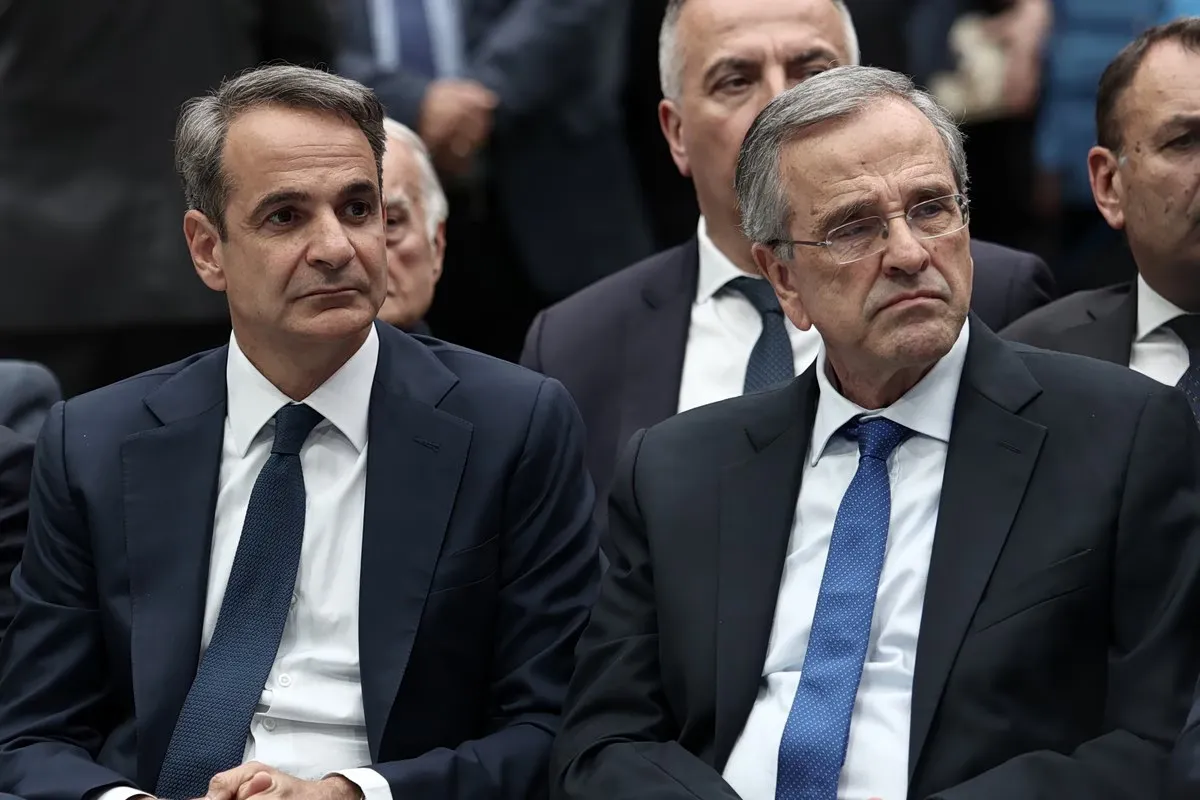
How is Mitsotakis redefining the New Democracy historical narrative?
Kyriakos Mitsotakis has adopted a communication strategy that emphasizes both 'stability and change' as a dual offering to the electorate. During recent celebrations marking 52 years of New Democracy, the Prime Minister delivered a speech that meticulously listed the party's historical leaders, starting with founder Konstantinos Karamanlis. However, a striking pattern emerged: the omission of former Prime Minister Antonis Samaras from the official roll of honor.
This exclusion has drawn sharp comparisons to the political purges of the Stalinist era, where figures were not just removed from power but effectively erased from historical records and photographs. By failing to mention Samaras, Mitsotakis appears to be performing a selective curation of the party's lineage. This move serves to consolidate the current leadership's legitimacy while distancing the party from the specific eras or policies associated with its predecessor.
The tension is not merely symbolic; it reflects a deeper internal struggle. While the Prime Minister seeks to present a unified front of continuous progress, the absence of key figures suggests an ongoing 'civil war' within the party ranks. This dynamic ensures that the political landscape within New Democracy remains volatile, even as the party maintains its grip on power.
The symbolic weight of political omission
In political science, the act of 'damnatio memoriae'—the condemnation of memory—is a powerful tool used to shape national or party identity. By omitting Samaras, the current administration is not just ignoring a person; it is attempting to rewrite the institutional memory of the party to suit a modern, technocratic image that prioritizes stability over the more turbulent eras of the past.
What role does internal party hierarchy play in Greek politics?
Internal power struggles within New Democracy are exemplified by the position of the party secretary, Kostas Kyranakis. Despite facing friction from certain factions within the party who question his authority, Kyranakis continues to operate as a central figure in the party's organizational structure. For many, his role is seen as a stepping stone toward future leadership, highlighting the complex ambitions of high-ranking officials.
The friction between the party secretary and various internal groups illustrates that New Democracy is far from a monolith. The ability of a secretary to command respect and navigate the demands of the Prime Minister's office is a key indicator of the party's internal stability. As different factions vie for influence, the central leadership must constantly balance these competing interests to prevent fragmentation.
How will the energy crisis impact the Greek economy?
Geopolitical instability is placing immense pressure on the Greek economic team, specifically regarding the volatility of oil prices and the rising yields on bonds. The intersection of the conflicts in Ukraine and the Middle East, combined with the uncertainty surrounding the upcoming US elections, has created a high-risk environment for Mediterranean economies. There is even growing concern among some analysts regarding the potential for a debt crisis if global conditions continue to deteriorate.
In response to these pressures, Greece is lobbying the European Commission for 'light' versions of energy support. The primary objective is to allow the government to use the surplus from Value Added Tax (VAT) on fuel to subsidize heating oil and diesel. This measure is intended to mitigate the impact of rising costs on households before the winter season begins.
The timing of these measures is critical. With heating oil prices expected to rise significantly in mid-October, the Greek government is under intense pressure to announce concrete relief measures. The outcome of discussions at the upcoming EU summit on October 15-16 will be decisive in determining whether Brussels provides the necessary fiscal flexibility to protect Greek consumers from a harsh winter.
What are the latest shifts in the Greek political landscape?
The movement of political figures between parties remains a defining characteristic of the Greek system, as seen in the recent return of Evangelos Apostolakis to PASOK. Apostolakis, a former Minister of National Defense under the SYRIZA government, has transitioned back to his political roots. His career has been marked by significant shifts, including a brief stint as a minister in the Mitsotakis administration in 2021 before being removed from his post.
This pattern of 'political migration' highlights the fluidity of party identities in Greece. Apostolakis's return to PASOK, a party he was once associated with during its modernizing era under Yannis Papandreou, suggests a realignment of political forces. Such movements often signal broader shifts in voter sentiment and the changing influence of major political blocs like SYRIZA and PASOK.
The impact of legal investigations on political stability
Beyond personnel shifts, the ongoing investigations into wiretapping and the use of Pegasus software continue to act as a significant political burden. The recent order by the Athens Prosecutor for a preliminary investigation into the Pegasus allegations adds another layer of complexity to the national discourse. These legal proceedings serve as a constant reminder of the tensions between state security and civil liberties, a topic that remains central to the Greek political debate.
Frequently asked questions
Why was Antonis Samaras excluded from the New Democracy anniversary speech?
Antonis Samaras was omitted from Prime Minister Kyriakos Mitsotakis's speech during the party's 52nd anniversary. This exclusion is viewed by political analysts as a strategic attempt to reshape the party's historical narrative and distance the current leadership from the Samaras era, effectively erasing him from the official party lineage.
How is Greece addressing rising fuel costs?
The Greek government is seeking permission from the European Commission to redirect VAT surpluses from fuel to subsidize heating oil and diesel. This 'light' support model aims to protect households from the price hikes expected during the winter months, with official measures likely to be announced in mid-October.
What is the connection between global conflicts and the Greek economy?
Ongoing wars in Ukraine and the Middle East contribute to global energy volatility and bond market instability. These factors increase the risk of economic pressure on Greece, prompting concerns about potential debt crises and the need for targeted fiscal interventions to manage rising energy costs.
Who is Evangelos Apostolakis and why is his move significant?
Evangelos Apostolakis is a former Minister of National Defense who recently returned to PASOK after serving in the SYRIZA government. His move is significant as it illustrates the fluid nature of Greek political affiliations and the shifting dynamics between the country's major center-left and center-right parties.
What is the current status of the Pegasus wiretapping investigation?
The Athens Prosecutor has ordered a preliminary investigation following complaints regarding the Pegasus spyware. This investigation is a critical component of the ongoing legal and political scrutiny surrounding surveillance practices in Greece, representing a significant challenge to the current administration's reputation for transparency.
Key takeaways
- Mitsotakis's omission of Samaras from party celebrations suggests a deliberate reshaping of New Democracy's historical memory.
- Greece is lobbying the EU to use fuel VAT surpluses to subsidize winter heating costs for citizens.
- Geopolitical tensions in Ukraine and the Middle East are driving up energy prices and economic uncertainty.
- The return of Evangelos Apostolakis to PASOK highlights the continuous political realignment within Greece.
Conclusion
The current state of Greek politics is defined by a complex interplay of historical revisionism, economic vulnerability, and shifting party loyalties. Within New Democracy, the attempt to curate a specific legacy through the omission of past leaders reflects an effort to consolidate power under the Mitsotakis administration. Simultaneously, the government faces the immediate, practical challenge of navigating a volatile global energy market to protect domestic stability. As legal investigations into surveillance and political migrations continue to reshape the landscape, the ability of Greek institutions to maintain stability amidst these pressures will be the ultimate test for the coming year.







