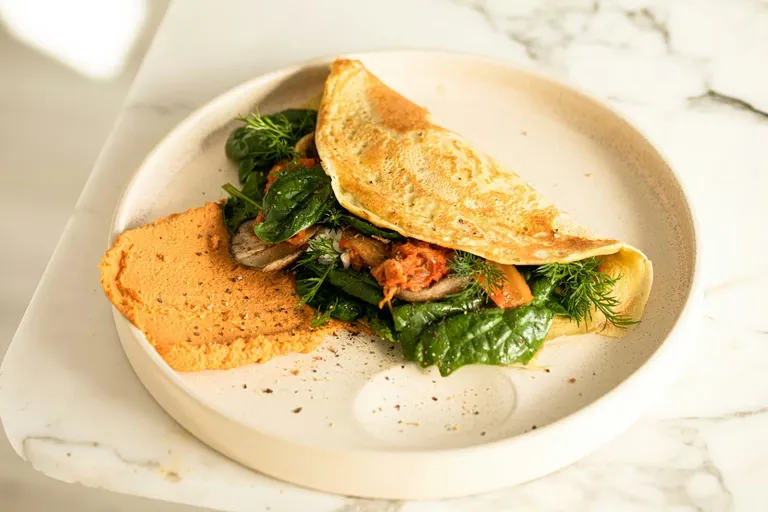
What are the essential ingredients for this Mediterranean omelette?
The foundation of this dish relies on a balance of grains, fresh vegetables, and healthy fats to ensure both satiety and nutritional depth. Unlike a standard omelette, this version utilizes bulgur wheat to add a chewy, substantial texture that complements the softness of the eggs.
The Core Components
To prepare this recipe, you will need the following specific items:
- Grains and Aromatics: 1/2 cup of bulgur wheat, 1/2 cup of finely chopped chives, and 1/2 teaspoon of cumin.
- Fresh Produce: 2 cups of baby spinach, 1 1/4 cups of fresh parsley, and one large tomato sliced into thin pieces.
- Proteins and Fats: Eggs (quantity determined by the mixture), 2/3 cup of lemon-infused hummus, 1/3 cup of toasted almonds, and olive oil for cooking.
- Seasoning: Salt to taste and 3 tablespoons of water for the egg mixture.
Each ingredient plays a strategic role. The bulgur provides complex carbohydrates, while the chives and parsley offer bright, herbaceous notes that cut through the richness of the eggs and hummus. The addition of toasted almonds introduces a necessary crunch, preventing the texture from becoming overly soft.
How do you prepare the bulgur and egg base?
Preparing the base requires two simultaneous processes: simmering the grains and aerating the egg mixture to ensure a light, omelette-like consistency. The texture of the bulgur is critical, as it serves as the structural filler for the wraps.
First, boil 1 cup of water in a medium saucepan. Once boiling, add the 1/2 cup of bulgur, reduce the heat, and simmer with a lid on for approximately 9 minutes. It is vital to leave the grain covered for an additional 3 minutes after removing it from the heat to allow the steam to finish the softening process. Once ready, fluff the bulgur with a fork to prevent clumping.
While the grain rests, prepare the egg mixture. In a blender, combine the eggs with 3 tablespoons of water and 1/4 teaspoon of salt. Blend until the mixture is completely homogenous. After blending, stir in the diagonally sliced chives by hand. This ensures the chives remain intact rather than being pulverized, providing small bursts of flavor in every bite.
What is the technique for cooking the egg tortillas?
The recipe treats the eggs more like thin tortillas or crepes rather than a traditional folded omelette. This method allows for the creation of four distinct wraps that can be easily filled and folded.
Heat a non-stick pan (approximately 25 cm in diameter) over medium-low heat and lightly coat the surface with olive oil. Pour in roughly 1/3 cup of the egg mixture—about one-quarter of the total liquid—and swirl the pan to ensure even coverage. Do not stir the eggs during the initial cooking phase; let them cook undisturbed for 3 to 4 minutes. You are looking for the surface to set and the underside to turn a light golden brown.
Using a spatula, carefully lift the edges to ensure they are not sticking, then flip the tortilla. Cook the second side for a mere 10 seconds before transferring it to a plate. Repeat this process with the remaining egg mixture, adding small amounts of olive oil to the pan as needed, until you have successfully produced four individual egg tortillas.
How do you assemble the final Mediterranean wraps?
Assembly is where the flavors and textures of the Mediterranean kitchen truly converge. The goal is to create a layered structure that remains stable when folded.
The assembly begins with the preparation of the filling. Using a blender, combine the baby spinach, parsley, cumin, and the remaining chives. Pulse until finely chopped. Next, add the toasted almonds, 1 tablespoon of olive oil, and 1/2 teaspoon of salt. Blend again until the almonds are finely processed but still contribute to the texture. Transfer this green mixture to a bowl and stir in the prepared bulgur wheat.
Step-by-Step Assembly Guide
Follow these steps to ensure the wraps are both beautiful and easy to eat:
- Lay the Base: Place the egg tortillas on a clean surface with the most aesthetically pleasing side facing down.
- Apply Hummus: Spread a generous layer of lemon hummus over the bottom half of each tortilla.
- Add Filling: Place approximately 1/2 cup of the bulgur and spinach mixture over the hummus, pressing down lightly to stabilize the filling.
- Add Freshness: Layer the thin tomato slices over the bulgur mixture.
- The Final Fold: Fold the top half of the tortilla over the filling, then fold it in half once more to create a compact quarter-circle shape.
This folding technique creates a sturdy, handheld meal that keeps the warm egg and cool hummus in close proximity.
How can you utilize leftover ingredients?
The recipe is designed to be efficient, often leaving a small amount of the bulgur and vegetable mixture. Rather than discarding these components, they can be repurposed to minimize food waste.
The leftover bulgur and spinach mixture is highly versatile. Because it already contains aromatics like cumin, parsley, and almonds, it can be tossed directly into a fresh green salad to add texture and protein. Alternatively, it can be used as a side dish or incorporated into a breakfast bowl with additional poached eggs or yogurt. This ensures that the effort put into the initial preparation provides value for subsequent meals.
Frequently asked questions
Can I substitute the bulgur with another grain?
Yes, you can substitute bulgur with quinoa or couscous to achieve a similar texture. Quinoa offers a higher protein content, while couscous provides a lighter, more delicate mouthfeel. Ensure the grain is cooked until soft and fluffed before adding it to the spinach mixture.
How do I prevent the egg tortillas from tearing?
To prevent tearing, ensure your pan is truly non-stick and that you use medium-low heat. Cooking too quickly on high heat can make the eggs rubbery and prone to breaking. Always use a wide, thin spatula when flipping the tortillas to maintain their integrity.
Is this recipe suitable for vegetarians?
This recipe is suitable for vegetarians as it relies on eggs and plant-based ingredients like hummus, spinach, and nuts. However, it is not vegan due to the inclusion of eggs. For a vegan version, you could replace the egg tortillas with thin flour or chickpea crepes.
Can I prepare the filling in advance?
The bulgur and spinach filling can be prepared ahead of time and stored in the refrigerator. However, for the best texture, it is recommended to assemble the final wraps just before serving to prevent the egg tortillas from becoming soggy from the moisture in the vegetables.
What are the health benefits of this dish?
This dish is nutritionally dense, providing healthy fats from olive oil and almonds, fiber from the bulgur and spinach, and high-quality protein from the eggs and hummus. The inclusion of fresh herbs and lemon adds antioxidants and micronutrients essential for a balanced diet.
Key takeaways
- Use bulgur wheat to provide a unique, chewy texture to the egg base.
- Blend eggs with water to achieve a lighter, more aerated tortilla consistency.
- Incorporate toasted almonds for a necessary textural contrast in the filling.
- Fold the wraps into quarter-circles to maintain stability and presentation.
- Repurpose leftover bulgur mixtures into salads to reduce food waste.
Conclusion
The omelette with tomatoes and hummus represents a sophisticated departure from conventional breakfast options. By integrating Mediterranean staples like bulgur, lemon hummus, and fresh aromatics, the recipe creates a meal that is as visually appealing as it is nutritionally complete. The process—from the careful simmering of grains to the precise folding of the egg tortillas—requires attention to detail but rewards the cook with a complex, multi-textured experience. Whether enjoyed as a structured breakfast or repurposed into a salad, this dish exemplifies the versatility and vibrant flavors of Mediterranean-inspired cooking.