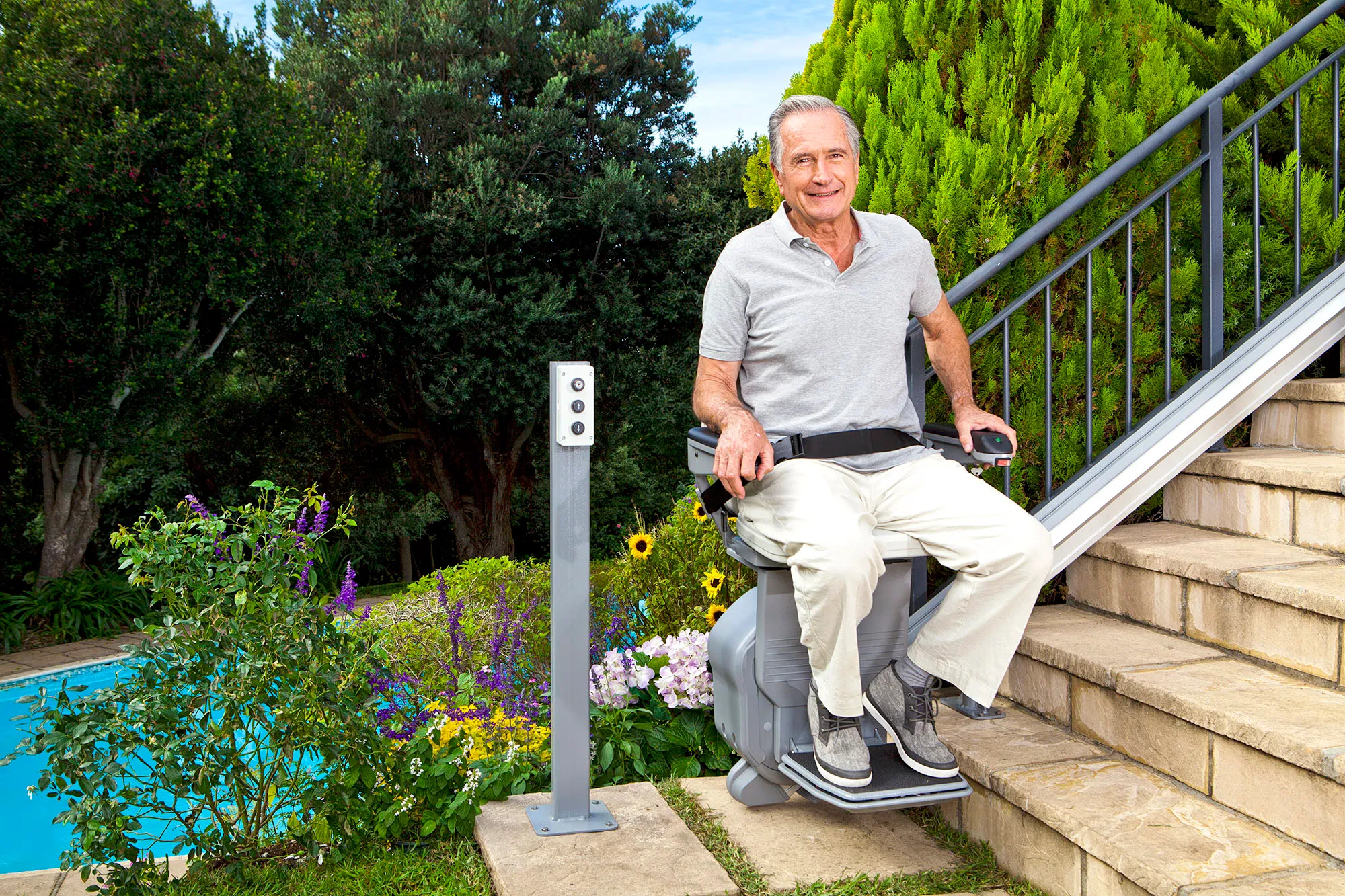
Why is an outdoor stairlift essential for home accessibility?
An outdoor stairlift serves as a critical bridge between physical limitations and the desire for an independent lifestyle. For individuals facing health challenges or reduced mobility, exterior architecture—such as entrances, terraces, yards, or garages—can transform from functional spaces into insurmountable barriers. Without proper assistance, these obstacles often lead to social isolation or the difficult decision to relocate to a more accessible home.
Installing an external stairlift allows residents to maintain their current living environment without necessitating structural changes to the property. By addressing the mobility gap at the very entrance of a residence, these systems ensure that the transition from the outside world to the home is seamless and dignified.
How does the Stannah 320 handle extreme weather conditions?
The Stannah 320 model is specifically engineered to maintain peak performance despite exposure to harsh environmental elements. Unlike indoor models, an outdoor stairlift must endure constant fluctuations in temperature, moisture, and precipitation to remain reliable for daily use.
According to Draculis, the Stannah 320 has been rigorously tested to operate in temperatures ranging from -20°C to +40°C, withstanding humidity levels of up to 80%. This durability ensures that the mechanism remains functional during winter snowfalls and summer heatwaves alike. Furthermore, the reliability of the components is verified through intensive testing protocols; before reaching the consumer, these units undergo up to 25,000 return trips to ensure mechanical integrity.
Technical durability and environmental resilience
The design philosophy behind the Stannah 320 prioritizes long-term resilience. Beyond temperature and humidity, the unit is built to resist the corrosive effects of rain and wind. This specialized construction is vital because any mechanical failure in an outdoor setting can leave a user stranded or unable to access their home during inclement weather. The combination of high-grade materials and rigorous testing cycles provides a level of security that standard stairlifts cannot offer.
What safety and space-saving features are included?
Safety and practicality are the dual pillars of modern outdoor stairlift design. Because these units are often installed in high-traffic areas or narrow walkways, they must provide maximum security without obstructing the passage for other pedestrians or residents.
The Stannah 320 includes several ergonomic and safety-oriented features:
- Swivel Seating: The ergonomically designed seat can rotate, making it significantly easier for users to board and exit the device safely.
- Space Optimization: When the lift is not in use, the seat folds against the wall, preserving the majority of the staircase area for other uses.
- Obstacle Detection: Integrated sensors identify potential obstructions in the path, automatically halting the movement to prevent accidents.
- Safety Equipment: Each unit is equipped with a safety belt and a protective hood to shield the user and the mechanism.
- Emergency Power: Built-in batteries ensure that the lift remains operational even during unexpected power outages.
With a payload capacity of up to 135 kg and CE certification, the system meets stringent European safety standards, providing a robust solution for various user needs.
Why is a customized installation approach necessary?
Every staircase possesses unique geometric characteristics, meaning that a one-size-fits-all approach is ineffective for stairlift installation. The effectiveness of an accessibility solution depends heavily on a precise technical study of the specific environment.
Factors that dictate the design of a custom stairlift include:
- The total length and gradient (slope) of the stairs.
- Available width and clearance for the installation.
- The specific location of boarding and exiting points.
- The presence of landings, turns, or irregular architectural shapes.
To address these complexities, Draculis utilizes a professional consultation process. This begins with a free on-site visit by a specialized engineer who performs precise measurements and a technical study of the staircase. This personalized assessment allows for a tailored cost estimate and ensures that the chosen model perfectly fits the unique constraints of the property.
The importance of professional expertise and service
Choosing a mobility solution is a long-term commitment. Draculis leverages 55 years of market experience and a track record of over 8,350 installations across Greece to provide high-level expertise. Their service model includes a dedicated technical department, nationwide support, and a maintained inventory of spare parts. This infrastructure is backed by ISO 9001:2018 certification, ensuring that the service quality matches the technical standards of the products provided.
What is the psychological impact of improved mobility?
The value of an outdoor stairlift extends far beyond its mechanical utility; it fundamentally alters the quality of life for the user and their support network. For the individual, the primary benefit is the restoration of autonomy.
When a person can navigate their own home without relying on others for every movement, the psychological burden of dependency is lifted. This independence reduces the anxiety associated with daily tasks and prevents the physical strain—such as back or knee pain—that often results from struggling with stairs. For families, the installation provides peace of mind, knowing that their loved ones can move with dignity and safety. Ultimately, these accessibility solutions aim to transform a house from a place of restriction into a space of freedom.
FAQ: Outdoor stairlift questions
Can an outdoor stairlift work in the rain?
Yes, outdoor stairlifts like the Stannah 320 are specifically designed for weather resistance. They are tested to handle humidity up to 80% and include protective elements like hoods to ensure the mechanism and user remain shielded from environmental elements during operation.
What happens if there is a power cut?
Modern outdoor stairlifts are equipped with backup battery systems. This ensures that if the electricity fails, the user can still operate the lift to reach their destination, preventing them from being stuck on the stairs or outside the home.
How much weight can a standard outdoor stairlift carry?
The Stannah 320 model, for example, features a useful load capacity of up to 135 kg. This capacity is designed to accommodate a wide range of users while maintaining the stability and safety of the mechanical drive system.
Do I need a professional to measure my stairs?
Yes, a professional measurement is essential because every staircase has unique angles, turns, and lengths. A specialized engineer can conduct a site visit to ensure the lift is perfectly tailored to the specific architectural requirements of your home.
How long is the warranty on these systems?
High-quality models such as the Stannah 320 typically come with a 10-year warranty. This long-term coverage reflects the manufacturer's confidence in the product's durability and its ability to withstand continuous outdoor exposure.
Key takeaways
- Outdoor stairlifts like the Stannah 320 are designed to operate in temperatures from -20°C to +40°C.
- Safety features include obstacle sensors, swivel seats, and backup battery systems for power outages.
- Customized engineering is required to account for specific stair gradients, turns, and landings.
- Draculis provides specialized support backed by 55 years of experience and ISO 9001:2018 certification.
Conclusion
Investing in an outdoor stairlift is an investment in independence and long-term well-being. By overcoming the physical barriers presented by exterior stairs, users can reclaim their ability to navigate their homes without constant assistance. Technologies like the Stannah 320 combine extreme weather resilience with sophisticated safety features to ensure that mobility is never compromised by the elements. Ultimately, professional installation and customized technical studies ensure that these solutions provide not just mechanical movement, but a significant improvement in the overall quality of life for users and their families.