What is the current political conflict regarding private debt in Greece?
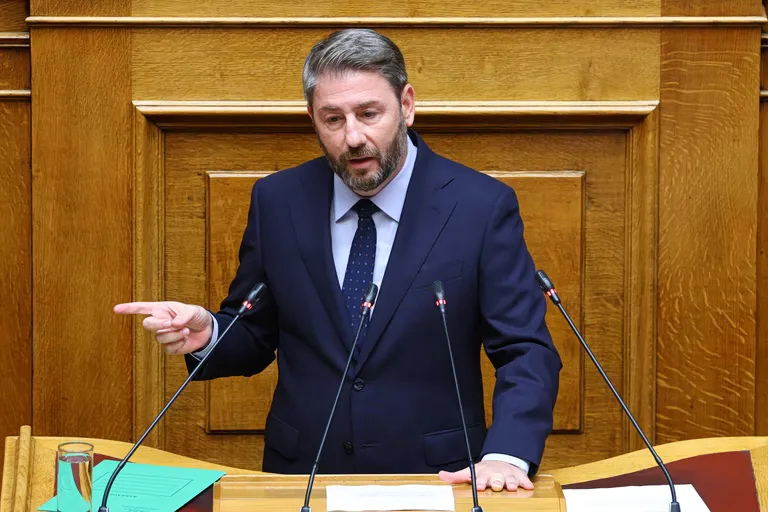
The political leadership of PASOK is seeking to maintain a sharp programmatic confrontation with the ruling New Democracy government over the management of household debt. Nikos Androulakis, the leader of the main opposition, is set to engage in a parliamentary debate focused on the implications of the government's current debt relief measures. The tension follows the recent controversy surrounding Article 23, a provision that the opposition claims was designed to benefit investment funds at the expense of debtors.
According to party sources, the confrontation is not merely about technicalities but represents a fundamental disagreement on how the state should protect its citizens from financial instability. The opposition argues that the government's approach to 'red loans'—non-performing loans held by individuals—is insufficient and fails to provide long-term security for vulnerable households.
What are the four key pillars of Androulakis's parliamentary intervention?
Nikos Androulakis has prepared a multi-faceted critique of the government's economic policies to be presented during the parliamentary session. His intervention is expected to focus on four specific areas of concern regarding the current legislative landscape.
The core arguments of the PASOK opposition
The opposition's strategy involves a systematic deconstruction of the government's recent legislative moves. The four primary areas of focus include:
- The critique of Article 23: Androulakis intends to attack the New Democracy government for its previous attempt to pass Article 23, which the opposition characterizes as a 'gift' to funds and servicers.
- The 120-installment plan: The PASOK leader will argue that the government's proposed regulation for the 120-installment repayment scheme is 'colossal' or inadequate in its scope and effectiveness.
- Debt restructuring alternatives: He will highlight the differences between the government's proposal and the specific bill submitted by PASOK regarding private debt management.
- Protection of the primary residence: A central theme of the intervention will be the urgent need for stronger legal protections to prevent citizens from losing their homes due to debt.
By addressing these points, Androulakis aims to present PASOK as a robust alternative government capable of offering a realistic and progressive plan for the lives of Greek citizens.
How does the PASOK amendment affect the extrajudicial mechanism?
The PASOK parliamentary group has submitted a new amendment that seeks to abolish the 'enforceability' of debt restructuring agreements within the existing extrajudicial mechanism. This move is a direct response to the government's decision to withdraw Article 23, which had previously granted similar enforceability to such agreements.
The amendment specifically targets the legislative consistency of the debt management framework. PASOK MPs argue that since the government withdrew the provision that allowed for direct enforceability in certain contexts, the existing rules within the extrajudicial mechanism must also be adjusted to ensure legal certainty and the substantive protection of debtors.
Technical details of the legislative amendment
The proposed change is highly specific in its legal application. The amendment aims to repeal paragraphs 3 and 4 of Article 27 of Law 4738/2020, as they were modified by Article 15 of Law 5313/2026. It is important to note that this proposal does not intend to undermine the prestige or validity of debt settlement agreements themselves. Instead, it focuses on removing the special legislative provision regarding the automatic enforceability of these restructuring contracts. The goal is to ensure that the rights of debtors are not bypassed through streamlined enforcement processes that favor creditors over individuals.
Why is the debate over 'red loans' so politically charged?
The debate is intensified by the perception that the government is prioritizing the interests of financial institutions and investment funds over those of individual borrowers. Following a period of social outcry, the government was forced to withdraw Article 23, a move that PASOK describes as a significant parliamentary victory for civil society.
Milena Apostolaki, the PASOK sectoral head, has criticized the government's claims that the disputed article did not disadvantage debtors, labeling such assertions as false. The political narrative has shifted from a technical discussion on debt to a broader debate on accountability and the 'law of silence' versus the 'law of accountability.' Androulakis has framed the issue as a choice between two different governance models: one that protects the vulnerable and another that serves the interests of funds and servicers.
FAQ: Frequently asked questions
What is the main issue behind the PASOK red loans debate?
The main issue involves how the Greek government manages private debt and 'red loans.' PASOK argues that current measures, such as the 120-installment plan, are insufficient and that previous attempts to pass legislation like Article 23 favored investment funds over the protection of debtors' primary residences.
What did the PASOK amendment propose regarding the extrajudicial mechanism?
The amendment proposes the removal of the 'enforceability' of debt restructuring agreements within the extrajudicial mechanism. This is intended to ensure legal consistency following the government's withdrawal of Article 23, thereby providing better substantive protection and legal certainty for individual debtors facing financial hardship.
Why was Article 23 controversial in the first place?
Article 23 was controversial because the opposition claimed it served as a 'gift' to funds and servicers. It was perceived as a mechanism that would allow these entities to more easily enforce debt settlements, potentially at the expense of the rights and stability of the borrowers.
How does PASOK view the government's 120-installment plan?
PASOK views the government's proposed regulation for the 120-installment repayment scheme as 'colossal' or inadequate. The party is proposing its own alternative legislative framework that places a stronger emphasis on the protection of the primary residence and more equitable debt restructuring.
What is the political goal of Nikos Androulakis in this debate?
Nikos Androulakis aims to strengthen the role of the official opposition by holding the government accountable. He seeks to demonstrate that PASOK has a realistic, progressive plan for citizens' lives, contrasting it with what he describes as a government policy that favors financial institutions.
Key takeaways
- PASOK has submitted a new amendment to the extrajudicial mechanism to remove the enforceability of debt restructuring agreements.
- The opposition is specifically targeting the 120-installment plan and the protection of primary residences for debtors.
- The controversy stems from the government's previous attempt to pass Article 23, which was withdrawn following social pressure.
- PASOK aims to present an alternative governance model focused on protecting citizens from predatory debt practices.
The evolving landscape of Greek debt management
The confrontation between PASOK and the New Democracy government marks a critical juncture in the Greek debate over private debt. While the government has attempted to mitigate criticism by withdrawing controversial provisions, the opposition continues to push for a more protective legal framework. The outcome of these parliamentary battles will likely determine the level of legal security afforded to debtors and the balance of power between financial servicers and individual households in the coming years. As the debate moves from the streets to the halls of Parliament, the focus remains on whether the legislative framework will prioritize economic stability for institutions or social protection for citizens.