
What defines the new PASOK social agenda?
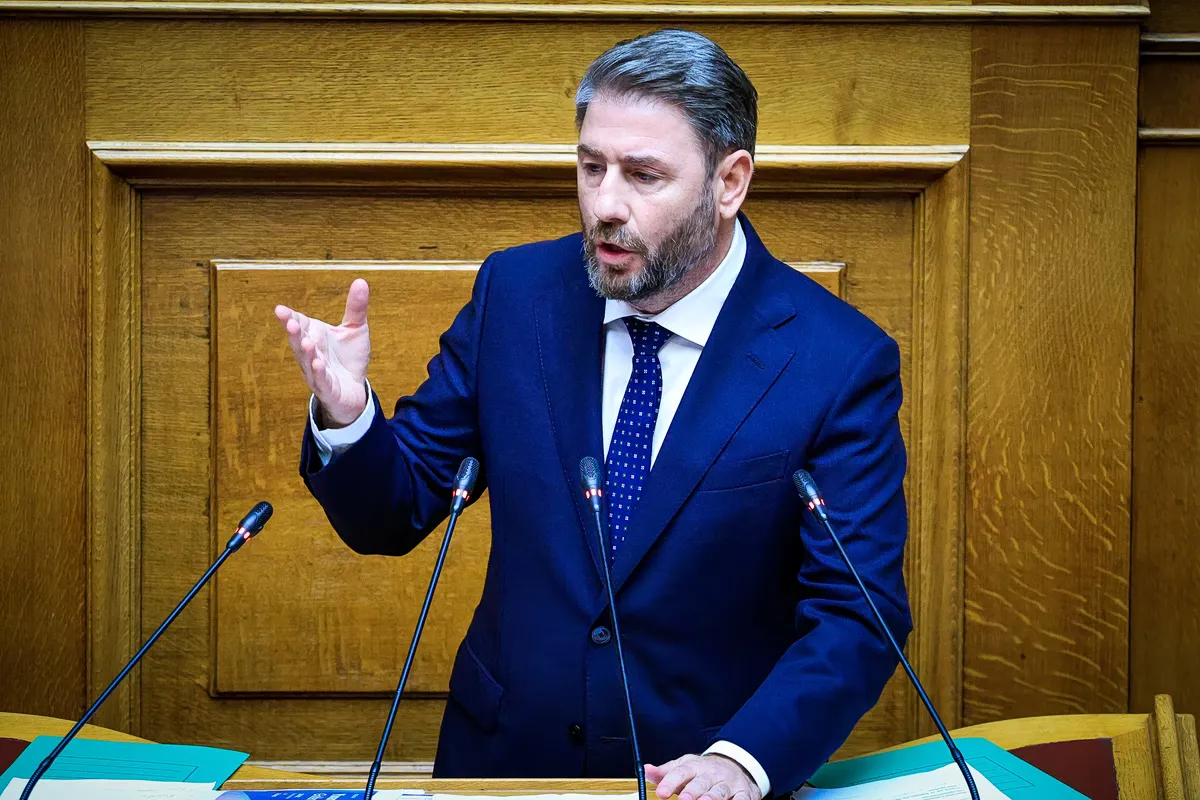
The PASOK social agenda is defined by a shift toward concrete legislative interventions designed to address the cost-of-living crisis and economic inequality. During recent parliamentary sessions, Nikos Androulakis emphasized that the party's focus has moved toward practical tools that the current government has avoided implementing. This strategy is built on three primary legislative pillars intended to provide direct relief to households and stabilize the housing market.
According to party sources, the goal is to demonstrate that PASOK possesses the necessary political tools to tackle the country's trajectory and economic future—tools that the governing party chooses to leave untouched. By focusing on these specific areas, the party aims to present itself as a proactive force capable of managing the complexities of the Greek economy through direct legislative action rather than mere rhetoric.
Core Legislative Priorities
The party has formally introduced two significant amendments: one concerning the Special Consumption Tax on fuels and another targeting the abolition of the Golden Visa program. While the fuel tax reform seeks to adopt a model similar to the Italian system to lower costs for consumers, the move against Golden Visas is aimed at tackling the housing crisis. By removing these investment-driven residency schemes, PASOK aims to create a new housing reserve specifically for the most vulnerable segments of the population.
These strategic choices are intended to address the immediate pressures facing Greek citizens. The fuel tax amendment, specifically by looking toward the 'Italian model,' seeks to provide a structural solution to energy costs. Simultaneously, the push to abolish the Golden Visa program serves as a direct response to the housing crisis, attempting to redirect the benefits of real estate investment toward domestic stability and the needs of those struggling to find affordable accommodation.
How does PASOK plan to address private debt?
PASOK plans to introduce a comprehensive bill next week to tackle private debt through a structured 120-installment repayment model. Unlike the government's recent measures, which Androulakis characterized as 'stopgap' or 'colobés' (insufficient), the PASOK proposal is designed as an integrated plan to protect debtors and enforce accountability on investment funds. The party's goal is to move beyond temporary fixes and provide long-term stability for those struggling with financial obligations.
The proposed legislation includes several critical components:
- A universal 120-installment plan applicable to all eligible debtors rather than a select few.
- Strict obligations for servicers to ensure transparency and fairness in the collection process.
- Robust protections for the primary residence of debtors to prevent homelessness.
- Increased scrutiny and measures against the perceived impunity of debt-buying funds.
Androulakis specifically noted that while government officials like Kyriakos Pierrakakis and Pavlos Marinakis previously dismissed the idea of a 120-installment plan, the administration is now rushing to institutionalize similar concepts. He argued that this shift is a direct result of the pressure exerted by PASOK's legislative proposals, effectively forcing the government to follow the opposition's lead.
Why did Androulakis target New Democracy's communication strategy?
Nikos Androulakis criticized the New Democracy government for using letters to European Union officials as a form of "communicative pyrotechnics" that fails to solve domestic issues. He argued that the frequent correspondence sent to Ursula von der Leyen regarding fuel prices and VAT does not address the root causes of inflation within Greece. Instead, he accused the government of "passing the ball to Brussels" to avoid taking responsibility for local economic management.
To illustrate this point, Androulakis used a cultural reference, citing Dimitra Galani's song "Your Blue Letters." He remarked that much like the song's lyrics, which speak of waiting for miracles that never arrive, the government's letters remain unanswered and ineffective. He concluded by stating that the legacy of such a strategy would be "sad" and "deplorable" for the Greek people, emphasizing the disconnect between diplomatic gestures and the daily reality of citizens.
How is PASOK positioning itself against other opposition parties?
PASOK is actively working to delegitimize any perceived cooperation between the ruling party and more radical opposition groups, such as Pleksi Eleftherias. By engaging in sharp rhetorical exchanges with figures like Zoi Konstantopoulou, Androulakis is signaling that PASOK remains a distinct, moderate force. He specifically defended the legacy of the party regarding legal precedents, such as the Special Court case involving Triantopoulos, to argue that serious opposition yields results while "showmanship" and "absurdity" do not.
This positioning is a calculated move to secure the centrist vote. By maintaining a clear distance from both the New Democracy government and the more populist elements of the opposition, PASOK seeks to present itself as the only viable alternative for voters who are dissatisfied with the current administration but wary of political extremism. An alliance or 'flirtation' with radical groups would, in the eyes of the party, alienate disillusioned centrist voters who are currently turning away from the government toward PASOK.
Key takeaways
- PASOK is prioritizing a social agenda focused on fuel tax reform and the abolition of Golden Visas.
- A new legislative proposal for private debt will offer 120 installments to protect primary residences and combat fund impunity.
- Nikos Androulakis criticized the government for relying on ineffective EU correspondence to address domestic inflation.
- The party is strategically distancing itself from radical opposition to capture disillusioned centrist voters.
Frequently asked questions
What is the purpose of the proposed Golden Visa abolition?
The abolition of the Golden Visa program is intended to combat the Greek housing crisis. PASOK argues that by ending these residency-by-investment schemes, the state can prioritize creating housing reserves for vulnerable citizens and reduce the upward pressure on property prices caused by foreign investment.
How does the PASOK debt plan differ from current government measures?
The PASOK plan proposes a more comprehensive 120-installment model designed for all eligible debtors, rather than limited groups. It also emphasizes stronger legal protections for primary residences and imposes stricter regulations on the investment funds that manage private debt to prevent predatory practices.
Why does PASOK criticize letters sent to the European Commission?
Androulakis argues that these letters serve as a political distraction rather than a solution. He contends that instead of seeking external validation or blaming Brussels for inflation and VAT issues, the government should implement domestic policies to resolve these economic challenges directly.
What is the "Italian model" mentioned in the fuel tax debate?
The "Italian model" refers to a specific method of calculating and applying consumption taxes on fuel. PASOK aims to adopt similar mechanisms to provide more predictable and potentially lower costs for consumers, aiming to alleviate the burden of high energy prices on Greek households.
How is PASOK differentiating itself from the Pleksi Eleftherias party?
PASOK is differentiating itself by focusing on "serious opposition" through legislative action rather than political spectacle. By criticizing the methods of leaders like Zoi Konstantopoulou, Androulakis aims to prove that PASOK is a stable, centrist alternative that avoids the perceived irrationality of more radical groups.
Conclusion
The strategic pivot toward a robust social agenda marks a significant chapter in PASOK's attempt to redefine its role in the Greek political landscape. By focusing on high-impact issues such as private debt, housing stability, and taxation, Nikos Androulakis is attempting to move the political conversation from abstract rhetoric to tangible economic relief. The success of this approach will depend on whether these legislative proposals can effectively resonate with a public increasingly concerned with the rising cost of living and the long-term stability of the Greek economy.







