
What are the specific PASOK legislative proposals being introduced?
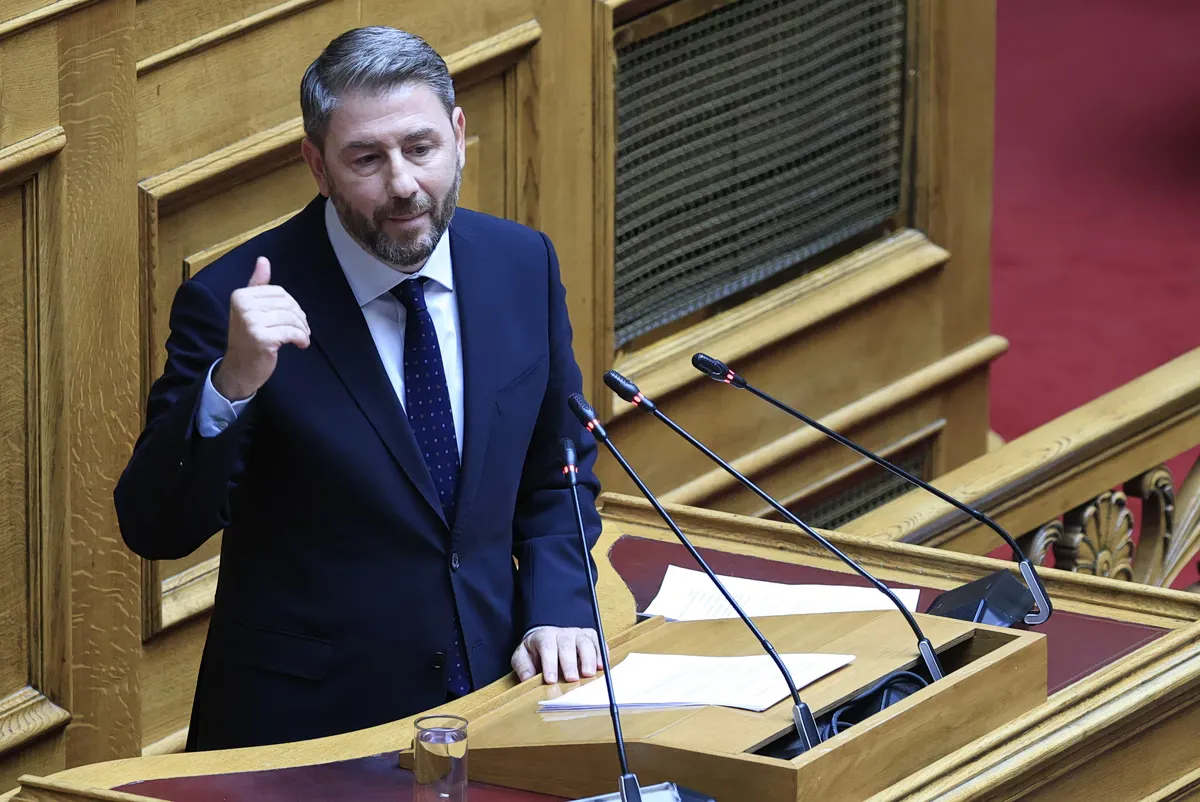
PASOK is launching a multi-pronged legislative offensive aimed at addressing energy costs, immigration-linked real estate trends, and household debt. The party leader, Nikos Androulakis, is presenting these measures as a direct alternative to the government's current economic management. The immediate focus involves two specific amendments regarding fuel taxes and residency permits, followed by a broader legislative package for private debtors.
The immediate legislative priorities
The first wave of interventions targets the Special Consumption Tax (SCT) on fuels and the controversial Golden Visa scheme. By addressing these, PASOK intends to present a ready-to-implement alternative program that contrasts with the New Democracy government's recent announcements. The party's strategy is to move from reactive criticism to proactive policymaking, offering concrete legal frameworks that citizens can evaluate against existing regulations.
How would the proposed fuel tax amendment work?
The proposed amendment for the Special Consumption Tax (SCT) on gasoline and diesel aims to create an automatic price adjustment mechanism based on international oil market fluctuations. This proposal is modeled after similar fiscal structures used in Italy to protect consumers from energy volatility. Under this mechanism, if international crude prices exceed the levels established in the country's official fiscal planning, the resulting excess VAT revenue would not be retained by the state.
Instead, these additional revenues would be returned directly to consumers. This would be achieved through a temporary reduction in the SCT, effectively lowering the price at the pump. The primary objective is to ensure that the state does not benefit from increased tax yields caused by energy crises, thereby providing relief to households without placing an additional burden on the national budget.
Why is PASOK calling for the abolition of the Golden Visa?
PASOK is proposing the complete abolition of permanent residency permits (Golden Visas) obtained through real estate purchases. The party argues for a redirection of investment incentives toward the broader national economy and genuine entrepreneurship. To replace the current real estate-centric model, the proposal introduces the 'Angel Visa,' which focuses on supporting business ventures and economic growth rather than property speculation.
Furthermore, the proposal introduces stricter conditions for third-country nationals who wish to renew their residency after the initial five-year period. According to the proposed law, these individuals would be required to choose between one of two options: either establishing their primary residence in the property (self-habitation) or committing to long-term rental agreements. This measure is designed to prevent the use of residency programs solely as investment vehicles that do not contribute to local community stability.
What is the planned reform for private debt and non-performing loans?
A comprehensive legislative proposal regarding private debt and 'red loans' is scheduled for submission to the Parliament next week. This follows intense political debate between PASOK and the Ministry of National Economy and Finance. PASOK representatives, including Kostas Tsoukalas, have criticized the government's current handling of debt, labeling recent ministerial decisions as mere 'patches' that fail to address the systemic issue of creditor aggressiveness.
The upcoming law aims to provide a more robust framework for debtors, positioning itself against the practices of debt-collection funds (servicers). While the government has highlighted the success of extrajudicial settlement mechanisms, PASOK argues that these measures are insufficient. The opposition's goal is to create a legal environment that protects borrowers from the perceived impunity of financial institutions and provides a sustainable path to debt resolution.
Comparing the political approaches to debt
The debate over debt management has become a central battlefield between the governing New Democracy party and the opposition. The government maintains that Greece's non-performing loan rates are improving and that existing mechanisms are producing impressive results. However, PASOK contends that the government's recent move to allow 120 installments for public debt payments is a reactive measure that ignores the struggles of private citizens facing aggressive debt collection.
What is the political context behind these moves?
The timing of these proposals is intended to create a 'programmatic confrontation' between the two major political forces in Greece. PASOK leadership views the government's recent economic announcements as an admission of failure, suggesting that the administration is being forced to adopt parts of the opposition's agenda. By presenting a finished, alternative program, PASOK seeks to capture the political momentum regarding cost-of-living issues.
Political analysts within the movement have characterized the government's recent actions as a sign of panic, suggesting that the Prime Minister is attempting to protect his 'economic success story' by implementing minor, superficial adjustments. In contrast, PASOK is positioning itself as the defender of the borrower and the consumer, aiming to turn the legislative session into a referendum on the government's economic efficacy.
Frequently asked questions
What is the 'Angel Visa' mentioned in the proposal?
The Angel Visa is a proposed alternative to the real estate-based Golden Visa. It is designed to encourage investment in entrepreneurship and the national economy rather than real estate. The goal is to attract investors who contribute directly to job creation and business innovation within Greece.
How will the fuel tax reduction affect the state budget?
The proposed mechanism is designed to be budget-neutral. It does not require additional state spending; instead, it redirects excess tax revenue generated by high oil prices back to the consumer. The reduction in SCT would be funded by the surplus VAT generated by the energy price increases.
What happens to Golden Visa holders after five years?
Under the new PASOK proposal, third-country nationals seeking to renew their residency after the initial five-year term would face new requirements. They would need to demonstrate either that they are living in the property as their primary residence or that they have entered into long-term rental agreements.
Why does PASOK criticize the current debt settlement mechanism?
PASOK argues that the current extrajudicial settlement mechanisms are insufficient to protect citizens from the 'impunity' of debt-collection funds. They believe the government's measures are 'patchwork' solutions that do not address the fundamental power imbalance between large financial servicers and individual debtors.
What is the main goal of the fuel tax amendment?
The primary objective is to protect households from the volatility of international energy markets. By implementing an automatic adjustment mechanism, the proposal ensures that consumers receive direct relief at the pump whenever global oil prices spike, preventing the state from profiting from energy inflation.
Key takeaways
- PASOK proposes an automatic fuel tax reduction mechanism based on international oil prices.
- The party seeks to abolish real estate-based Golden Visas in favor of the 'Angel Visa' for entrepreneurship.
- New residency renewal rules would require self-habitation or long-term rental for third-country nationals.
- A comprehensive legislative package for private debt and non-performing loans is due next week.
The shifting landscape of Greek economic policy
The legislative moves by PASOK represent a significant attempt to redefine the economic discourse in Greece. By targeting highly visible issues such as fuel costs, residency through property, and household debt, the opposition is attempting to move beyond traditional criticism into the realm of practical governance. Whether these proposals will gain traction in Parliament or force the government to adopt more radical measures remains to be seen, but the era of debating 'minor adjustments' is clearly giving way to a more profound confrontation over the country's social and economic direction.







