
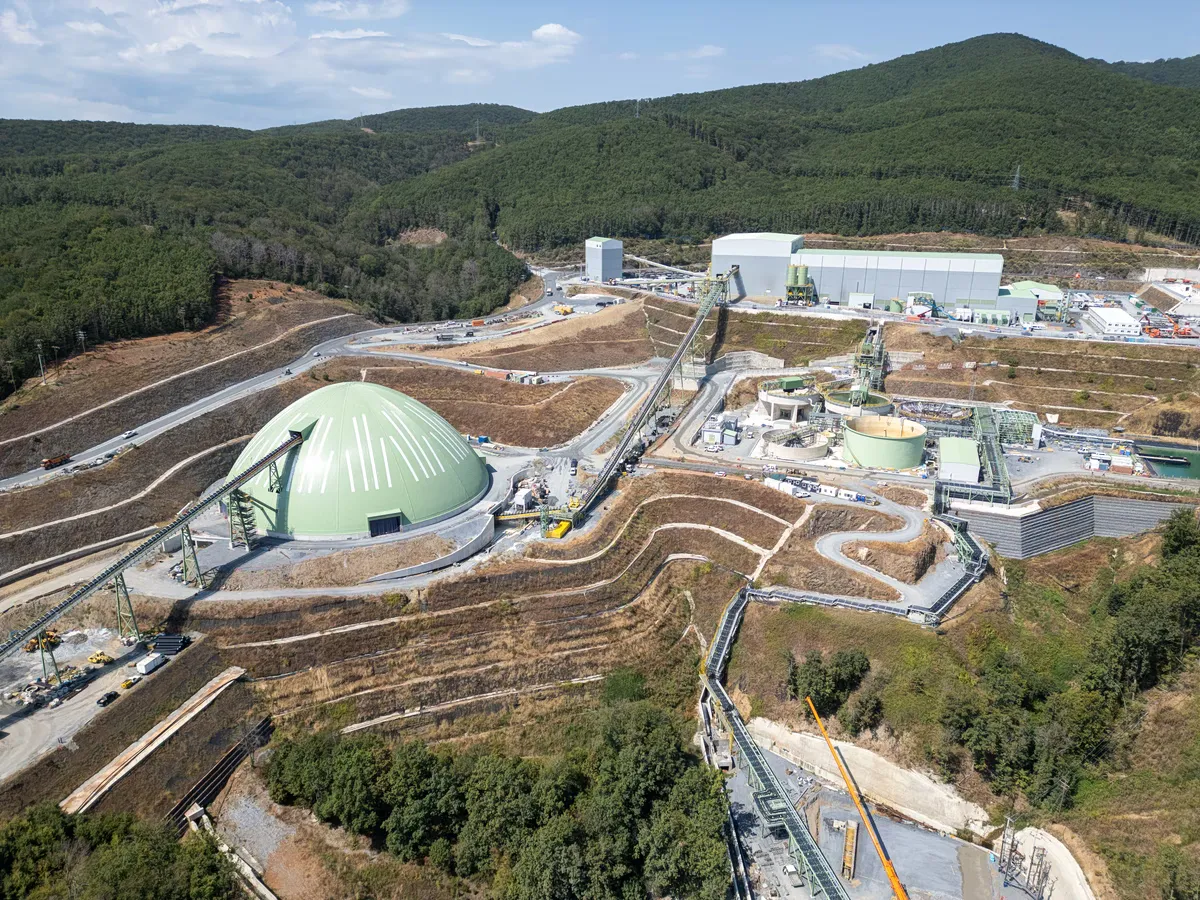
What is the economic scale of the Skouries mine investment?
The Skouries mine project is a cornerstone of Hellenic Gold's strategic expansion in Greece, representing a massive injection of capital into the regional and national economy. While the total investment in the Kassandra mines exceeds $3 billion, the Skouries site alone accounts for more than $2 billion of that figure. This investment is designed to create long-term value through diverse economic channels, ranging from local employment to international trade.
The financial footprint of the project extends far beyond the initial capital expenditure. According to the project's economic data, the investment facilitates €6.7 billion in Greek procurement and contributes to €17.5 billion in exports. Furthermore, the project provides a substantial boost to public revenues through mining fees, with €509 million specifically allocated to the Municipality of Aristoteles. This scale of investment positions Skouries as a vital driver of industrial growth in the region, connecting the production of critical raw materials with broad economic benefits.
Employment and wage structures
A critical component of the economic impact is the creation of high-quality jobs. Currently, the Skouries project employs more than 3,000 workers. A standout feature of this employment model is the wage level; the average salary is approximately €2,500. This figure is 67% higher than the average salary found in the Greek industrial sector, providing a significant boost to local purchasing power and standard of living. This high-wage environment is part of a broader strategy to provide quality employment that supports local communities.
Additionally, the workforce shows signs of modernizing social roles, with women making up 14.3% of the total personnel. This demographic composition, combined with the emphasis on high-skill roles, suggests a shift toward a more inclusive and professionalized industrial workforce in the region. The project's ability to maintain these wage levels and diversity metrics is central to its role as a driver of social and economic development.
How is digital technology transforming the Skouries mining operations?
The Skouries mine is engineered to function as a highly advanced, digital, and automated facility, setting a new benchmark for mining activities in Greece. Rather than relying on traditional manual processes, the site utilizes sophisticated automation, remote control systems, and real-time production monitoring. This digital-first approach ensures higher precision, increased safety, and optimized resource management throughout the extraction and processing cycles.
The technological framework at Skouries is not an isolated development but a continuation of expertise gained at other sites. The company has successfully transferred technical knowledge from the Olympiada project—where remote control and digital systems were implemented—to the Skouries operations. This continuity allows for a streamlined implementation of cutting-edge industrial solutions, turning the Skouries site into a new point of reference for technologically advanced mining in the country.
Upskilling and the future workforce
To support this high-tech environment, Hellenic Gold has placed a heavy emphasis on human capital development through reskilling and upskilling initiatives. The company utilizes modern educational infrastructures, including simulators and the application of virtual and augmented reality (VR/AR) to train staff. These tools allow workers to master complex machinery in a controlled, digital environment before entering the field, ensuring they are prepared for the specific demands of a modern mine.
A notable example of this commitment is the recent collaboration with DYPA (the Greek Public Employment Service) to train a new generation of heavy machinery operators. This partnership ensures that the local workforce is not left behind by technological advancement but is instead equipped with the necessary skills to thrive in a 21st-century industrial landscape. By investing in education, the company is creating human capital with a value that extends beyond the operational life of the mine itself.
What environmental management strategies are being implemented?
Environmental responsibility is integrated into the core design of the Skouries project through advanced waste management and land preservation technologies. One of the most significant innovations is the use of dry stacking technology for filtered mining tailings. This method allows for the removal of up to 90% of the water from the tailings, facilitating high rates of water recycling and reuse within the production process. This reduction in water usage is a key component of the project's resource efficiency strategy.
This technological choice has a direct positive impact on the project's physical footprint. By utilizing dry stacking, the company has achieved a nearly 40% reduction in its environmental footprint compared to the original design, primarily due to the amount of land saved that would otherwise have been required for traditional tailings storage. To ensure these standards are met, the project incorporates a comprehensive monitoring system featuring more than 700 control points to provide continuous oversight of environmental parameters.
Land reclamation and waste utilization
Beyond mere containment, the project focuses on active land restoration. The management strategy includes the utilization of certain tailings to fill underground stopes and the entirety of the open-pit mine. This approach not only manages waste more effectively but also contributes to the long-term rehabilitation of the landscape. By integrating waste back into the mine structure, the project aims to ensure that the site can be returned to a stable and rehabilitated state following the conclusion of its approximately 20-year operational horizon.
How does the project benefit local communities?
The impact of the Skouries mine extends into the social fabric of the surrounding areas through a dedicated social investment program. Hellenic Gold has committed $80 million to social investments over a twenty-year horizon. These funds are directed toward several key pillars of community development, including healthcare, education, local infrastructure, and environmental protection.
By focusing on these areas, the investment aims to create a multiplier effect where industrial success translates into improved social services and local prosperity. This long-term commitment is intended to foster a sustainable relationship between the mining operations and the local population, ensuring that the benefits of the mineral extraction are shared broadly across the community and contribute to long-term local development.
Key takeaways
- The Skouries project represents a specific investment of over $2 billion within the larger Kassandra mines.
- The workforce exceeds 3,000 employees, with average salaries 67% higher than the Greek industrial average.
- Advanced dry stacking technology reduces the environmental footprint by approximately 40%.
- The project supports €17.5 billion in exports and €6.7 billion in Greek procurement.
- A $80 million social investment plan is scheduled over a 20-year period.
FAQ: Skouries mine investment
When will the Skouries mine officially begin production?
The Skouries mining project is scheduled for its official inauguration on October 8, 2026. This event marks the transition from the construction phase to the active production phase, with the presence of national political leadership expected to attend the ceremony.
What makes the Skouries mine technologically advanced?
The mine is designed as a digital and automated facility. It utilizes remote-control technologies, real-time production monitoring, and advanced automation systems. These technologies are supported by training tools such as virtual and augmented reality simulators for the workforce.
How does the mine manage water usage?
The mine uses dry stacking technology for mining tailings, which enables the removal of up to 90% of water from the waste. This water is then recycled and reused within the production process, significantly enhancing resource efficiency and reducing water consumption.
What is the social impact on the local municipality?
The project provides significant financial benefits to the local area, including €509 million in mining fees directed to the Municipality of Aristoteles. Additionally, a $80 million social investment program supports local health, education, and infrastructure over 20 years.
How many people does the project employ?
Currently, the Skouries project employs more than 3,000 people. The project also maintains a focus on diversity, with women representing 14.3% of the total workforce, and offers salaries that are significantly higher than the national industrial average.
Conclusion
The Skouries mine investment is far more than a localized industrial project; it is a strategic asset for the Greek economy. By combining massive capital injection with cutting-edge digital automation and rigorous environmental standards, Hellenic Gold is establishing a modern industrial model. The project's ability to generate high-wage employment, drive significant exports, and support local communities through substantial social and municipal contributions ensures its role as a vital economic pillar. As the project moves into its production phase this October, it sets a precedent for how large-scale mining can integrate technological innovation with long-term social and environmental responsibility.







