
What is the premise of The Delivery Edition?
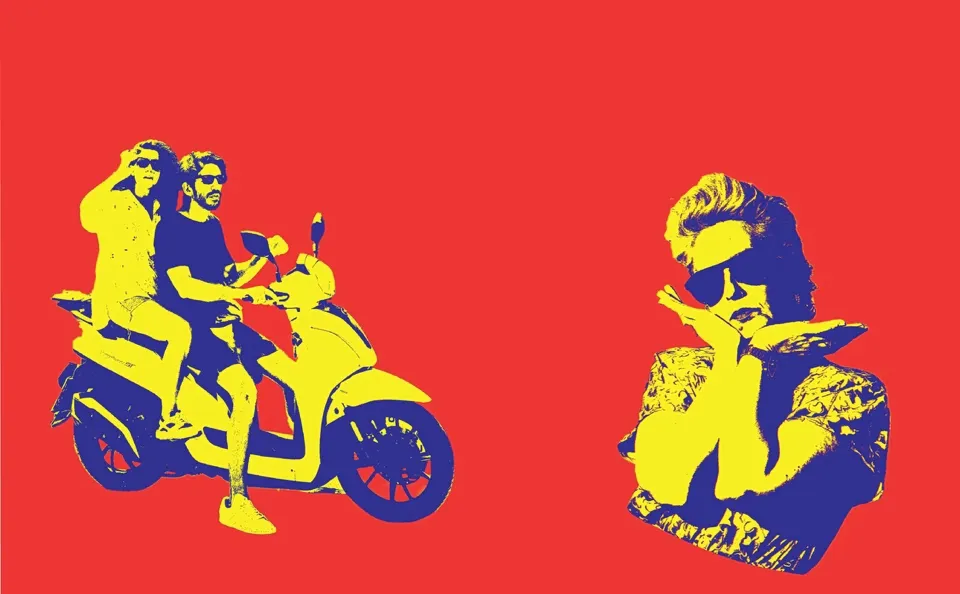
The Delivery Edition is a contemporary comedy centered on the lives of four women—Maria, Myrto, Evdoxia, and Ioanna—and one man, Romanos. While the characters are described as exhausted, they maintain a sense of optimism that drives the narrative forward. The play functions as a survival game, portraying the characters as they attempt to manifest their desires and reach basic agreements amidst the chaos of the modern world.
Rather than relying on traditional theatrical tropes, the Douth group uses the characters' interactions to reflect the frantic pace of current life. The setting is not just a stage but a microcosm of modern social dynamics, where the characters grapple with the tension between individual neuroses and the collective need for companionship. The play seeks to answer fundamental questions regarding what it means to grow up, the nature of modern anxiety, and the perceived lack of dead ends within the capitalist structure.
A Modern Reimagining of a Classic
The production explicitly distances itself from the original work it references. While 'Me Dynami apo tin Kifisia' serves as a spiritual foundation, the Douth team has chosen to rewrite the concept from scratch for the present day. There is no attempt at museum-like preservation or sentimental longing for the past. Instead, the team focuses on the 'now'—the immediate, often absurd, reality of living in a society dominated by instant gratification and digital connectivity.
How does the play explore late capitalism?
The play uses the concept of 'delivery' as a central metaphor for the consumption-driven lifestyle of the 21st century. In this production, the characters are constantly consuming—not just food or products, but time, neuroses, and psychological revelations. This cycle of consumption is presented as a defining characteristic of surviving within late capitalism, where the boundaries between personal identity and consumer habits become increasingly blurred.
The narrative suggests that in a world of endless deliveries, the characters are caught in a chain of consumption and concessions. The play examines how the obsession with the 'next'—the next delivery, the next impulse, the next distraction—affects human connection. By placing these characters in a state of 'small immobility,' the production highlights the paradox of modern existence: being constantly stimulated by new arrivals while remaining stuck in repetitive psychological patterns.
What makes the theatrical experience unique?
The Delivery Edition introduces a non-traditional approach to audience engagement by maintaining an open bar throughout the 140-minute performance. This allows for a fluid experience where spectators can enter, leave, or return to their seats as they please. This flexibility is designed to mirror the very themes of the play, breaking the 'fourth wall' not through dialogue, but through the physical reality of the performance space.
The inclusion of food and drink is not merely a convenience but a thematic extension of the play's focus on consumption. Audiences are even encouraged to order their own deliveries during the show, blurring the line between the fictional world of the characters and the lived experience of the spectators. This immersive element reinforces the idea that the themes of the play are not distant observations but immediate, tangible realities.
The Role of the Open Bar and Audience Agency
By allowing the bar to remain open and permitting movement, the production challenges the traditional, passive role of the theatre-goer. This format supports the play's exploration of 'the present moment.' Just as the characters in the play are navigating their own immediate needs and impulses, the audience is given the agency to manage their own experience, creating a shared atmosphere of casual, contemporary social interaction.
What is the director's vision for the production?
The director views comedy as a vital form of 'oxygen' in a world that often feels suffocating. Drawing on the etymology of Kifisia—which the director links to the idea of 'where the wind blows'—the production aims to provide a space for existential meaning-making. For the creative team, comedy serves as a tool for psychological resilience and a means to renew the 'vows of friendship' that sustain individuals in uncertain times.
The director emphasizes that the characters are not attempting to save one another in a heroic sense. Instead, they return to each other out of a habit of companionship, which is presented as being more resilient than the pursuit of individual happiness. The play concludes without providing easy answers or tidy resolutions, much like a film that ends without explaining the final movements of its protagonists. This ambiguity is intentional, reflecting the unresolved nature of life in the current era.
How does the play address modern social connections?
The production posits that true strength is found in the ability to endure the 'absolute present' alongside others. Through a mix of philosophical analysis, pop culture references, and even Latin dance, the characters attempt to find common ground. The play suggests that the 'veto' found in deep friendships—the ability to sit with someone and simply listen or repeat the same truths—is a crucial mechanism for survival.
Ultimately, the play explores whether human connection can withstand the pressures of a consumerist society that prioritizes the individual. By focusing on the 'tragi-comic agony' of trying to find meaning, the Douth group highlights the importance of social solidarity. The characters' ability to remain 'standing' is not due to their success in the capitalist race, but due to their willingness to remain present for one another, even in the midst of exhaustion.
Frequently asked questions
When does the play premiere and where can it be seen?
The Delivery Edition is scheduled to begin its run on October 12, 2026. The performances will take place at Theatre 104, located in the Syntagma area. The production is an improvised comedy created by the Douth theatre group.
How long is the performance?
The total duration of the play is 140 minutes. During this time, the theatre maintains an open bar, allowing the audience to consume drinks and move in and out of the performance space as they wish.
What is the central theme of the play?
The central theme is the survival of friendship and human connection within the context of late capitalism. It explores how modern consumption, anxiety, and the constant need for 'deliveries' impact the way people relate to one another.
Is the play a remake of an older work?
Yes, it is inspired by the classic work 'Me Dynami apo tin Kifisia.' However, it is not a nostalgic remake; it is a complete reimagining that focuses on contemporary life, modern neuroses, and current social realities.
What kind of atmosphere should audiences expect?
Audiences can expect a mix of comedy, philosophical discussion, and social commentary. The atmosphere is designed to be fluid and immersive, reflecting the characters' experiences with consumption and the informal nature of modern social gatherings.
Key takeaways
- The Delivery Edition premieres on October 12, 2026, at Theatre 104 in Syntagma.
- The play is an improvised comedy by the Douth group inspired by 'Me Dynami apo tin Kifisia.'
- It explores themes of late capitalism, consumption, and the resilience of friendship.
- The 140-minute performance features an open bar and allows for audience movement.
Conclusion
The Delivery Edition offers a provocative look at the intersection of personal identity and systemic economic structures. By moving away from traditional theatrical boundaries and embracing an immersive, consumption-themed format, the Douth group creates a space that mirrors the chaotic reality of the 21st century. The play does not offer a roadmap for escaping late capitalism, but rather suggests that the most effective way to navigate its uncertainties is through the enduring, albeit imperfect, habit of companionship. It is a work that finds profound meaning in the small, everyday acts of staying present for one another.







