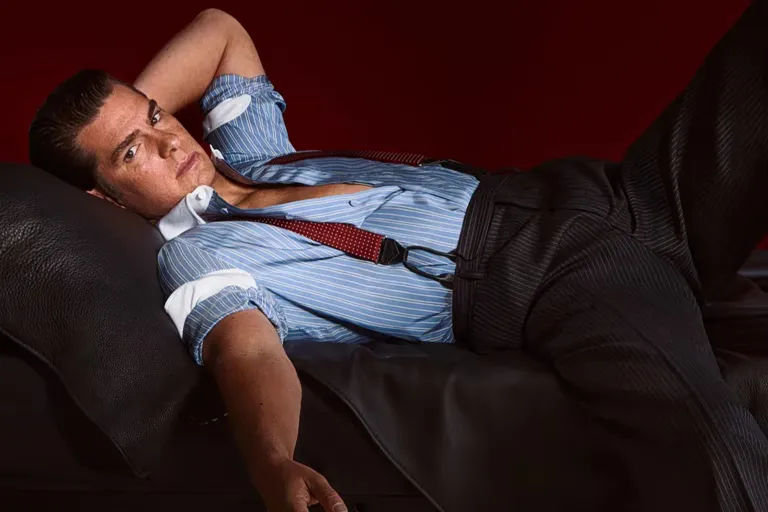
How has Andrew Garfield dealt with professional burnout?
Andrew Garfield has faced significant physical and mental exhaustion following a period of intense professional activity. The actor completed three distinct, high-demand projects in consecutive succession: the historical drama 'The Uprising', the miniseries 'Wild Things: Siegfried & Roy', and the upcoming film 'Artificial'. This workload led to a period of what he described as minor burnout.
Reflecting on his time in Berlin, Garfield noted that his lack of sleep was not a romanticized experience but a difficult struggle. He suggested that he simply needed to let the period pass rather than trying to force a recovery. This exhaustion highlights the high stakes and demanding nature of modern high-level acting, where the transition between vastly different roles requires immense emotional and cognitive shifts.
The toll of consecutive filming schedules
The transition from portraying historical figures to modern tech moguls requires a level of immersion that can deplete an actor's mental reserves. Garfield's experience serves as a case study in the hidden costs of professional momentum in the entertainment industry.
What is the significance of portraying Sam Altman in 'Artificial'?
In Luca Guadagnino's film 'Artificial', Garfield takes on the role of Sam Altman, the leader of OpenAI, navigating the internal politics and the sudden leadership crisis that defined the company's recent history. To prepare for the role, Garfield engaged in extensive observation of Altman's physical mannerisms and public presence.
Garfield noted a specific evolution in Altman's persona. He observed that while Altman initially appeared more free in his movements, he gradually transitioned into a more homogenized version of a tech CEO as his power increased. Garfield described Altman's sitting posture as resembling a young boy, suggesting a blend of intimacy and a subtle, quiet dominance over his environment. The film aims to map the rise of OpenAI and the complexities of the power struggles within the artificial intelligence sector.
Why does Garfield criticize the modern technological elite?
Garfield has expressed profound skepticism regarding the mindset of the world's most powerful technology leaders. He specifically targeted the "adolescent impulse" he perceives within the tech elite—a drive to win at any cost and a refusal to acknowledge vulnerability or humility as strengths.
One of his most pointed critiques concerns the relationship these leaders have with mortality and their own creations. He described the belief held by some powerful figures that they are essentially immortal as "naïve and cowardly." Furthermore, he pointed out a perceived hypocrisy: many tech CEOs are reportedly strictly against using the very technologies they develop within their own homes, a fact he described as "objectively dark" given their awareness of the potential consequences of these tools.
Despite these criticisms, Garfield admitted to a sense of hesitation. He expressed doubt about whether his artistic critiques would actually impact individuals of such immense wealth and influence, wondering if they are simply "too big to fail." He noted the strange phenomenon of online "armies" that emerge to defend these billionaires, often using bots or intense social media defense to shield them from scrutiny.
How does the actor view the current state of global culture?
Garfield perceives the contemporary world as being in a state of cultural collapse or profound transformation. He described a sense of living in a culture that has lost its center, making it increasingly difficult for individuals to find their own grounding amidst the chaos.
However, his view is not entirely pessimistic. He suggested that as old structures collapse, they provide the necessary environment for new ideas to grow, stating that "as something collapses, the seeds for a future that will be reassembled begin to be planted." He feels a professional responsibility to remain authentic and truthful, driven by a desire to speak to the younger generation of fans who look to public figures for genuine expression.
What role does vulnerability play in Garfield's career?
Throughout his career, Garfield has been noted for his emotional transparency, a trait that has helped him navigate the transition from teen stardom to serious dramatic acting. He has frequently spoken about personal loss and the importance of maintaining mental equilibrium.
His massive rise to fame following his role in 'Spider-Man' necessitated a protective approach to his psyche. By embracing vulnerability rather than hiding behind a mask of celebrity invincibility, Garfield has attempted to maintain a sense of humanity in an industry that often demands a polished, impenetrable persona. He views the ability to remain vulnerable as a vital counterweight to the perceived arrogance of the modern era.
FAQ: Andrew Garfield and his recent reflections
What film is Andrew Garfield starring in that features Sam Altman?
Andrew Garfield stars in the film 'Artificial', directed by Luca Guadagnino. In this production, he portrays Sam Altman, the CEO of OpenAI, exploring the internal power dynamics and the leadership challenges faced by the AI company during its formative years.
Has Andrew Garfield experienced burnout recently?
Yes, Garfield admitted to experiencing a period of exhaustion following the completion of three major projects in a single year. This included 'The Uprising', 'Wild Things: Siegfried & Roy', and 'Artificial', which took a significant toll on his physical and mental well-being.
What is Garfield's opinion on tech CEOs?
Garfield is highly critical of the tech elite, describing their pursuit of victory at all costs as an "adolescent impulse." He also criticized their perceived hypocrisy regarding the use of the technologies they create and their apparent dismissal of human vulnerability.
How does Garfield describe the current cultural climate?
He describes the current culture as being in a state of collapse where a central sense of direction is missing. However, he views this collapse as a transformative process that allows for the eventual emergence of new societal structures.
Why did Garfield study Sam Altman's movements?
Garfield studied Altman's body language to provide an authentic portrayal in 'Artificial'. He observed how Altman's physical presence evolved from a more free-moving individual into a more standardized and controlled version of a tech executive as his influence grew.
Key takeaways
- Andrew Garfield experienced burnout after completing three major film and series projects in rapid succession.
- In the film 'Artificial', Garfield portrays OpenAI CEO Sam Altman, focusing on his evolving physical mannerisms.
- The actor criticized the tech elite for an perceived lack of humility and a refusal to acknowledge vulnerability.
- Garfield views the current cultural instability as a period of transition that will lead to new social reassemblies.
Synthesis and Perspective
Andrew Garfield's recent reflections provide a striking intersection between celebrity experience and broader societal critique. By linking his personal struggle with burnout to the systemic issues he observes in the tech industry, he moves beyond simple interview tropes to offer a meditation on power and authenticity. His portrayal of Sam Altman appears to be more than a performance; it is an attempt to hold a mirror to the perceived arrogance of the digital age. Ultimately, Garfield suggests that while the current cultural landscape feels fragmented, the collapse of old certainties may be the necessary precursor to a more grounded and human-centric future.