What major honors is Angelos Papadimitriou receiving?
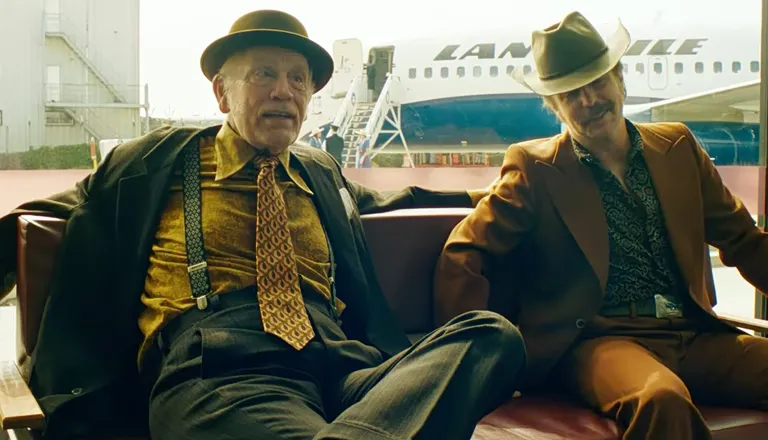
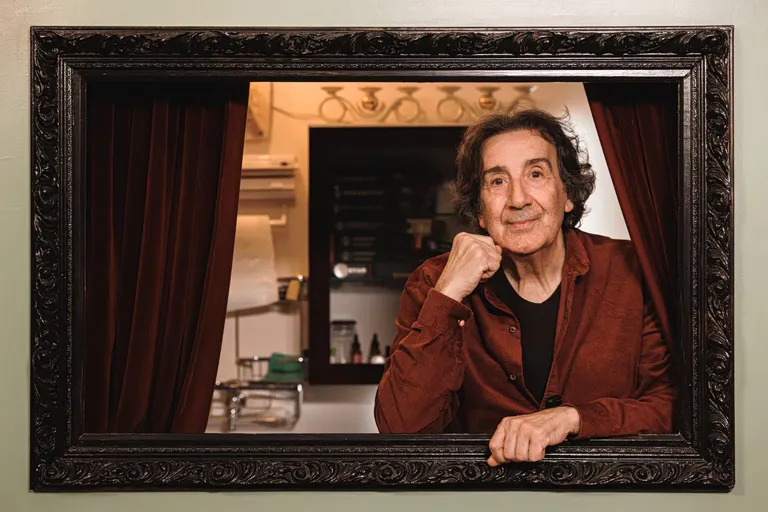
Angelos Papadimitriou will be formally recognized by the Thessaloniki Film Festival with the Golden Alexander award. This ceremony is scheduled to coincide with the premiere of the film 'Angelos sta Perix' by director Freddy Bienellis, taking place on November 15 at the John Cassavetes Hall in the Port Warehouse. This cinematic tribute is part of a broader period of institutional recognition for the artist.
In addition to his cinematic honors, Papadimitriou is set to be inaugurated as an honorary doctor of the Higher School of Fine Arts in Ioannina. While such accolades are significant, the artist has expressed a complex relationship with formal recognition. He noted that awards can sometimes create a sense of distance between an artist and the public, stating that he prefers to remain close to people rather than being defined solely by titles like 'award-winning director' or 'award-winning actor.'
The tension between accolades and human connection
For Papadimitriou, the true essence of artistry lies in the atmosphere created for the audience rather than the trophies collected. He views awards as secondary to the lasting impact an artist leaves on the human experience. His philosophy suggests that the ultimate goal of creation is to foster a connection that persists in the memories of those who experience the work.
How is his performance in 'Jenny-Jenny' shaping his current career?
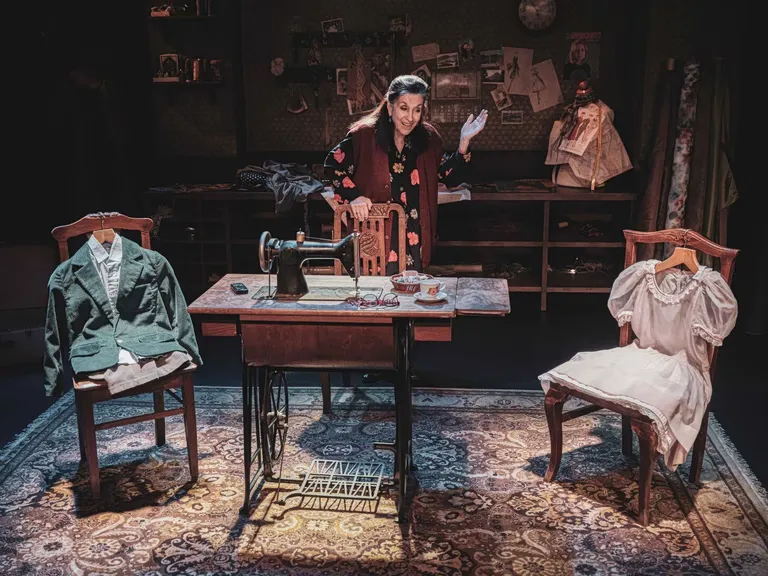
Papadimitriou is currently delivering a powerful performance as Matina Skoutari in Nikos Karathanou's theatrical production 'Jenny-Jenny' at the Piraeus Municipal Theatre. The role involves a deep psychological exploration of a character that defies simple categorization. Despite being a 75-year-old man, Papadimitriou finds a profound resonance in portraying the complexities of an older woman's inner life.
The character of Matina Skoutari is described by the actor as a person with a vast internal world, filled with hidden loves, sorrows, and a quiet intensity. He highlights the importance of capturing the "flow of things" that defines the character. Recently, the production has uncovered a new dimension of the role: a sudden, assertive anger that demands recognition. This explosion of passion adds a layer of tension that makes the theatrical experience feel alive and "magical" to the performers involved.
What role did his childhood and upbringing play in his artistic identity?
A childhood characterized by perceived stability and abundance provided the foundation for Papadimitriou's later creative pursuits. Growing up in a large house in Kiato, he recalls a period of life that felt like a "great vat of honey," where even when searching for negative memories for psychological exploration, he struggled to find any significant hardship. This sense of security allowed him to view the world through a poetic and almost dreamlike lens.
However, this period of innocence was not without its shifts. The family's relocation to Stylida following the collapse of his father's raisin production factory marked a transition, though Papadimitriou notes that children often remain insulated from the economic realities of their parents. He reflects on a time before the starker divisions of wealth and poverty became apparent, describing a communal way of living where the boundaries between different households were fluid and welcoming.
The transition from childhood innocence to artistic awareness
The shift from a protected childhood to an adult consciousness was marked by a specific moment of metaphysical realization. At the age of sixteen, while in a state between sleep and wakefulness near a small church, Papadimitriou experienced what he describes as a vision of his future. He felt a sudden, rhythmic change in his perception of the world, realizing that he was destined for a creative path. This moment acted as a liberation, setting the stage for his multifaceted career in the arts.
How does Papadimitriou view the concept of friendship and social connection?
Papadimitriou maintains a philosophy that balances intense social engagement with a deep appreciation for solitude. He describes himself as a highly social individual who nonetheless "blooms in loneliness." This duality is central to his personality, which he defines through a rejection of rigid molds or restrictive group identities. He values authenticity and avoids what he perceives as the "fearful" nature of closed-off individuals.
One of his most striking assertions is that being a friend is not merely a social status but a professional commitment. This view underscores his dedication to human relationships and his desire to create meaningful connections. This commitment to people is reflected in his approach to both his personal life and his artistic work, where the goal is to create an environment that resonates deeply with the human condition.
Frequently asked questions
What is the significance of the Golden Alexander for Papadimitriou?
The Golden Alexander is a prestigious honor awarded by the Thessaloniki Film Festival. For Papadimitriou, it recognizes his immense contributions to cinema, specifically coinciding with the premiere of Freddy Bienellis's 'Angelos sta Perix'. It serves as a high-level institutional validation of his lifelong artistic work.
Why is he playing a female role in 'Jenny-Jenny'?
Papadimitriou portrays Matina Skoutari to explore the profound internal complexities of an older woman. He finds that age does not create a barrier to empathy, allowing him to tap into the character's hidden passions, sorrows, and the intense psychological reality that defines her life.
How does he feel about receiving an honorary doctorate?
While honored, Papadimitriou expresses a degree of hesitation regarding formal titles. He fears that such distinctions can create a distance between the artist and the public. His preference is to remain grounded and connected to people through the shared experience of art.
What influenced his decision to become an artist?
A profound, almost metaphysical experience at age sixteen served as a turning point. He describes a moment of clarity where he felt a "rhythm of the world" change, signaling a destiny toward creative expression and a sense of liberation from his previous life.
How does he describe his childhood environment?
He describes his childhood as a period of immense happiness and perceived abundance, comparing it to a "vat of honey." This stable and protective environment allowed him to develop a poetic worldview, even as his family faced economic transitions later on.
Key takeaways
- Papadimitriou will receive the Golden Alexander at the Thessaloniki Film Festival this November.
- He is being named an honorary doctor of the Higher School of Fine Arts in Ioannina.
- His current theatrical role in 'Jenny-Jenny' explores deep psychological complexity.
- He views artistic success through the lens of human connection rather than awards.
- A childhood of perceived stability shaped his dreamlike and poetic artistic perspective.
The intersection of memory and creation
The life of Angelos Papadimitriou is a testament to the power of integrating personal history with artistic exploration. From the protected innocence of his youth in Kiato to the sudden, transformative realization of his creative calling, every stage of his journey has contributed to a singular, unclassifiable identity. His ability to navigate between the roles of actor, singer, and author—while maintaining a profound connection to the human experience—ensures that his legacy will be measured not by the awards he receives, but by the lasting emotional resonance of his work.