The essence of the Arkas cartoon gastronomy sketch
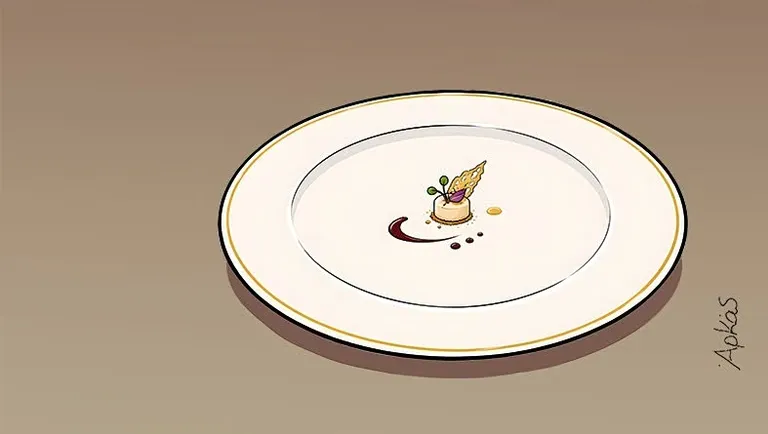
The latest work by the celebrated cartoonist Arkas focuses on the perceived absurdity within the high-end culinary sector. In this specific sketch, released on Sunday, November 8, 2026, the artist utilizes visual irony to critique modern plating techniques. The imagery depicts an expansive plate, which serves as a dramatic stage for a nearly microscopic portion of food. This central visual element is meticulously decorated, emphasizing the aesthetic labor involved in contemporary food presentation.
Accompanying the drawing is a biting caption: "Fine dining: The larger the description, the smaller the portion." This phrase encapsulates the core of the satire, targeting the disconnect between linguistic grandiosity and physical reality. Through this medium, Arkas captures a sentiment often shared by diners who find themselves paying premium prices for minimal sustenance. The sketch relies on the contrast between the vast empty space of the ceramic plate and the tiny, intricate morsel at its center to drive the comedic point home.
Satirizing the culture of high-end dining
Fine dining has increasingly become a performative art form, where the narrative surrounding a dish is often as important as the ingredients themselves. Arkas targets this specific phenomenon, where elaborate descriptions are used to justify both high prices and small serving sizes. This trend often involves complex terminology and storytelling regarding the origin or preparation of a single ingredient.
The satire extends beyond mere food volume; it critiques the psychological aspect of luxury consumption. When a restaurant provides a lengthy, poetic description of a dish, it sets a high expectation in the mind of the consumer. When that expectation is met with a minuscule portion, the resulting cognitive dissonance provides the perfect material for social commentary. Arkas uses his characteristic humor to bridge the gap between the elite culinary world and the everyday observer, making the critique accessible to a wide audience.
The role of satire in cultural commentary
Cartoonists like Arkas play a vital role in society by translating complex or subtle cultural shifts into digestible, humorous snapshots. By focusing on gastronomy, the artist touches upon a universal human experience: the act of eating and the social status associated with it. The satire of fine dining is not just about hunger, but about the perceived pretension of modern lifestyle trends.
In a broader sense, this type of social commentary helps to demystify industries that rely on exclusivity and mystery. By laughing at the "microscopic portion," the public reasserts a sense of common sense against the rising tide of culinary abstraction. Arkas continues to demonstrate why his work remains relevant, as he identifies the points where modern trends veer into the realm of the ridiculous.
Frequently Asked Questions
What is the main theme of the new Arkas sketch?
The main theme is the satire of fine dining, specifically the trend where extremely long and elaborate menu descriptions are paired with very small food portions. The cartoon highlights the irony of paying for presentation over actual substance in high-end restaurants.
Who is the artist Arkas?
Arkas is a well-known and celebrated cartoonist recognized for his ability to provide humorous social commentary. His work often focuses on daily life, human behavior, and cultural trends, making his satirical sketches widely recognized and appreciated across various demographics.
Why is fine dining a common subject for satire?
Fine dining is a frequent target for satire because of the inherent tension between luxury and excess. The industry's emphasis on elaborate storytelling, intricate plating, and high prices creates a perfect environment for humor regarding pretension and the perceived lack of value.