
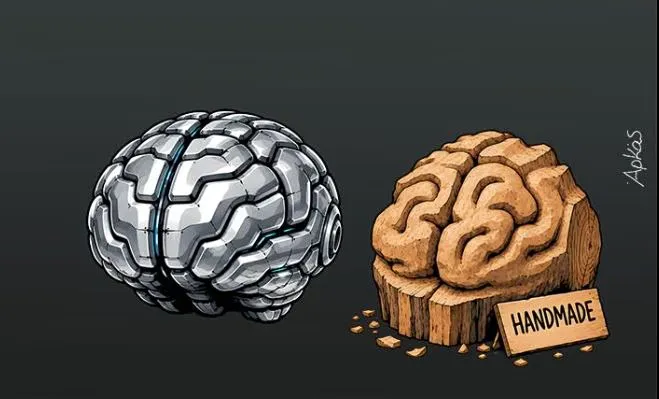
The intersection of automation and human fallibility
The latest social commentary from the Arkas cartoon suggests a profound shift in how we perceive intelligence and error. As machines continue to evolve, the distinction between computational perfection and human unpredictability becomes more pronounced. The core of this observation lies in the paradox of progress: as technology achieves higher levels of accuracy, the flaws that define humanity may actually become more sought after.
According to the Arkas sketch published on September 30, 2026, the increasing sophistication of machines serves to highlight a counter-trend in human value. The commentary posits that as machines become smarter, the inherent 'stupidity' or unpredictability of humans gains a different kind of social currency. This is not necessarily a critique of human intellect, but rather an observation on the scarcity of non-algorithmic behavior.
The allure of the authentic and the handmade
A central theme in the Arkas commentary is the concept of authenticity in an automated world. The artist draws a parallel between human imperfection and the charm of artisanal goods. In a marketplace flooded with mass-produced, perfect items, there is a growing premium placed on things that bear the marks of their creator.
The 'Handmade' metaphor in social interaction
Just as consumers seek out handmade products for their unique textures and minor irregularities, the Arkas sketch suggests that human interactions may undergo a similar valuation. The 'authentic' quality mentioned in the commentary refers to the spontaneous, unscripted, and sometimes irrational nature of human thought. This stands in direct opposition to the predictable, optimized outputs of advanced machine intelligence.
Societal implications of increasing machine intelligence
The rise of intelligent machines forces a re-evaluation of what constitutes value in a modern society. If intelligence and efficiency are no longer exclusive human domains, society must find new ways to define human uniqueness. The Arkas observation suggests that our value may shift from our ability to process information correctly to our ability to be 'imperfectly' human.
This shift implies a future where the most valuable human assets are those that cannot be easily replicated by an algorithm: empathy, irrationality, and the beautiful errors that characterize the human experience. As we integrate more deeply with smart technology, the preservation of these 'authentic' traits becomes a significant cultural challenge.







