
Why can a simple chair be used for core strengthening?
A stable chair serves as a versatile piece of fitness equipment that provides both support and resistance for various bodyweight movements. Many people spend a significant portion of their daily lives seated, whether working at a desk, dining, or relaxing. Instead of viewing sitting as purely sedentary time, you can transform your environment into a functional gym space. Because these exercises do not require a yoga mat or heavy weights, they lower the barrier to entry for maintaining physical activity.
The primary benefit of using a chair for abdominal training is the ability to adjust the angle of resistance. For instance, elevating your hands on a chair seat changes the intensity of a push-up, while sitting on the edge of the chair allows for controlled rotational movements. The key requirement is that the chair must be sturdy and free of wheels to ensure safety during weight-bearing exercises. By focusing on slow, deliberate motions, you can maximize muscle engagement and improve proprioception—the body's ability to sense its position in space.
How can you perform incline push-ups for core stability?
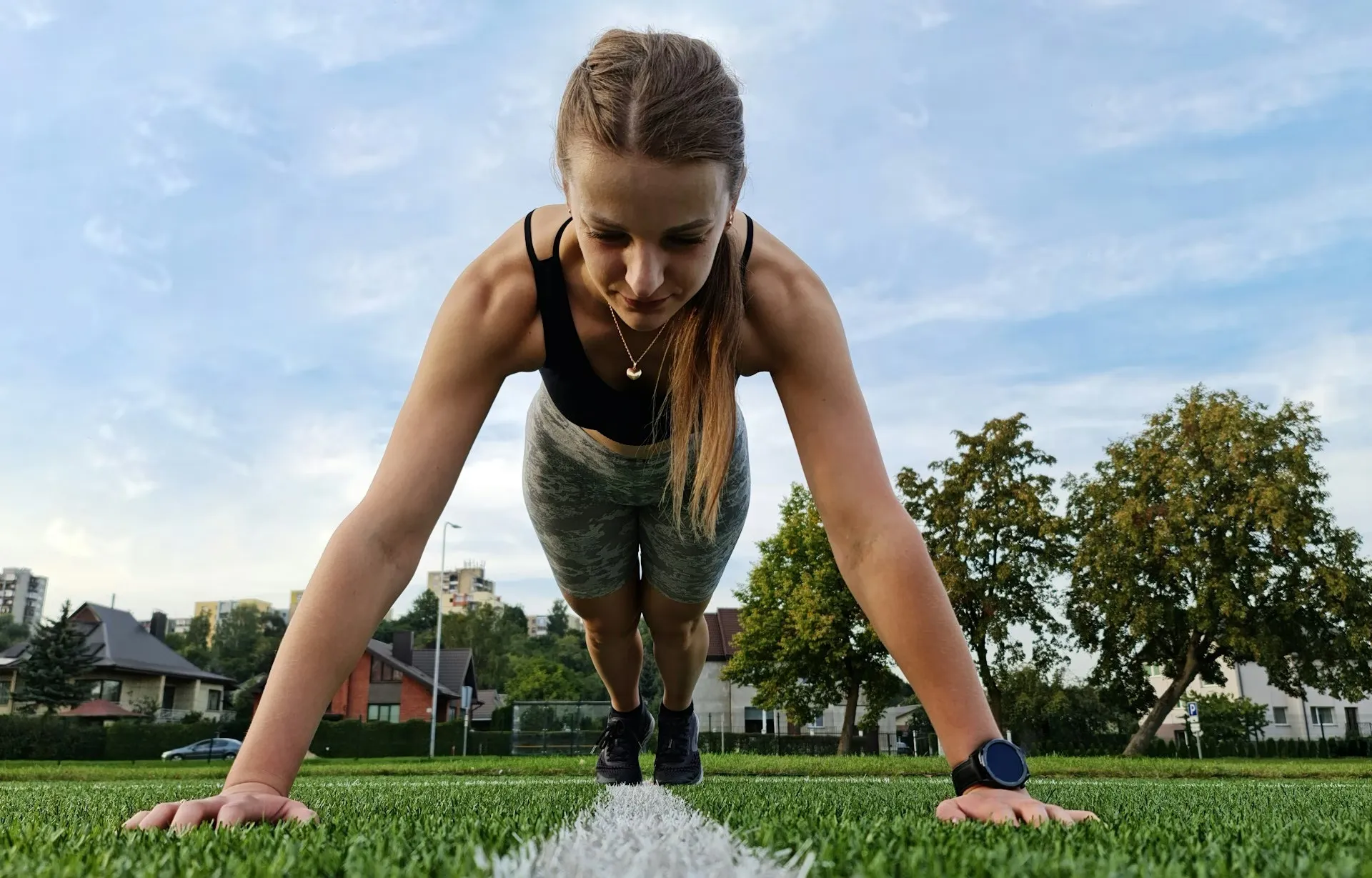
Incline push-ups are a highly effective way to engage the entire body while placing a specific demand on the abdominal muscles to maintain a straight line. To perform this move, stand in front of a stable chair and place your palms on the seat, ensuring they are positioned slightly below shoulder width. Extend your legs behind you and maintain a rigid, plank-like posture from head to toe.
The movement involves slowly bending the elbows to lower your chest toward the chair seat, followed by a controlled push back to the starting position. While the chest and arms perform the primary work, the core must remain constantly active to prevent the hips from sagging. Maintaining a straight line is crucial for preventing lower back strain. If the midsection begins to "dip," the intensity may be too high, and you should focus on tightening the abdominal wall to stabilize the spine.
Optimizing push-up form
To get the most out of incline push-ups, focus on the tempo of the movement. Descending slowly increases the time under tension for both the pectoral muscles and the core. Additionally, ensure your gaze is directed slightly ahead of your hands rather than down at your feet, which helps maintain a neutral spine. This alignment ensures that the abdominal muscles are working to stabilize the trunk rather than compensating for poor posture.
What are the benefits of mountain climbers and squats?
Mountain climbers and squats are dual-purpose exercises that bridge the gap between lower body strength and core stability. Mountain climbers focus on dynamic stability, while squats build functional power in the legs and glutes.
Executing mountain climbers safely
For mountain climbers, place your hands on the edge of the chair and extend your legs behind you. The goal is to bring one knee toward the chest, return it to the starting position, and then alternate with the other leg. It is highly recommended to start with a slow, controlled pace rather than rushing. Speed often leads to hip instability, which reduces the effectiveness of the exercise. Keep your hips level; if your body sways from side to side, you are losing the core engagement necessary for the move to be effective.
Integrating squats for full-body engagement
Squats are a fundamental movement that targets the legs, glutes, and core simultaneously. To perform a chair squat, stand in front of the chair with your back to it, keeping your feet approximately shoulder-width apart. Lower your hips as if you are about to sit down, only lightly touching the chair before driving back up to a standing position. Keep your chest open and your gaze forward to ensure proper spinal alignment. This movement reinforces the connection between the lower body and the core, as the abdominals must stabilize the torso during the ascent and descent.
How do single-leg squats and cross crunches target the abs?
Advanced variations like single-leg squats and rotational movements like cross crunches provide the specific lateral and unilateral challenges needed to refine core control.
Mastering the single-leg squat
The single-leg squat is a more demanding version of the standard squat that forces the core to manage asymmetrical weight distribution. Stand with one foot slightly ahead of the other and shift your weight onto the lead leg. Slowly lower your hips toward the chair. Because one side of the body is doing more work, the core must work overtime to prevent the torso from tilting. If this movement feels too difficult, it is better to revert to a standard two-legged squat rather than sacrificing form. Progression should be gradual, moving to the single-leg version only once stability is mastered.
The mechanics of the seated cross crunch
The cross crunch is specifically designed to target the obliques—the muscles on the sides of your abdomen. Sit on the front edge of the chair with your back straight and feet flat on the floor. Place your hands behind your head and bring your right knee toward your left elbow, rotating your torso slightly to meet the movement. Return to center and repeat on the opposite side. This controlled rotation improves abdominal awareness and strengthens the rotational capacity of the core. To avoid neck strain, ensure you are rotating from the waist rather than pulling on your head with your hands. Exhaling during the rotation helps deepen the contraction of the abdominal muscles.
FAQ: Frequently asked questions
Can I do these exercises if I am a beginner?
Yes, these exercises are highly adaptable for beginners. You can start with the standard versions of the movements, such as regular squats instead of single-leg squats, and focus on slow, controlled motions. The goal is to master the form before increasing the intensity or speed of the repetitions.
How many repetitions should I perform?
The number of repetitions depends on your current fitness level. A good starting point is to perform 10 to 15 repetitions of each movement for 2 to 3 sets. As you become more comfortable and your core strength improves, you can gradually increase the number of repetitions or the number of sets.
Do I need special footwear for chair exercises?
While you can perform these exercises barefoot or in socks, wearing athletic shoes can provide better stability and grip, especially during squats and push-ups. This is particularly important if you are performing them on a smooth floor to prevent slipping during the movement.
How often should I incorporate these moves into my routine?
For consistent results, aim to integrate these exercises into your daily routine or at least three to four times per week. Since they require minimal time, they are excellent for breaking up long periods of sitting and maintaining metabolic activity throughout the day.
What is the most important safety tip?
The most critical safety rule is to ensure the chair is stable and does not have wheels. Using an unstable surface can lead to falls or muscle strains. Always test the chair's stability before placing your weight on it or using it for support.
Key takeaways
- Use a stable, non-wheeled chair to ensure safety during all movements.
- Incline push-ups and mountain climbers engage both the upper body and the core.
- Squats and single-leg squats build functional strength in the legs and glutes.
- Cross crunches are essential for targeting and strengthening the oblique muscles.
- Control and form are more important than speed for effective core activation.
Conclusion
Integrating chair exercises into your daily life offers a low-barrier approach to maintaining core strength and overall physical health. By utilizing simple, bodyweight movements like incline push-ups, squats, and cross crunches, you can effectively engage the abdominal muscles and improve stability without the need for a gym membership. The key to success lies in performing each movement with precision and control, prioritizing proper form over high intensity. Whether you are looking to break up sedentary work hours or seeking a quick home workout, these five exercises provide a versatile foundation for functional fitness.







