The rise of widespread digital disruptions
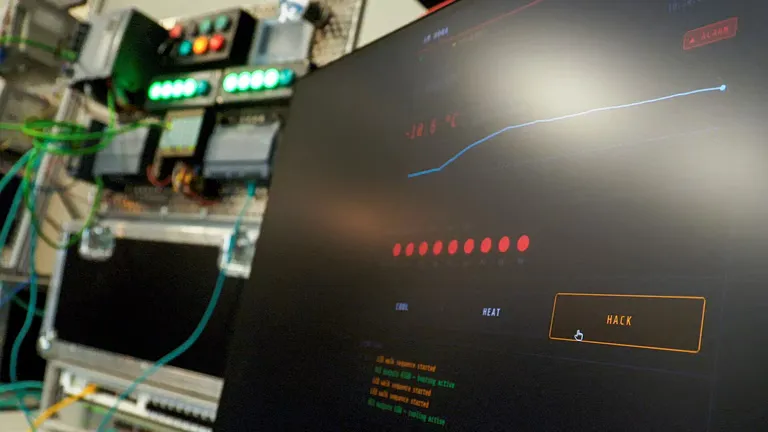
The recent surge in cyber incidents suggests that the era of isolated hacks is transitioning into a period of continuous, widespread disruption. In London, a fruit and vegetable wholesaler discovered that internet-connected refrigeration units were malfunctioning, with temperatures climbing to 15°C due to suspected interference. This was not an isolated case; retailers in Belgium, Estonia, Ireland, Finland, Luxembourg, the Netherlands, and Sweden reported similar anomalies, with some freezer temperatures soaring to 50°C.
These incidents highlight the vulnerability of the Internet of Things (IoT), where everyday objects like smart speakers and broadband routers become entry points for attackers. Ollie Whitehouse, Chief Technology Officer at the NCSC, stated that it is "absolutely clear" that such devices could be vulnerable to hackers. This pattern of targeting essential infrastructure and commercial systems suggests a move toward more chaotic, widespread digital interference.
The vulnerability of interconnected systems
As more commercial and domestic devices connect to the internet, the attack surface for hackers expands exponentially. The disruption of refrigeration units demonstrates how digital vulnerabilities can have immediate, physical consequences for supply chains and food safety. Security experts emphasize that manufacturers must increase investment in product security, while consumers must remain vigilant regarding the devices they integrate into their networks.
AI as a catalyst for discovering vulnerabilities
Artificial intelligence is fundamentally changing the speed at which security flaws are identified and exploited. The deployment of advanced AI models has led to a dramatic increase in the discovery of software vulnerabilities. For instance, since the release of Anthropic’s Mythos model in April, which possesses a high capacity for detecting system flaws, the number of vulnerabilities identified by leading tech firms has increased eightfold.
While the discovery of flaws has surged, the actual frequency of successful attacks has not yet risen at the same rate. Cybersecurity expert Tal Beery notes that hackers often struggle to monetize these newly discovered vulnerabilities, as evidenced by a recent decline in ransomware revenues. However, the potential for harm remains high as AI tools become more accessible to malicious actors.
| Event/Entity | Impact/Detail | Date/Context |
|---|---|---|
| Binance Theft | $6.3 billion loss | October 30, 2026 |
| Ukraine Emergency App | Fake nuclear attack notification | November 1, 2026 |
| European Fridge Hacks | Temperatures up to 50°C | Recent weeks |
| PHP Vulnerability | Global web infrastructure risk | Last month |
The NCSC warns that by 2028, AI-based malware is likely to be used against critical infrastructure, including power stations, airports, and hospitals. AI assists attackers in high-speed tasks such as target identification, network weakness detection, and the automated generation of malicious code.
Geopolitical tensions and state-sponsored actors
The landscape of cyber warfare is increasingly dictated by global political conflicts. Experts have noted that recent attacks on refrigeration systems bear the hallmarks of Russian operations, while the massive breach of the cryptocurrency exchange Binance has been attributed to North Korean state actors, despite their denials. Similarly, the November 1st attack on Ukraine's emergency application—which sent false nuclear strike warnings to Kyiv residents—has been linked by suspicion to Moscow.
North Korea, in particular, has established a reputation for cryptocurrency hacking, often driven by the need for liquidity amidst international sanctions. This intersection of state interests and digital crime creates a volatile environment where cyberattacks are used as tools of geopolitical leverage.
Distinguishing between new threats and historical patterns
While some observers, such as tech entrepreneur Azeem Azhar, have compared the current surge in AI-driven vulnerability discovery to the "Wuhan moment" of the Covid-19 pandemic, others urge caution. Ciaran Martin, founder and former CEO of the NCSC, argues that this is not a brand-new phenomenon. He points to the 2017 NotPetya and WannaCry attacks—attributed to Russia and North Korea respectively—as evidence that coordinated, large-scale digital threats have been a reality for years.
The challenge of securing the global web infrastructure
Beyond state actors and AI, the fundamental architecture of the internet remains a significant point of failure. Last month, the development of AI by OpenAI contributed to the discovery of a critical flaw in PHP, a programming language that underpins a vast portion of the global web. This discovery forced websites worldwide to temporarily go offline as a preemptive security measure.
The scale of these risks is reflected in the sentiments of industry leaders. Matthew Prince, a cybersecurity professional, noted that the coming years may feel as though "every week... the sky is falling." This sense of perpetual crisis is driven by the reality that as soon as one vulnerability is patched, AI-driven tools are already scanning for the next one, creating a continuous cycle of discovery and exploitation.