The decoding of 1,009 pages of handwritten manuscripts
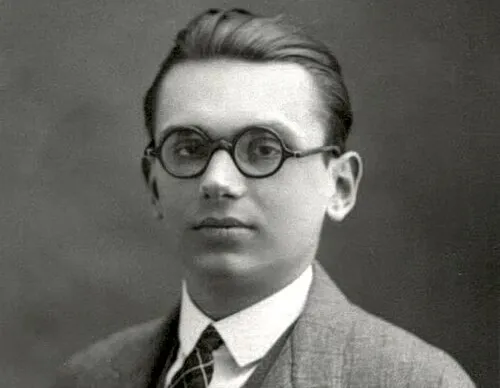
The recovery of these mathematical insights stems from the analysis of 16 notebooks composed by the Austrian mathematician and philosopher during the early 1940s. For decades, these documents remained largely undecipherable because Gödel utilized Gabelsberger German stenography, a shorthand method that had become obsolete by the time modern researchers attempted to study his work. This linguistic barrier turned a monumental archive into a nearly impenetrable wall for logicians.
Since 2017, Finnish logic researcher Jan von Plato has directed a research program at the University of Helsinki specifically aimed at decrypting these manuscripts. The manual process was characterized by extreme slowness; researchers were only able to study approximately one page per week. This pace made the comprehensive analysis of the 1,009-page collection an almost impossible task for human teams working within standard academic timelines.
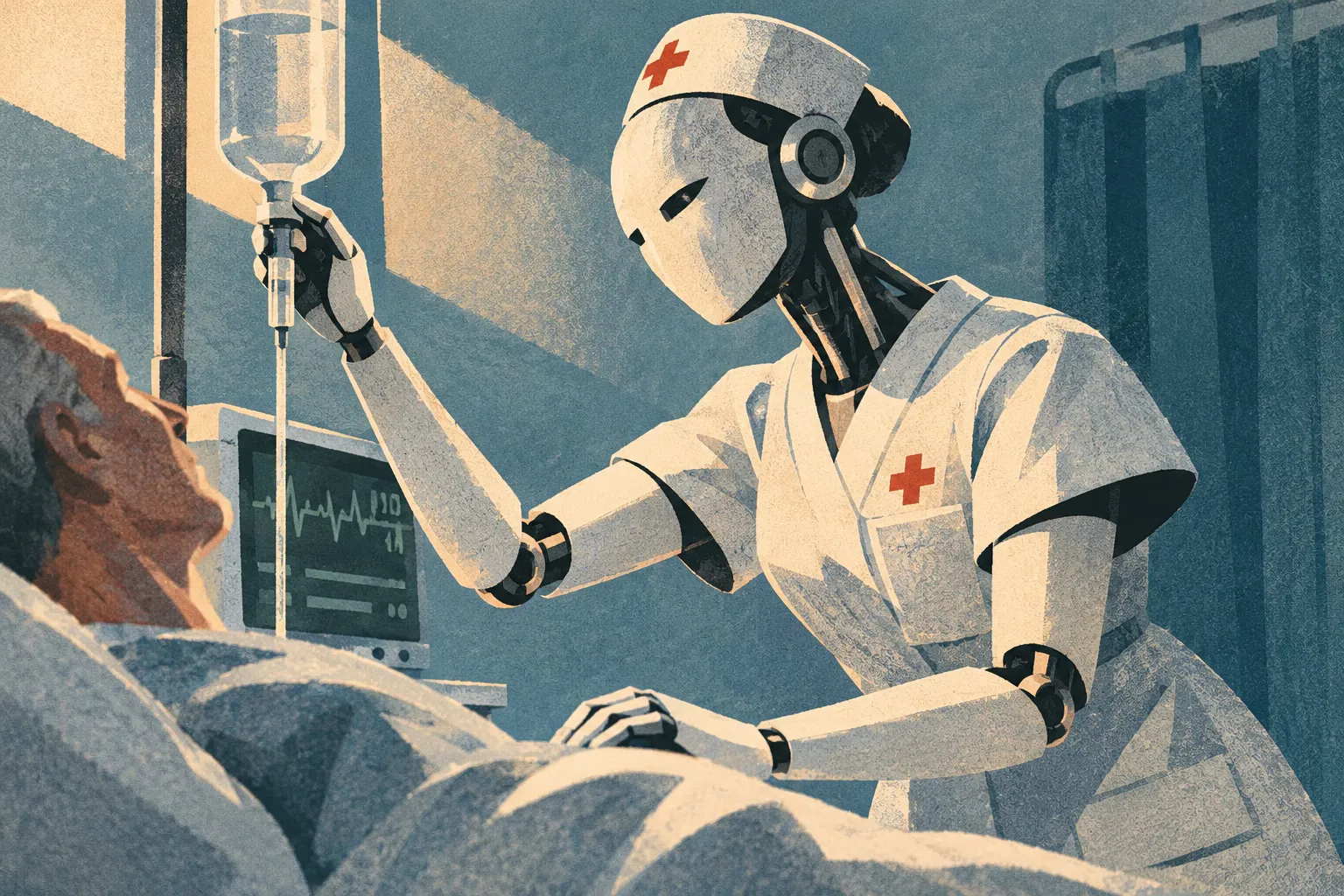
The trajectory of the research changed fundamentally in September when von Plato integrated the Claude AI model into the workflow. The impact was immediate and transformative. According to a report by the Guardian, the AI system produced a 650-page analysis in just two days, a task that would have taken human researchers decades to complete. This capability allowed the team to see the connections between mathematical ideas that were scattered across different notebooks.
Quantitative breakdown of the 663 identified theorems
The AI analysis identified a total of 663 theorems or mathematical ideas within the manuscripts. While the volume of findings is significant, the accuracy of these rediscovered ideas varies. The research team categorized the findings to distinguish between confirmed logic and erroneous notes, providing a structured view of Gödel's internal mathematical processes.
| Category of Finding | Number of Instances | Status |
|---|---|---|
| Verified Theorems | Approximately 400 | Confirmed without changes |
| Corrected Ideas | Approximately 200 | Required minor adjustments |
| Erroneous Notes | 50 | Proven incorrect |
Beyond the specific theorems, the AI-driven analysis revealed that Gödel had explored 14 thematic areas of logic that appear to remain largely unexplored by the broader mathematical community. This suggests that the manuscripts contain not just specific solutions, but entire frameworks for new logical inquiries.
The near-miss of a Fields Medal discovery
One of the most significant findings involves a proof related to the independence of the Axiom of Choice. In 1966, mathematician Paul Cohen was awarded the Fields Medal for discoveries in set theory. The new AI analysis suggests that Gödel had reached similar conclusions as early as the 1940s, though he was unable to present a complete proof at the time.
Reconstructing the proof through definition correction
Jan von Plato noted that Gödel had been extremely close to finalizing this specific reasoning. The primary obstacle was a single error in a definition, which prevented the completion of the logical chain. Interestingly, the correct definition was actually present in Gödel's earlier notes, but it had not been correctly integrated into the later proof attempt. To verify the validity of this reconstructed logic, the researchers used the Coq mathematical verification program. According to von Plato, the reconstructed proof successfully passed the Coq verification test, providing computational evidence that Gödel's underlying logic was sound.
Debating the boundary between human and AI contribution
The discovery has prompted a scholarly debate regarding the provenance of these mathematical insights. While the AI successfully synthesized the data, experts question where Gödel's original thought ends and the AI's reconstruction begins. This distinction is vital for maintaining the historical integrity of mathematical attribution.
Joel David Hamkins, a professor of logic at Notre Dame University, told the Guardian that the question remains open as to which parts of the reconstruction belong to Gödel and which parts constitute the contribution of the artificial intelligence. He noted that the fact a mathematician approached a significant discovery does not necessarily mean they completed it. The AI acts as a bridge, but the intellectual architecture remains a hybrid of historical intent and modern computational synthesis.
The legacy of Kurt Gödel and future research directions
These findings add a new layer to the legacy of a man who fundamentally altered mathematics in 1931 with his two incompleteness theorems. By proving that mathematics has inherent limits regarding what it can demonstrate, Gödel changed the trajectory of logic forever. The recent AI findings show that his reach extended far beyond those initial theorems.
The research team is now looking toward other undocumented areas of Gödel's work. Jan von Plato plans to examine unpublished notebooks that focus on physics and cosmology. Given the depth of the logical findings, there is significant anticipation regarding what these scientific manuscripts might reveal about Gödel's views on the structure of the universe. As the team moves forward, the intersection of 20th-century logic and 21st-century AI continues to redefine our understanding of mathematical history.