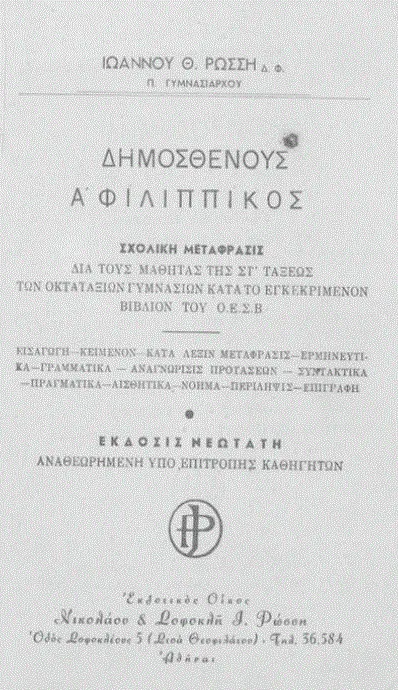
The historical context of the First Philippic in 351 BC
The First Philippic was delivered during a critical geopolitical juncture for the Greek city-states. While historical opinions vary slightly on the exact timing, the speech is widely dated to 351 BC. This period followed Philip II's assault on the Heraian Wall, though a temporary reduction in hostilities had occurred due to an illness affecting the Macedonian king.
Demosthenes recognized that this lull was merely a temporary reprieve. The expansion of Macedonian influence was a looming reality, as Philip had already established a presence in Thessaly and reached the passes of Thermopylae. The threat was not merely territorial but existential for the democratic structures of Athens. Addressing the Assembly of the People, the 33-year-old orator broke with the established custom of waiting for elder statesmen to speak first, stepping forward immediately to present his urgent warnings.
The geopolitical landscape of the mid-4th century BC
By 351 BC, the Macedonian kingdom was no longer a peripheral power. The strategic movement of Philip II toward the south signaled a shift in the balance of power in the Greek world. Demosthenes' decision to speak was prompted by the realization that Athenian political and military inertia was providing the vacuum necessary for Macedonian growth. His speech was not merely a critique of current events but a proactive attempt to redirect the city's trajectory before the window of opportunity closed.
Rhetorical strategy and the call to civic action
Demosthenes employed a complex rhetorical structure that combined sharp criticism of past failures with encouraging, patriotic exhortations. He identified a profound psychological crisis within the Athenian citizenry, characterized by political inertia, mental apathy, and moral exhaustion. To combat this, he argued that the city required a resurgence of patriotic enthusiasm to fulfill its civic duties.
His approach was not solely focused on the external enemy but on the internal state of the Athenian soul. He sought to transform a disillusioned populace into a disciplined force capable of methodical warfare. By addressing the "moral fatigue" of the citizens, Demosthenes aimed to bridge the gap between the recognition of danger and the actual capacity to act upon that recognition. He presented his plan not as a radical departure, but as the necessary logical conclusion to the city's survival instincts.
Proposed military reforms and naval requirements
To counter the unpredictable and sudden campaigns of Philip II, Demosthenes proposed a dual-track military strategy involving both naval superiority and a sustained land presence. He argued that a strong maritime force was essential to prevent Macedonian incursions via the sea and to maintain control over vital trade and communication routes.
His specific military recommendations included:
- Naval Expansion: The construction and maintenance of a powerful fleet consisting of triremes, transports (hippagoga), and other logistical vessels to ensure mobility and rapid response.
- Permanent Land Forces: The establishment of a standing force of both Athenian citizens and mercenaries.
- Continuous Harassment: This land force was intended to be deployed to constantly harass the Macedonian king on land, preventing him from consolidating his gains or launching unhindered expeditions.
This strategy moved away from the traditional reliance on seasonal citizen levies toward a more professionalized and continuous military posture designed for the realities of Macedonian warfare.
Financial planning and the 'Proof of Resources'
A defining feature of the First Philippic was its pragmatic focus on the economic realities of sustaining a long-term military campaign. Demosthenes did not merely demand action; he provided a detailed fiscal roadmap. This aspect of his oratory is often highlighted by his work titled "Proof of Resources" (πόρου απόδειξις), which accompanies the surviving text.
The orator provided a meticulous breakdown of the annual costs required to maintain the proposed naval and land forces. By doing so, he removed the excuse of financial uncertainty that often paralyzed Athenian policy. His analysis included a detailed survey of available resources, demonstrating that the city possessed the necessary means to fund the defense if the political will were present. This integration of military strategy with fiscal accountability transformed his speech from a mere call to arms into a functional policy proposal.
| Military Component | Required Asset Type | Strategic Objective |
|---|---|---|
| Naval Force | Triremes, transports, and logistical vessels | Prevent sudden maritime expeditions and secure sea lanes |
| Land Force | Citizen soldiers and mercenaries | Maintain a continuous presence and harass Macedonian movements |
| Fiscal Support | Annual budgetary allocations | Ensure the sustainability of permanent military readiness |
The role of fiscal transparency in Athenian democracy
Demosthenes' insistence on detailing the "Proof of Resources" served a dual purpose. First, it provided the Assembly with the technical data required to make an informed decision. Second, it held the city's leadership accountable to the mathematical reality of their ambitions. In the context of Athenian democracy, where resource allocation was a central point of contention, this level of detail was a sophisticated tool for bypassing political deadlock.
The legacy of the Philippic speeches
The First Philippic is recognized as one of Demosthenes' greatest achievements, serving as the foundation for a series of speeches that defined the struggle between the Greek city-states and the Macedonian monarchy. The speech is characterized by its "mad passion" and