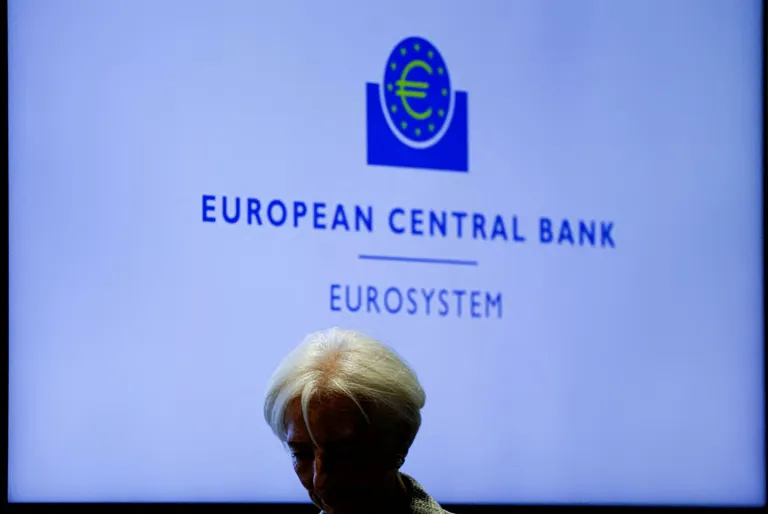
Why is Christine Lagarde leaving the ECB early?
Christine Lagarde will conclude her presidency on February 7, 2027, leaving her post several months ahead of her original October 2027 expiration. Her decision to step down early has sent immediate ripples through European political and financial institutions. Lagarde, who assumed leadership in 2019 following Mario Draghi, stated that she is leaving with a sense of duty fulfilled, claiming she is handing over an institution prepared for future challenges.
The suddenness of the announcement has prompted rapid responses from EU leadership. Antonio Costa, President of the European Council, confirmed that selection processes are set to begin immediately. Simultaneously, Eurogroup chief Paschal Perdonakis (Kyriakos Pierrakakis) assured that finance ministers would work quickly to prepare a recommendation to ensure a swift transition. While Lagarde has attempted to reassure staff through internal memos that the bank's mission will remain steadfast, the timing has sparked debate regarding the institution's stability.
Speculation and internal concerns
Before the official announcement, rumors regarding Lagarde's departure had been circulating, often fueled by her refusal to commit to completing her full term. Various theories emerged, suggesting potential roles at the World Economic Forum in Davos or involvement in the upcoming French presidential elections. Although Lagarde has explicitly denied seeking political office, the ambiguity surrounding her tenure had reportedly caused unease within the ECB, with some officials concerned about the impact on the bank's institutional image.
Who are the leading candidates in the ECB succession race?
Pablo Hernández de Cos and Klaas Knot have emerged as the primary frontrunners in the competition to succeed Lagarde. The race is being conducted against a backdrop of significant economic complexity, requiring a leader capable of navigating high inflation and geopolitical instability. According to Bloomberg, the selection process is expected to be highly competitive, with European leaders aiming to finalize a decision during the summits in November and December.
Among the favorites, Pablo Hernández de Cos holds a significant advantage in current projections. As the former Governor of the Bank of Spain and the current head of the Bank for International Settlements (BIS), his profile is highly regarded by economists and policymakers alike. His experience in international central banking positions him as a leading contender to manage the ECB's mandate in an increasingly fragmented global economy.
The complexity of the 'package deal' negotiations
The leadership transition is not limited to the presidency alone. European negotiators are facing a multifaceted challenge as they seek to fill several high-level vacancies simultaneously. This includes finding a successor for Executive Board member Isabel Schnabel, who is also departing early in early 2027 to join the IMF, and replacing Chief Economist Philip Lane, whose term ends in May. This has led to discussions regarding a 'package deal' approach, where leaders attempt to reach a comprehensive agreement on all three critical positions to ensure institutional continuity.
What economic challenges will the new President face?
The incoming ECB President will inherit a central bank operating in an extremely fragile economic environment. The mandate requires balancing price stability with the pressures of significant geopolitical shifts and fiscal demands. The successor must manage the complexities of persistent inflation, which has been exacerbated by ongoing conflicts in the Middle East, particularly involving Iran, and the resulting volatility in energy and commodity markets.
Beyond inflation, the new leadership must navigate several structural and market-driven hurdles:
- Bond Market Volatility: Fluctuating interest rates and shifting investor sentiment in the sovereign debt markets require precise monetary steering.
- Defense Spending: Massive increases in European defense expenditures are placing new pressures on national budgets and broader economic stability.
- Inflation Targets: Lagarde herself had previously forecasted that inflation might not return to the ECB's target levels until late 2027, leaving a narrow window for the successor to achieve stability.
How does the timing affect European political dynamics?
The timing of Lagarde's departure introduces a significant political dimension to the selection process, particularly concerning the influence of national leaders. Because the transition occurs before the end of French President Emmanuel Macron's term, he will have the opportunity to participate in the selection of his successor. This has raised concerns among some observers regarding the potential for political maneuvering within the selection process.
With domestic polls in France showing a potential shift in political leadership, the involvement of the current administration in the ECB appointment process has been criticized as a potential threat to the central bank's independence. Critics argue that the intersection of national electoral cycles and the appointment of a global monetary leader could lead to perceptions of political interference, potentially undermining the perceived neutrality of the ECB.
FAQ: ECB Succession
When will the new ECB President take office?
The transition is expected to occur following Christine Lagarde's departure on February 7, 2027. European leaders are working toward a rapid decision, with key summits in November and December 2026 serving as critical milestones for finalizing the selection and ensuring a smooth handover of power.
Who are the main candidates for the position?
Pablo Hernández de Cos and Klaas Knot are currently identified as the two leading candidates. Hernández de Cos, the current head of the Bank for International Settlements and former Governor of the Bank of Spain, is considered a strong favorite by many economists and market analysts.
Why is the succession process more complex than usual?
The process is complicated by the need to fill multiple high-level roles at once. Beyond the presidency, the ECB must find replacements for Executive Board member Isabel Schnabel and Chief Economist Philip Lane, leading to potential negotiations for a consolidated 'package deal' of appointments.
What economic risks are currently facing the ECB?
The ECB is managing persistent inflation driven by geopolitical tensions, such as the conflict in Iran, alongside volatile bond markets. Additionally, the bank must account for the economic impact of increased European defense spending and the challenge of returning inflation to target levels.
Will the transition impact the ECB's independence?
There are concerns that the timing of the departure allows sitting political leaders, such as Emmanuel Macron, to influence the appointment process. This has led to debates about whether the selection could be subject to political maneuvering, potentially impacting the central bank's traditionally independent status.
Key takeaways
- Christine Lagarde will step down as ECB President on February 7, 2027, ahead of her original schedule.
- Pablo Hernández de Cos and Klaas Knot are the primary frontrunners in the succession race.
- The transition involves a complex 'package deal' to fill multiple vacancies, including the Chief Economist role.
- The new leader must manage high inflation and significant increases in European defense spending.
Conclusion
The sudden departure of Christine Lagarde marks the beginning of a high-stakes period for the European Central Bank. As the succession race intensifies, the focus remains on finding a leader capable of navigating a landscape defined by geopolitical instability and economic volatility. While candidates like Pablo Hernández de Cos appear to hold the advantage, the political complexities surrounding the timing of the transition and the need to fill multiple leadership roles simultaneously present significant challenges. Ultimately, the success of this transition will be measured by the ECB's ability to maintain its independence and achieve its mandate of price stability in an uncertain global environment.