The Shift from Suppression to Saturation
The most effective censorship methods no longer rely on the outright prohibition of specific news items. Traditional censorship, characterized by the removal of books, the banning of journalists, or the blocking of websites, is increasingly being replaced by a strategy of saturation. Instead of creating a void where information should be, modern actors create a surplus of irrelevant data.
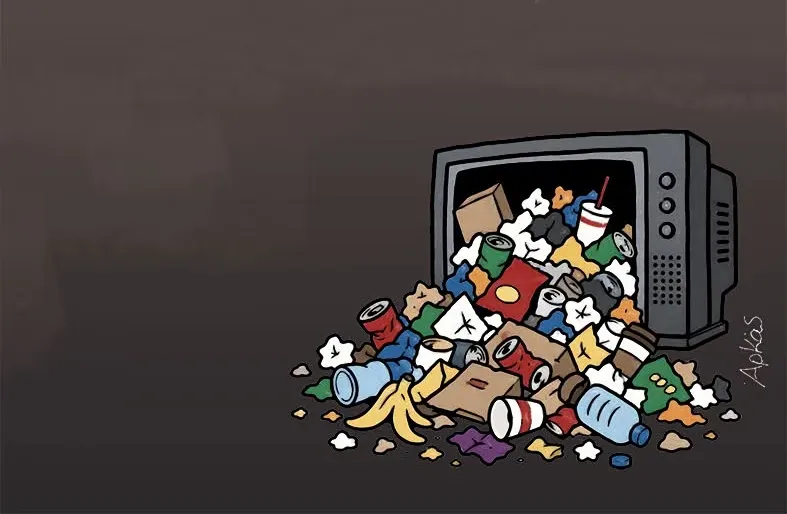
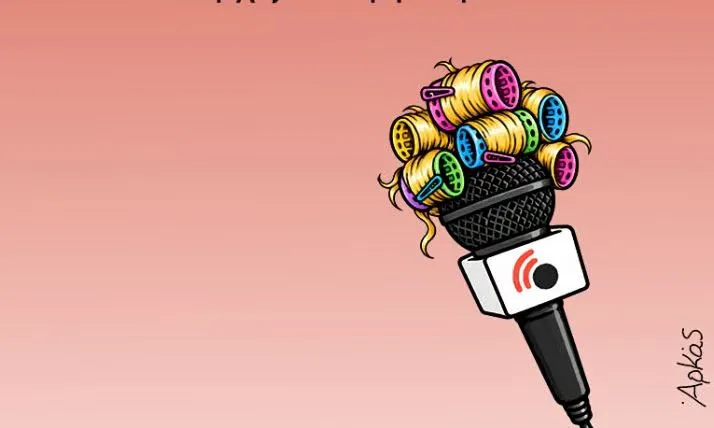
By flooding the information ecosystem with trivial updates, celebrity gossip, and minor social media trends, the weight of critical investigative journalism is diminished. When the public is constantly bombarded with low-value content, the cognitive energy required to identify and process significant political or social developments is depleted. This creates a state of perpetual distraction, where the truth is not hidden, but simply lost in the noise.
Analyzing the Arkas Commentary on Media Control
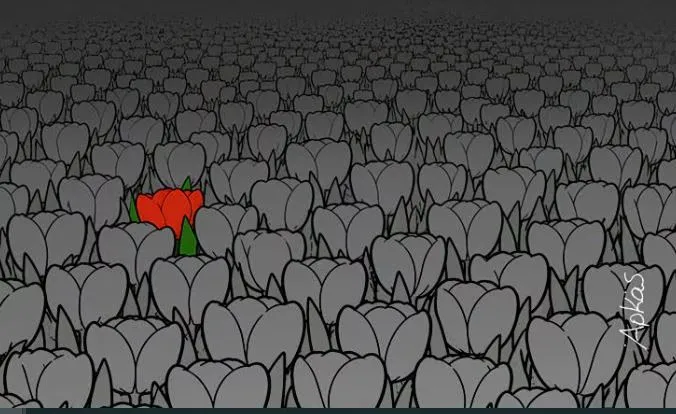
A recent social commentary by the cartoonist Arkas provides a sharp critique of this phenomenon. The sketch posits a profound observation regarding modern media control: "The most effective censorship does not forbid important news. It drowns it in the insignificant." This statement captures the essence of modern information warfare and media manipulation.
Under this model, the goal is not to convince the audience that a specific event did not happen, but to ensure that the event fails to gain traction. If a major corruption scandal is released simultaneously with a thousand stories about viral dance trends or celebrity lifestyle changes, the scandal loses its ability to provoke public outcry. The mechanism of censorship here is not the 'delete' button, but the 'scroll' function.
The Role of Algorithms in Information Dilution
Digital platforms and their underlying algorithms play a crucial role in this process. Algorithms are designed to prioritize engagement, which often favors sensationalist, low-effort, or highly emotional content over complex, nuanced reporting. Consequently, the very tools meant to democratize information often serve as the primary vehicles for drowning out meaningful discourse.
The Societal Impact of Information Overload
The consequences of these censorship methods extend beyond media theory into the realm of social stability and democratic health. When significant news is consistently buried under a layer of triviality, the public's ability to hold institutions accountable is severely compromised.
A distracted citizenry is less likely to organize, less likely to protest, and less likely to demand transparency. This creates a vacuum of accountability where power can operate with minimal scrutiny. The danger is not that people will stop consuming news, but that they will stop consuming the *right* news, mistaking the volume of information for the quality of knowledge.