The premise of a nation selling its heritage
The narrative of The Painting is set in a near-future Spain where an economic crisis has effectively dismantled the European Union and crippled the nation. To achieve an extreme form of economic "rescue," the "Empros Lae" coalition government decides to deregulate the sale of the country's cultural heritage. This process begins with one of the world's most iconic masterpieces: Velázquez's "Las Meninas" (The Ladies-in-Waiting).
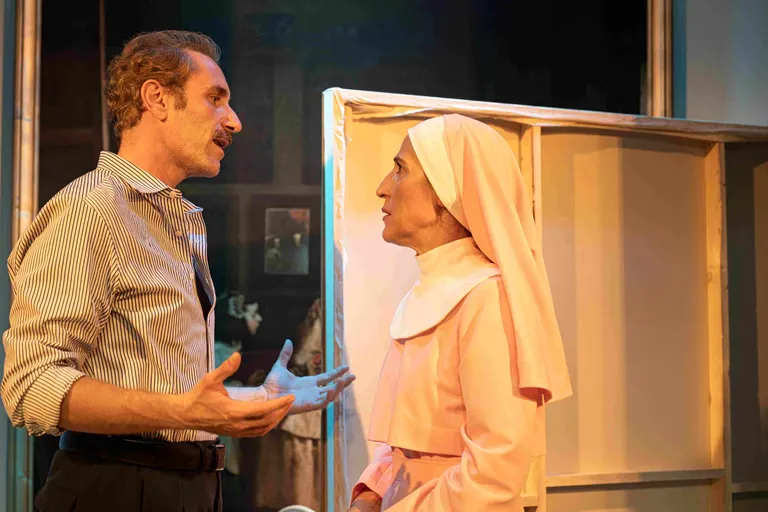
To facilitate this transition, the government implements a replacement strategy. Before the original masterpiece is handed over to private buyers, the Prado Museum executes a plan to ensure the public still has something to view. This is achieved by hiring a humble nun, renowned for her rare talent in replicating works of art, to create a "perfect" identical copy of the original painting.
The economic backdrop of the play
The play uses this extreme fiscal measure to mirror real-world anxieties regarding national debt and the commodification of history. By placing the survival of the state against the preservation of its soul, the work asks whether cultural identity holds value when a country faces literal insolvency.
The transformation of Sister Angela into a viral trend
The central character, Sister Angela, undergoes a radical metamorphosis driven by the government's "Exhibition of Copies." What begins as a religious vocation—utilizing her skill to serve the museum through replication—quickly shifts into a media phenomenon. As the public becomes aware of her talent, she is transformed from a woman of God into an avant-garde influencer and a "pop nun" of the digital age.
This shift is not merely a personal change for the character but a societal one. The play depicts a populace that begins to worship the replicator more than the original creator. In this social landscape, the manufactured image holds more weight than historical authenticity. The character becomes a viral trend, personifying the shift from traditional reverence to modern celebrity worship.
Satire in the age of deep fakes and influencers
The production is described as a sharp comedy that navigates the complexities of the modern era, specifically focusing on the dominance of influencers and the prevalence of deep fakes. Through a combination of political thriller elements and pure satire, the play reflects a society that appears to be collapsing behind a polished, digital facade.
The play highlights several key themes of contemporary life:
- Political Manipulation: How governments use cultural assets to manage economic crises.
- Digital Identity: The power of influencers to reshape traditional social roles.
- The Value of Authenticity: The tension between a historical original and a "trendy" replica.
- Social Media Addiction: A society driven by likes, manipulation, and constructed idols.
By focusing on these elements, Caballero creates a mirror for a world where social media personalities often carry more perceived value than history or culture itself.
The conflict of artistic voice and vanity
The plot reaches a turning point when the star nun, Sister Angela, begins to develop her own distinct artistic voice. Rather than remaining a mere tool for the government's replacement scheme, she starts to make interventions directly within the painting itself. This development shifts the story from a political satire into a journey of vanity, faith, and self-discovery.
This internal struggle serves as the catalyst for a frenetic exploration of how much control an individual can maintain when they have become a product of the masses. As she asserts her agency, she challenges the very system that elevated her to celebrity status. The play examines whether true self-awareness is possible in an environment addicted to the curation of artificial idols.
Cast and production details
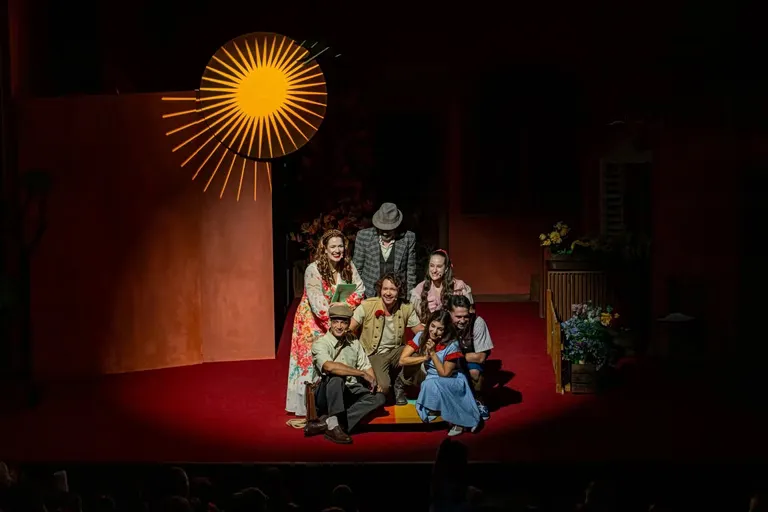
The production at Psyrri Theater features a collaborative cast designed to drive the play's rapid pace and ironic tone. The performing ensemble includes:
| Performer | Role/Contribution |
|---|---|
| Ioanna Pappá | Lead Cast |
| Giouli Tsagkaraki | Lead Cast |
| Angelos Andriopoulos | Lead Cast |
| Michalis Panadis | Director |
The play is characterized by a high-speed rhythm and a blend of subtle irony and relentless self-mockery, aiming to provide a biting critique of the modern condition.