
What are the specific criminal charges against Filippos Kampouris?
Filippos Kampouris faces a series of severe legal charges including the leadership of a criminal organization and large-scale fraud against a legal entity. According to the prosecutor's indictment, the charges extend beyond simple financial mismanagement to encompass organized crime and money laundering. The investigation aims to determine the depth of the syndicate's operations and the extent of the financial damage caused to the state.
The legal framework surrounding these charges suggests that the authorities view the matter not as a series of isolated business failures, but as a coordinated effort to undermine the national social security system. By targeting the leadership of a criminal organization, prosecutors are seeking to address the structural nature of the alleged activities.
Detailed breakdown of the indictment
The prosecutor has filed specific charges for each individual involved in the network. These include the formation and management of a criminal organization, as well as fraud against a legal entity involving amounts exceeding €120,000. Furthermore, the indictment includes charges of conspiracy in fraud, the laundering of proceeds from criminal activity as a professional practice, and the failure to make timely employer and employee social security contributions. These charges suggest a structured effort to bypass the legal and financial obligations required by Greek law.
The specific inclusion of 'professional practice' in the money laundering charge indicates that the authorities believe the illicit activities were a regular, organized part of the group's operations. Additionally, the charge regarding the non-payment of employer and employee contributions highlights the direct impact the syndicate had on the rights of workers and the stability of the EFKA fund. The complexity of these charges reflects a multi-layered approach to the prosecution, addressing both the methods of the fraud and its ultimate financial outcomes.
How did the 'Mammoth' syndicate operate?
The 'Mammoth' syndicate allegedly utilized a rotating system of shell companies to evade social security obligations and defraud the EFKA fund. Since at least 2021, the network is believed to have operated through at least 25 distinct companies, including businesses in the advertising, hospitality, nightlife, and retail sectors. The operational model was designed to maximize profit while minimizing legal accountability through the use of 'straw men' or figurehead owners.
The mechanism functioned through a repetitive cycle of creation and dissolution. The syndicate would establish a company, often using individuals who had no real control over the business to act as legal owners. Once these companies accumulated significant debts in unpaid social security contributions, they would be closed down, leaving the EFKA fund to absorb the losses. Immediately following the closure of one entity, a new company would be established to continue the same cycle, effectively creating a continuous loop of debt evasion and profit extraction.
This process of opening and closing businesses allowed the group to reset their legal standing whenever debts became too high. By utilizing a network of 29 companies in total, the group ensured that even if one entity was investigated or closed, the broader network could continue its operations under a different name and a different 'straw man' owner. This systematic approach allowed the syndicate to maintain a presence in various sectors of the economy while remaining perpetually insulated from their financial obligations.
What role do artists and entertainers play in the investigation?
Testimonies from well-known singers and entertainers have become a critical component of the ongoing investigation into the syndicate's activities. Several artists have already provided statements to the authorities regarding their professional collaborations with companies suspected to be mere 'showcase' entities. These testimonies aim to clarify the hierarchy of command within the businesses that employed them.
According to reports, many artists claim they negotiated their performance contracts directly with Filippos Kampouris rather than with the individuals listed as the official owners of the companies. This distinction is vital for investigators, as it helps establish who held the actual decision-making power and who was merely a legal placeholder. The authorities are currently examining whether there was a widely known scheme among collaborators where the registered owners were entirely decoupled from the actual business management and financial control.
The involvement of these artists provides a window into the actual management structure of the companies. If the artists were dealing directly with Kampouris, it supports the prosecution's theory that the 'straw men' listed on official documents had no real authority. This testimony is essential for proving the 'leadership' aspect of the criminal organization charge, as it links the high-profile media figure to the day-to-day operational decisions of the shell companies.
What is the impact on the EFKA social security fund?
The financial damage to the EFKA social security fund is estimated to be at least €1.5 million. This loss stems from the systematic failure of the syndicate's companies to remit mandatory employer and employee contributions. Beyond the direct monetary loss, the investigation highlights a broader systemic risk posed by the use of ghost companies to bypass the national social security framework.
The investigation is now expanding into a wider probe regarding tax evasion and the laundering of illicit funds. While the defense team has attempted to downplay the severity of the situation, characterizing the matter as a 'common debt' or a shared liability, the judicial authorities are treating it as a major organized crime case. The scale of the fraud, involving nearly 30 companies, suggests a highly sophisticated attempt to undermine the financial stability of the state's social security systems.
The €1.5 million figure represents only the direct damage identified so far, but the expansion of the investigation into tax evasion suggests the total impact on the state could be even larger. By investigating how these companies operated and how funds were moved, authorities are looking for the full extent of the financial bleeding caused by the syndicate's repetitive cycle of debt and dissolution.
How has Filippos Kampouris responded to the allegations?
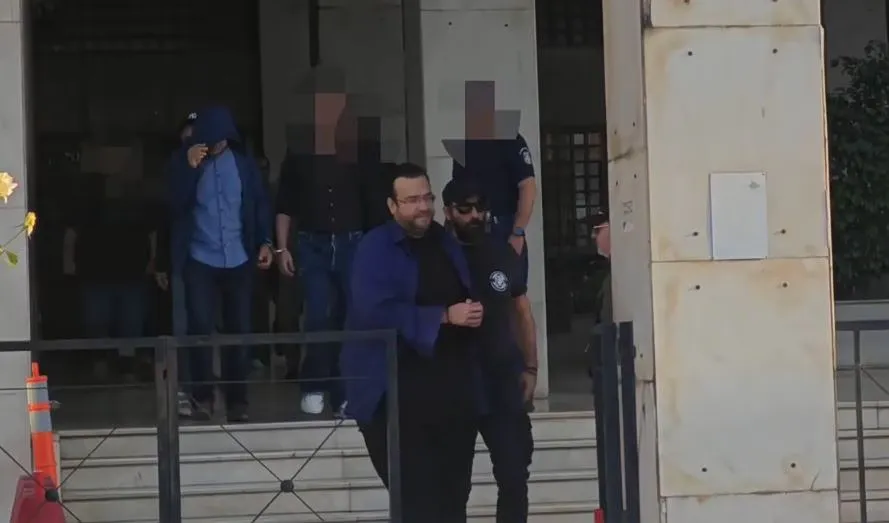
Filippos Kampouris has maintained his innocence, describing the entire investigation as a conspiracy. Following his arrest, he told journalists that he is innocent and possesses the evidence to prove it. During his initial questioning by security police, he exercised his right to remain silent, choosing instead to reserve his detailed explanations for the investigating magistrate.
The legal proceedings are expected to involve ten other individuals, including Kampouris's wife, who are also being questioned as part of the same criminal circle. As the investigation moves from the police stage to the judicial phase, the focus will remain on the link between the media personality's public life and the alleged management of this shadow economic network.
The defense's strategy appears to be one of total denial, framing the legal actions as a coordinated effort to discredit him. However, the transition from police questioning to a formal investigation by a magistrate marks a significant escalation in the legal pressure facing Kampouris and his associates. The ability of the prosecution to connect the 'straw men' owners to the actual decision-making power will be the central battleground of this case.
FAQ: Filippos Kampouris Investigation
What are the main charges against Filippos Kampouris?
The primary charges include leading a criminal organization, fraud against a legal entity exceeding €120,000, and the laundering of criminal proceeds. He is also accused of failing to pay mandatory social security contributions and participating in a conspiracy to defraud the EFKA fund.
How much money did the syndicate allegedly steal?
The investigation indicates that the syndicate caused approximately €1.5 million in damages to the EFKA social security fund. This loss resulted from the systematic use of shell companies that avoided paying required social security and employer contributions before being dissolved.
Who else is involved in the 'Mammoth' case?
In addition to Kampouris, nine other individuals are being investigated, including his wife. The investigation also focuses on the 'straw men' used to register the 29 companies and the various artists who worked for these businesses.
What was the business model of the shell companies?
The syndicate created companies in sectors like advertising and nightlife, used them to accumulate debt without paying social security, and then closed them down. New companies were then opened to repeat the process, a cycle that has reportedly been active since 2021.
How did artists interact with these companies?
Many artists reported that they dealt directly with Filippos Kampouris for their contracts, despite other individuals being listed as the official company owners. This suggests that the registered owners may have had no real control over the business operations.
Key takeaways
- Filippos Kampouris is accused of leading a criminal organization involved in the 'Mammoth' fraud.
- The syndicate allegedly defrauded the EFKA fund of approximately €1.5 million since 2021.
- The scheme utilized a network of 29 shell companies to evade social security contributions.
- Artists claim they negotiated directly with Kampouris, bypassing the official company owners.
- Authorities are expanding the probe to include widespread tax evasion and money laundering.
The legal and social implications of the case
The investigation into Filippos Kampouris represents a significant moment in the Greek judiciary's fight against organized financial crime. By targeting the intersection of the entertainment industry and social security fraud, authorities are attempting to dismantle the sophisticated structures that allow 'ghost companies' to operate with impunity. The outcome of this case will likely set a precedent for how the state handles complex, multi-layered fraud involving high-profile figures and the systematic evasion of public obligations.







