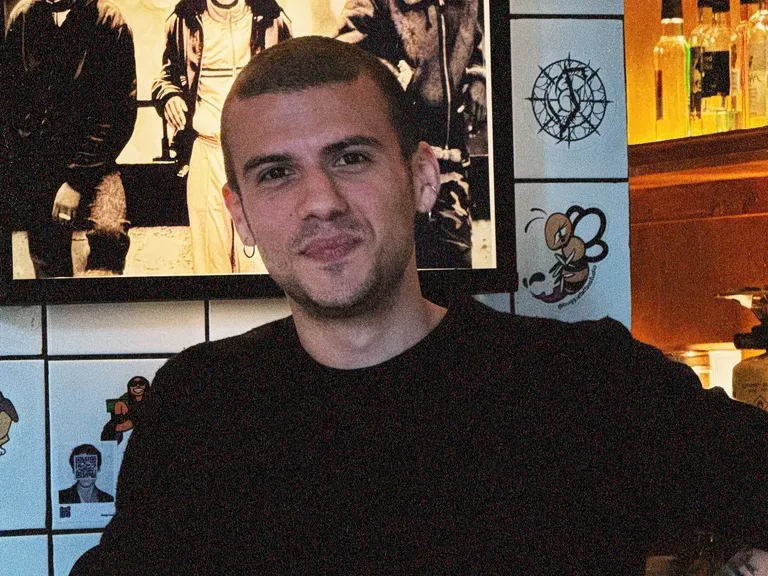
Giannis Malamas has opened up about the emotional toll following his September 2025 arrest and the intense media scrutiny that followed. During a recent appearance on the program 'Mia Ellada Parea' on November 14, 2026, the musician described the incident as a "bad joke" that left him unable to think logically at the time. He emphasized that while the sudden public exposure was difficult, the unwavering support of his parents provided a necessary foundation during one of his most challenging personal moments.
The emotional impact of sudden public exposure
The musician described the intense media attention surrounding his legal incident as a profound and unprecedented challenge. For Malamas, the transition from private life to being the subject of widespread news coverage happened abruptly, creating a level of exposure he was unprepared to manage. He noted that the suddenness of the situation made the experience particularly taxing, as he was forced to navigate public scrutiny without prior warning.
During his interview on the show 'Mia Ellada Parea' on Saturday, November 14, 2026, he elaborated on how this visibility affected his mental state. He characterized the experience as being thrown into the "deep end" immediately. This sudden shift in his public profile meant that every detail of the incident was being dissected by the media, adding a layer of stress to an already volatile situation.
Navigating the media spotlight
Malamas explained that the complexity of the situation was heightened by the speed at which information traveled. The "difficult exposure" he referenced was not just about the content of the news, but the sheer volume of attention directed at him. He indicated that the intensity of the media cycle made it difficult to maintain a sense of normalcy while dealing with the underlying legal and personal issues.
Family support during the September 2025 incident
The musician highlighted the critical role his parents played in helping him navigate the crisis following his arrest in September 2025. He described his relationship with his father, Socrates Malamas, as being particularly close, noting that he is able to share everything with him. This sense of security allowed him to process the events with a level of honesty that he might not have achieved alone.
Malamas expressed deep gratitude for the stability provided by his family, stating that he feels "crazy fortunate" to have both his parents by his side. This support system acted as a buffer against the external pressures of the media and the legal proceedings. The ability to speak freely with his father provided a private space to manage the chaos of the public incident.
| Family Member | Relationship/Role | Nature of Support |
|---|---|---|
| Socrates Malamas | Father / Close confidant | Direct communication and emotional stability |
| Mother | Mother / Emotional anchor | Primary emotional refuge during the crisis |
The search for maternal comfort in times of crisis
While Malamas maintains a close bond with both parents, he revealed a specific and profound need for his mother's presence during the height of the incident. He confessed that in his most vulnerable moments, his instinct was to seek the comfort of her embrace. He described this as a rare instance where he felt the urge to openly express his need for maternal protection.
"In my most difficult moment, I took my mother," Malamas stated, reflecting on the emotional weight of that day. He admitted that he wanted to tell her, "Mom, it is the first time I want to come and cry in your arms." This admission highlights the contrast between his public persona and the private vulnerability he experienced when faced with the sudden upheaval of his life.
Lessons learned from the "bad joke"
Reflecting on the arrest itself, Malamas categorized the entire experience as a "bad joke" (κακόγουστο αστείο). He admitted that the intensity of the moment prevented him from thinking logically or acting with complete composure. The chaotic nature of the events meant that many details were processed without a clear foundation, leading to a sense of disorientation.
Despite the difficulty, the musician views the episode as a significant life lesson regarding human relationships. He used the experience to evaluate his social circle, distinguishing between those who remained steadfast and those who distanced themselves when complications arose. He noted that while some people he expected to stay actually did, others simply offered a superficial "good morning" before retreating.
Malamas concluded that he has now moved past the incident. He stated that he has "untangled" the issue and intends to leave it firmly in the past. The experience, while painful, provided him with a clearer understanding of his support network and the reality of his social connections during times of adversity.