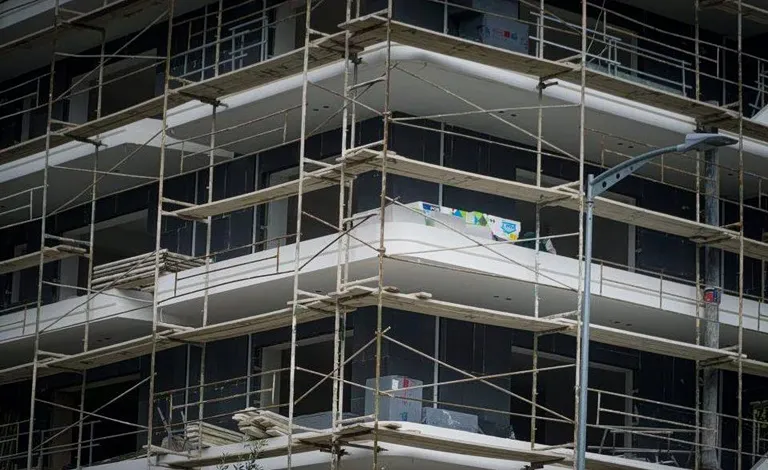
Why are Greek real estate investments facing a legal deadlock?
Legal uncertainty and administrative delays are currently preventing millions of euros in real estate investments from reaching completion. Even when capital, land, and business plans are secured, projects often remain in limbo due to judicial decisions or administrative inconsistencies. This phenomenon was a central theme at the Green Deal Greece 2026 conference hosted by the Technical Chamber of Greece (TEE) at the Stavros Niarchos Foundation Cultural Center.
The core issue is not a lack of resources, but the inability of investors to rely on stable, predictable rules. According to industry experts at the conference, development requires the certainty that once rules are understood and permits are obtained, projects can be executed without years of litigation or shifting regulatory goalposts.
The cost of judicial delays
When legal disputes arise, the consequences are not merely procedural; they are financial. Delays in court rulings can last several years, during which construction costs continue to rise and original business models become obsolete. Investors are not asking the state to absorb their commercial risks, but they are demanding that the state guarantees the regulatory framework under which those risks were originally calculated.
What specific issues are stalling construction projects?
Three distinct scenarios illustrate the complexity of the current regulatory environment in Greece. These cases, highlighted by Fotis Giotsios, Vice President and CEO of TEN BRINKE HELLAS, demonstrate how different types of administrative and legal friction can paralyze the market.
- Suspended Permits: In several instances, large-scale investments have seen their building permits suspended following legal appeals. Even when court hearings have concluded, the lack of timely decisions leaves projects in a state of expensive stagnation.
- The NOK Revision Trap: A significant problem arises when developers attempt to legally revise existing building permits. Under current frameworks, revising a permit may trigger the requirement to comply with the updated New Building Code (NOK) incentives, which have been partially overturned. This creates a paradox where buildings already 80% completed cannot be legally updated because they are caught between old and new regulations.
- Administrative Inertia: In areas like Kifissos, projects have been stalled for decades due to administrative technicalities. For example, despite the physical management of a riverbed, the lack of a formal administrative study prevents the issuance of building permits, leaving investors unable to move forward despite meeting environmental requirements.
These examples suggest a need for a compensation framework for investors who act legally but suffer financial damage due to the failure of the administrative and institutional systems to function predictably.
How can the housing crisis be addressed through affordable housing?
The Greek housing crisis requires more than just incremental measures; it necessitates the rapid addition of high-quality, affordable units to the market. Dimitris Andropoulos, CEO of DIMAND, argues that the current legislative framework is insufficient to encourage private sector involvement in affordable housing due to high construction costs and interest rates.
To bridge this gap, a new model is being discussed with the government. Unlike social housing, which is a state responsibility, this model focuses on private development for long-term rental. The goal is to ensure that rent does not exceed 25% to 30% of a worker's net income. This would require specific financial and tax incentives rather than just urban planning changes.
Proposed incentives for private developers
For affordable housing to be economically viable for private investors, several levers must be pulled:
- Tax Reductions: Implementing lower VAT rates on the construction of affordable units.
- Financial Incentives: Providing tax breaks that offset the lower initial returns expected from these projects.
- Market Stability: Ensuring that these units remain in the rental market for a set period to provide long-term benefits to the community.
Andropoulos notes that investors must be prepared to accept lower returns during the initial years, with the expectation of gradual economic maturation over a decade or more. He describes existing fragmented measures as "band-aids for deep wounds," emphasizing that only a large-scale addition of units can solve the structural problem.
What are the proposed reforms for Greek building regulations?
The Technical Chamber of Greece (TEE) has proposed a radical simplification of the regulatory landscape to restore investor confidence. Giorgos Stasinous, President of the TEE, has advocated for a "Mini NOK"—a simplified Building Code consisting of approximately ten clear, objective articles.
The objective of this proposal is to eliminate the ambiguity that currently allows different administrative offices to interpret the same rules in conflicting ways. By creating a streamlined, transparent code, the TEE aims to allow businesses to plan long-term investments with a clear understanding of the legal requirements.
Furthermore, the TEE is calling for faster judicial processes. When court decisions take three or four years to be issued, the resulting impact on businesses can be catastrophic. A more efficient judicial system is seen as a prerequisite for a functional real estate market, ensuring that legal challenges do not become permanent roadblocks to development.
Key takeaways
- Legal uncertainty and judicial delays are currently stalling millions of euros in Greek real estate investments.
- The New Building Code (NOK) has created complications for revising existing permits in completed projects.
- Affordable housing models are being discussed to cap rents at 25-30% of net income via tax incentives.
- The Technical Chamber of Greece (TEE) proposes a simplified "Mini NOK" to ensure regulatory consistency.
- Faster judicial rulings are essential to prevent the economic collapse of projects caught in litigation.
FAQ: Greek building regulations
How does the New Building Code (NOK) affect current projects?
The NOK can create significant hurdles when developers attempt to revise existing permits. In some cases, the revision process triggers requirements to comply with newer, potentially less favorable regulations, which can effectively block the legal update of buildings that are already largely constructed.
What is the proposed model for affordable housing in Greece?
The proposed model involves private developers building units specifically for long-term rental. To make this viable, the state would provide financial and tax incentives, such as reduced VAT, ensuring rents remain between 25% and 30% of a tenant's net income.
Why is the Technical Chamber of Greece (TEE) proposing a "Mini NOK"?
The TEE proposes a simplified code of about ten articles to eliminate interpretive discrepancies between different administrative services. A clearer, more objective set of rules would allow investors to plan projects with greater certainty and fewer legal interruptions.
What is the impact of judicial delays on real estate?
Judicial delays can last several years, causing construction costs to rise and making original business plans unfeasible. These delays often leave permits suspended, causing massive financial losses for investors who have already secured land and capital.
Is affordable housing the same as social housing in Greece?
No, they are distinct. Social housing is a state responsibility. The proposed affordable housing model relies on private sector investment and financial incentives to provide long-term rental options for workers, rather than direct state subsidies for individual rents.
Conclusion
The Greek real estate market stands at a crossroads where legal stability and housing needs intersect. The current impasse, characterized by the complexities of the NOK and protracted judicial battles, threatens to stifle much-needed investment. However, the proposals from the TEE and the discussions regarding a private-sector-led affordable housing model offer a potential path forward. Success will depend on the government's ability to implement transparent, simplified regulations and provide the fiscal incentives necessary to turn the housing crisis into a sustainable economic opportunity for both investors and citizens.