How much has the student population decreased over the last decade?
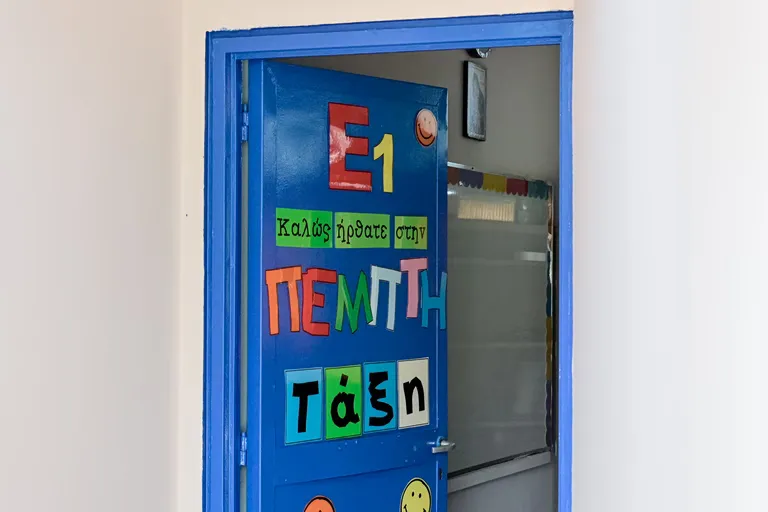
The student population in Greek primary schools has undergone a significant and steady contraction over the last ten years. Data provided by the Hellenic Statistical Authority (ELSTAT) reveals that the number of students enrolled in primary schools dropped from 642,707 during the 2015/2016 school year to 548,873 in the 2024/2025 period. This represents a total loss of approximately 93,834 students, marking a 14.6% decline in just one decade.
While primary schools show a consistent downward trajectory, the situation in kindergartens has been more volatile. Kindergarten enrollment rose from 155,243 in 2015/2016 to a peak of 177,372 around the 2021/2022 period. However, this growth has reversed; by the 2024/2025 school year, enrollment settled at 165,597, reflecting a 1.4% decrease between the 2023/2024 and 2024/2025 academic years. This reversal highlights that the shrinking demographic base is affecting all levels of early childhood education.
The trend of graduating students
The decline is not merely a matter of fewer new enrollments but also a reduction in the number of students completing their primary education. In the 2024/2025 academic year, the number of graduating primary school students saw a 5.1% decrease compared to the previous year. This indicates that the "replacement rate" of students is failing to keep pace with the outgoing cohorts, creating a structural deficit in the school system.
What is the impact on school units and teaching staff?
The reduction in student numbers has led to a decrease in the total number of active school units, even as the teaching workforce has seen slight growth. Between the 2023/2024 and 2024/2025 academic years, the number of kindergarten units fell by 1.2%, while primary school units decreased by 0.4%. These closures and mergers are a direct consequence of the dwindling child population, particularly in peripheral regions.
Interestingly, the teaching staff has not followed the same downward trend as the students. During the same period, the number of teachers increased by 2% in kindergartens and 0.5% in primary schools. This divergence has resulted in a statistically improved teacher-to-student ratio, though the practical application of this statistic varies significantly by location.
The reality of teacher-student ratios
On paper, the educational system appears to be becoming more "luxurious" in its staffing. For the 2024/2025 school year, the ratio stood at 1 teacher for every 7.4 students in kindergartens and 1 teacher for every 7 students in primary schools. This is an improvement from the previous year, which saw ratios of 1:7.6 and 1:7.2, respectively. However, this statistical improvement masks a harsh reality: in rural areas, classrooms are being dissolved or reduced to very small groups, while urban centers continue to struggle with overcrowding.
How does the demographic crisis create regional inequality?
The demographic decline is not distributed evenly across Greece, creating a sharp divide between the capital and the rest of the country. The Attica region acts as a demographic sponge, absorbing a disproportionate share of the nation's youth. According to ELSTAT, Attica accounts for 36.0% of all kindergarten students and 35.9% of all primary school students in Greece. This concentration means that over one-third of the country's primary-age children are located within the Attica Basin.
In contrast, peripheral and mountainous regions are experiencing a much more aggressive contraction. As families migrate toward urban centers, entire villages are being depopulated, leading to a wave of school closures in areas such as Western Macedonia, Eastern Macedonia and Thrace, Epirus, and the Peloponnese. The scale of this restructuring is evident in recent figures: over the last three years, there have been 46 mergers of primary schools and 253 mergers of kindergartens. Furthermore, authorities are currently planning additional mergers involving 23 primary schools and 120 kindergartens.
What are the long-term socioeconomic implications?
The shrinking number of students is a precursor to broader structural changes in Greek society. With children under the age of 15 making up only 12% to 13% of the total population, the country is facing a fundamental shift in its social fabric. The decline of nearly 100,000 primary students in a single decade serves as a warning for several key sectors of the national economy and social structure.
The long-term consequences extend far beyond the classroom. A shrinking youth population directly impacts the future labor market, the sustainability of the social security and pension systems, and the overall viability of regional development. The "silence" in the classrooms is an indicator of a looming demographic crisis that will require comprehensive national planning to address the root causes of population decline rather than merely managing the symptoms of school closures.
Frequently asked questions
How many primary school students have been lost in Greece since 2015?
Greece has lost approximately 93,834 primary school students over the last decade. According to ELSTAT, enrollment dropped from 642,707 in the 2015/2016 school year to 548,873 in 2024/2025, representing a 14.6% decline in the student population.
Is the teacher-to-student ratio improving in Greek schools?
Statistically, the ratio has improved due to falling student numbers and a slight increase in teaching staff. In 2024/2025, the ratio was 1 teacher per 7 students in primary schools and 1 per 7.4 in kindergartens, though this masks regional disparities in classroom density.
Which region in Greece has the highest concentration of students?
The Attica region holds the highest concentration of students in the country. ELSTAT data shows that Attica contains 35.9% of Greece's primary school students and 36.0% of its kindergarten students, acting as a central hub for the nation's youth.
Why are schools closing in rural Greece?
Schools in peripheral and mountainous regions are closing due to rapid depopulation and a lack of new families. This demographic shift has led to 46 primary school and 253 kindergarten mergers in the last three years as student numbers dwindle in those areas.
What is the current percentage of children under 15 in Greece?
Children under the age of 15 currently represent only 12% to 13% of the total Greek population. This low percentage underscores the severity of the demographic crisis and the shrinking base of the country's future workforce and social systems.
Key takeaways
- Primary school enrollment in Greece fell by 14.6% between 2015 and 2025.
- The number of primary school students decreased by over 93,000 in one decade.
- Attica concentrates over 35% of the nation's primary-aged student population.
- Recent years saw 253 kindergarten mergers due to declining enrollment.
- Children under 15 make up only about 12-13% of the Greek population.
Conclusion
The steady decline in Greek primary school enrollment is more than a logistical challenge; it is a profound symptom of a national demographic crisis. As student numbers fall and school units merge, the geographical divide between the concentrated population in Attica and the emptying peripheral regions continues to widen. Addressing this issue requires moving beyond the management of school closures to tackle the underlying socioeconomic causes of population decline. The next decade will determine whether Greece can implement effective national strategies to reverse this trend or if it will face permanent regional desertification and social contraction.