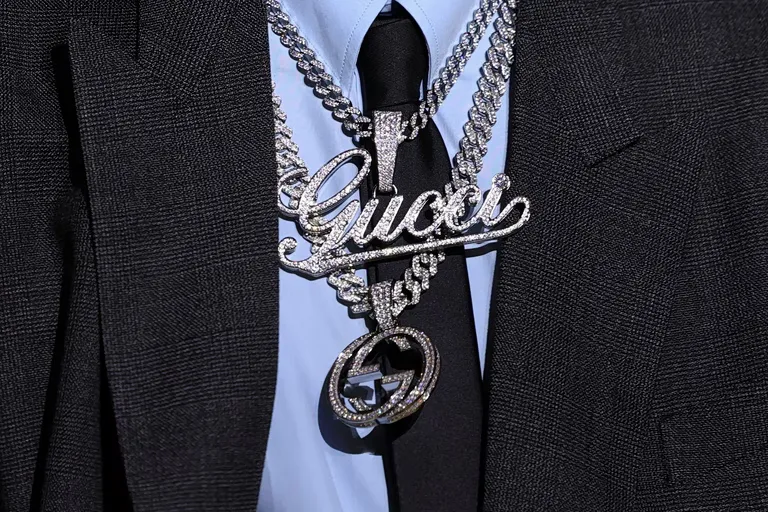
Why is Gucci experiencing such a significant sales decline?
The primary driver behind the Gucci sales decline is a sharp reduction in consumer footfall across key luxury markets. While the brand has managed to improve conversion rates and average transaction values, these gains have been insufficient to offset the lack of customers entering stores. According to Kering's latest reports, direct retail sales for Gucci fell by 9%.
This weakness is particularly pronounced in the Asia-Pacific region, specifically within mainland China and Japan. While wholesale revenues and other activities saw a 35% increase—largely due to a low comparison base and orders for new collections—the core direct-to-consumer engine is struggling. This creates a disconnect between the brand's high-level visibility and its actual retail performance.
The impact of regional demand shifts
The contraction in the Asia-Pacific market is a significant hurdle for the group. As luxury demand fluctuates in China, even established houses like Gucci find it difficult to maintain the momentum required to sustain high-end retail spaces. The reliance on wholesale to boost figures suggests that while the brand remains relevant in orders, the physical retail experience is failing to capture the immediate consumer interest necessary for high-margin direct sales.
How is Kering managing its store network contraction?
Kering is accelerating its store closure program to mitigate rising fixed costs and exit underperforming locations. During the first nine months of 2026, the group completed 105 net store closures, surpassing its initial annual target of 100. The group has now revised its expectations upward, planning at least 125 net closures for the full year.
This reduction in the physical footprint is a double-edged sword. On one hand, a smaller, more curated network can improve profitability by eliminating low-yield sites. On the other hand, the sheer volume of closures indicates a defensive posture rather than a purely strategic optimization. For Gucci, the challenge lies in ensuring that the remaining stores can drive higher productivity and better customer service to justify their existence in a tightening market.
What is the impact of Gucci's creative transition?
The creative direction under Demna is currently in a phase of gradual market introduction, with a strategic focus on leather goods, particularly bags. Kering has noted that while the transformation of the product offering is underway, there is a temporal gap between creative shifts and commercial recovery. A successful fashion show can redefine a brand's identity, but rebuilding consumer trust and repeat purchase habits takes multiple seasons.
While the new collections are being rolled out, the financial data suggests that the market has yet to fully embrace this new era. The transition requires not just new designs, but a holistic improvement in the retail experience to ensure that the brand's heritage and new creative vision translate into sustained footfall and sales.
How do other Kering brands compare to Gucci's performance?
The Kering portfolio shows a stark contrast between Gucci and its sister brands. While Gucci's direct retail sales plummeted, other houses such as Saint Laurent, Bottega Veneta, and Brioni helped drive a 2% increase in retail revenue for the group, excluding Gucci. This indicates that the group's struggles are heavily concentrated in its largest brand.
Other brands within the group are also undergoing significant structural changes:
- Balenciaga: Has shown relative resilience, particularly within its leather goods segment.
- Alexander McQueen: Is currently undergoing a restructuring process with an emphasis on British tailoring and a more streamlined distribution network.
- Kering Group overall: Reported revenues of €7.2 billion for the first half of 2026, a 3% decrease, even as operating profits remained stable at €921 million.
The concentration of risk in a single brand
Because Gucci is the largest brand within the Kering ecosystem, its specific challenges dictate the group's overall market valuation. Investors are closely monitoring whether the brand can successfully navigate its current identity shift. The divergence between Gucci's decline and the stability of brands like Saint Laurent suggests that the issue is not necessarily a total collapse of the luxury sector, but a specific struggle for Gucci to maintain its relevance and retail efficiency.
Why is the distinction between retail models important?
The current crisis highlights the difference between strategic downsizing and reactive contraction. A comparison with Uniqlo provides a useful benchmark; while Uniqlo also closed stores, it did so while growing revenues by 17% and increasing operating profits by 32%. In Uniqlo's case, closures were used to prune unprofitable locations while the core business model remained robust.
In contrast, Kering's closures appear more closely tied to a fundamental struggle in the business model. For Gucci, the physical store has historically been the primary vehicle for the business. When a brand relies so heavily on its flagship locations to drive its identity and sales, the loss of footfall becomes an existential threat to the retail strategy itself. Successful brands typically rely on three pillars: a loyal audience, a unique product offering, and high rates of repeat purchases. Currently, Gucci is struggling to maintain these mechanisms without the constant support of its premium retail windows.
Frequently asked questions
What were Kering's total revenues for Q3 2026?
Kering reported total revenues of €3.345 billion for the third quarter of 2026. This represents a stable performance on a reported basis, though it reflects a 1% decrease when compared on a comparable basis, highlighting the ongoing pressure in the luxury market.
How many stores has Kering closed in 2026?
Kering has completed 105 net store closures in the first nine months of 2026. This has already exceeded the group's initial annual target of 100 closures, and the company now expects to reach at least 125 net closures by the end of the year.
Is the luxury market declining overall?
The data suggests a selective decline rather than a universal one. While Gucci has seen a significant drop, other Kering brands like Saint Laurent and Bottega Veneta have actually seen retail revenue increases. This indicates that certain segments of the luxury market remain resilient while others face intense pressure.
What is the role of Demna at Gucci?
Demna serves as the creative director responsible for the brand's current transformation. His focus is on revitalizing the product offering, specifically through leather goods and bags, to help steer the brand through its current period of identity transition and commercial recovery.
Why is the Asia-Pacific region significant for Gucci?
The Asia-Pacific region, particularly mainland China and Japan, is a critical market for Gucci. Recent declines in direct retail sales have been heavily driven by reduced consumer activity and demand in these specific geographical areas, impacting the brand's global performance.
Key takeaways
- Gucci experienced a 12% sales decline and a 9% drop in direct retail sales.
- Kering exceeded its store closure target, planning 125 net closures for 2026.
- Kering's Q3 2026 revenues reached €3.345 billion, a 1% comparable decrease.
- Saint Laurent and Bottega Veneta provided resilience, offsetting some of Gucci's losses.
Conclusion
The current trajectory for Gucci underscores the volatility inherent in the high-end luxury sector. While Kering's broader portfolio shows signs of targeted resilience, the heavy reliance on Gucci means the group remains vulnerable to the brand's specific retail struggles. The aggressive closure of 84 stores in six months serves as a clear signal of a defensive shift in strategy. For a full recovery, the brand must move beyond mere cost-cutting and successfully execute its creative transformation, turning new product visions into consistent, high-value consumer experiences that drive footfall back to its remaining retail locations.