Why are Athens hospitals seeing a surge in corridor nursing?
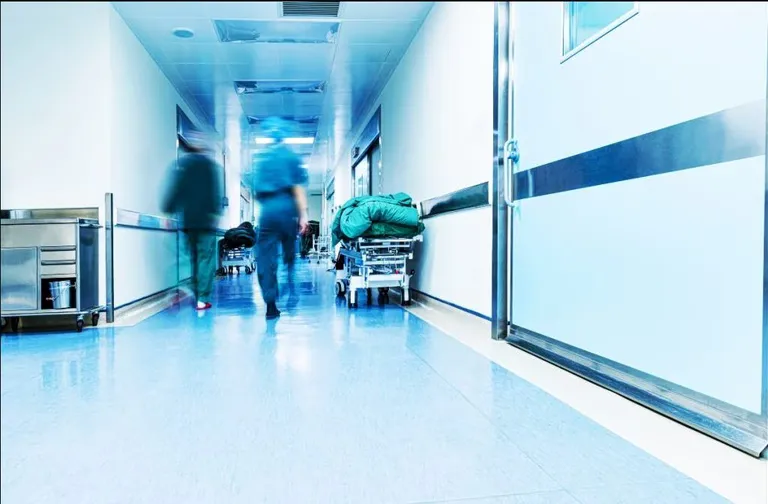
The resurgence of patients being treated on stretchers in hospital corridors is driven by a combination of systemic scheduling flaws and a seasonal rise in respiratory illnesses. While the Ministry of Health promised the eradication of this practice by November 2024, the reality in major Attica facilities suggests the problem has merely shifted or intensified. The convergence of early-season influenza and COVID-19 outbreaks has placed immediate pressure on emergency departments (EDs) that are already struggling with structural deficits.
At Attikon Hospital, the situation has reached critical levels. According to the Attikon Hospital Employees' Association, between September 3 and October 13, the facility recorded 7,700 visits and 2,000 admissions. Most alarmingly, 1,300 of these patients were treated on stretchers in hallways. The association notes that after every shift, between 100 and 140 stretchers remain in use, with up to 40 patients stuck in the ED awaiting inpatient beds.
The human cost of overcrowding
Beyond the statistics, the crisis imposes extreme pressure on medical staff and compromises patient dignity. Nurses and doctors are reportedly working beyond their limits, with some reports indicating that as few as two or three nurses are responsible for managing up to 50 patients. This exhaustion is compounded by increasing bureaucratic burdens, such as time-consuming new medication ordering processes, which divert attention from direct patient care.
How has the new morning duty system affected hospital capacity?
The new morning duty system, implemented to better distribute the approximately 2,000 daily emergency cases in Attica, has largely failed to achieve its intended purpose. Originally designed as a 'lifesaving move' by the Ministry of Health, the system aimed to prevent hospitals from being overwhelmed during their 24-hour general duty shifts. Under this model, hospitals operate on a four-day cycle: one day of general duty, one day of rest, and two days of morning-only shifts to handle lower-acuity cases.
However, medical unions such as EINAP and OENGE argue that this has created a different kind of pressure. Instead of relieving the primary duty hospitals, the morning shifts are filling up internal medical wards to capacity. Matina Pagoni, coordinator of the 3rd Pathological Clinic at Gennimatas Hospital and president of EINAP, explains that morning cases lead to full wards, which then leaves no room for patients arriving during the subsequent 24-hour general duty period. This creates a cycle where hospitals start their main duty shifts with zero available beds, inevitably leading to the 'stretcher phenomenon' in the corridors.
What role does the decline of regional hospitals play?
The centralization of healthcare in Athens is a significant contributor to the overcrowding in the capital's major hospitals. As regional hospitals face degradation and reduced services, patients from across the country are forced to travel to Attica for essential care. This phenomenon effectively turns Athens' central hospitals into the primary providers for the entire nation, a burden they are not equipped to handle.
Michalis Giannakos, president of POEDHIN, points out that approximately 50% of patients treated at Attikon Hospital originate from regional areas. The lack of robust primary healthcare and the deterioration of regional medical infrastructure act as a funnel, pushing a massive volume of cases toward the capital. This centralization means that even if the duty systems in Athens were optimized, the sheer volume of incoming patients from the provinces would likely continue to overwhelm the system.
Why are certain hospitals excluded from the duty system?
The current duty rotation excludes several key institutions, including Nikaia, Evangelismos, and Attikon, leading to questions regarding the equity and logic of the current healthcare management. While the Ministry of Health has not provided a unified explanation, medical professionals suggest that these exclusions are based on political and social considerations rather than clinical necessity.
Panos Papanikolaou, General Secretary of OENGE, suggests that the exclusion of Nikaia Hospital was likely a response to avoid intense reactions from its highly active employees' association. Regarding Evangelismos and Attikon, he implies the exclusions are linked to their status as prestigious institutions. Evangelismos serves as the central hospital for the capital's high-ranking officials, while Attikon is staffed by many prominent academic physicians. These political realities appear to have influenced the structural organization of emergency services, creating a fragmented system that fails to provide a cohesive response to the national health crisis.
Frequently asked questions
What is the 'stretcher phenomenon' in Greek hospitals?
The 'stretcher phenomenon' refers to the practice of treating and housing patients on stretchers in hospital corridors or emergency department waiting areas because no inpatient beds are available. This occurs when the rate of patient admissions exceeds the hospital's capacity to move them to dedicated wards.
Why did the 2024 health reforms fail to stop corridor nursing?
The reforms failed because the new morning duty system inadvertently filled medical wards during the day, leaving no capacity for the 24-hour emergency shifts. Additionally, the system did not address the underlying issues of regional hospital decline and the lack of primary healthcare access.
How many patients are affected by this crisis at Attikon?
According to data from the Attikon Hospital Employees' Association for the period of September 3 to October 13, 2026, approximately 1,300 patients were treated on stretchers in corridors out of 2,000 total admissions.
What are the main causes of the current hospital overcrowding?
The primary causes include the flawed morning duty rotation system, the seasonal increase in influenza and COVID-19 cases, the degradation of regional hospitals, and a lack of effective primary healthcare services across Greece.
Are medical staff being impacted by these conditions?
Yes, medical staff are facing extreme exhaustion and constant pressure. Reports indicate that the workload is increasing due to both patient volume and new bureaucratic tasks, with some nurses responsible for as many as 50 patients simultaneously.
Key takeaways
- Attikon Hospital reported 1,300 patients treated on stretchers in corridors within 40 days.
- The morning duty system has led to full wards, preventing effective 24-hour emergency care.
- Regional hospital decline is driving a massive influx of patients toward Athens hospitals.
- Medical staff face severe exhaustion, sometimes caring for up to 50 patients per nurse.
The future of the Greek healthcare system
The recurring autumn crisis in Athens highlights a fundamental disconnect between government policy and the operational realities of the Greek healthcare system. While administrative changes like the morning duty system were intended to optimize resource distribution, they have instead created new bottlenecks. Without addressing the systemic issues of regional healthcare decay and the lack of primary care, the capital's hospitals will remain overwhelmed. The current trajectory suggests that unless the structural imbalance between regional and central healthcare is corrected, the cycle of corridor nursing and staff exhaustion will persist indefinitely.