
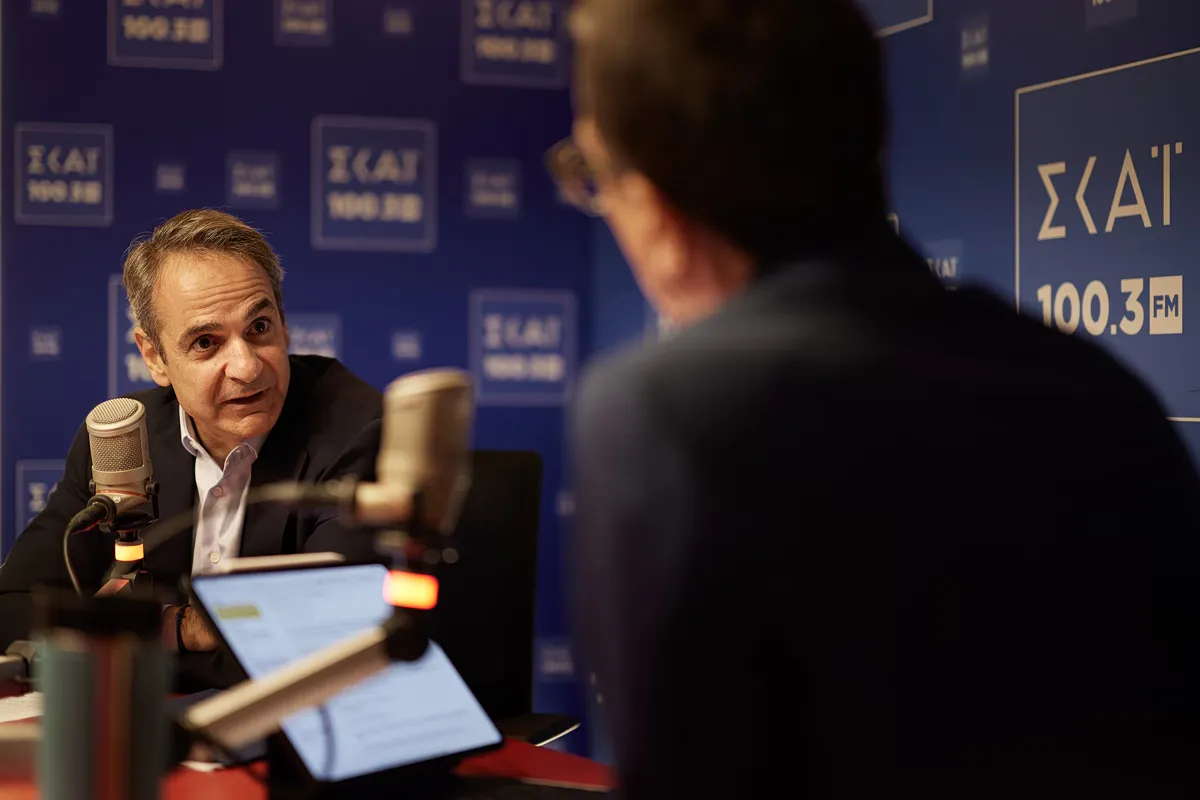
Why is Kyriakos Mitsotakis seeking a third consecutive term?
Kyriakos Mitsotakis argues that completing the current four-year mandate is essential for national stability and the fulfillment of long-term economic projects. The Prime Minister has explicitly stated that his goal is to secure a third term to maintain a steady pace of growth, aiming to double the national development rate compared to the European average. He contends that political autonomy, provided by a single-party majority, allows for rapid decision-making and clear accountability, which is often lost in coalition governments.
The Prime Minister's call for continuity is framed as a necessity for institutional credibility. He noted that holding early elections would send a message of weakness, particularly during difficult economic periods. According to Mitsotakis, the government's focus remains on delivering on its promises, including significant investments and the reduction of public debt, which he identified as a major success of his administration's economic policy.
Economic stability and the mandate for growth
A central pillar of the argument for a third term is the ongoing economic transformation. Mitsotakis highlighted that Greece is seeing a rapid reduction in public debt, a trend he describes as a historic achievement compared to the levels seen in the 1980s. He emphasized that this fiscal health allows for social benefits, such as housing subsidies for students and tax exemptions for citizens under 25, which were not feasible a decade ago.
How are Greece-Turkey relations being characterized?
The Prime Minister described the current state of Greece-Turkey relations as experiencing "light ripples" or "breezes" in the Aegean. Using meteorological metaphors, Mitsotakis compared the diplomatic fluctuations to changing weather patterns, noting that "storms" and "strong winds" are not unusual in these bilateral interactions. This characterization serves to downplay immediate escalations while acknowledging the inherent volatility of the relationship with the Turkish presidency.
Regarding the "Blue Homeland" (Mavi Vatan) doctrine, Mitsotakis dismissed it as an ahistorical concept that lacks a basis in international law. While he expressed a cautious approach to commenting on specific provocations until they manifest, he reaffirmed Greece's readiness to respond to any developments. His stance remains focused on defending Greek sovereignty while maintaining a framework of international legality.
What is the impact of the US-Greece strategic dialogue?
The recent visit of US Secretary of State Marco Rubio to Athens is viewed by the Greek government as a significant confirmation of the strengthening bilateral relationship. Mitsotakis highlighted that Rubio's visit, conducted within the framework of the US-Greece Strategic Dialogue, is a formalized process intended to deepen ties. He noted the rarity of such high-level visits, pointing out that Rubio had only previously traveled abroad for a similar dialogue in India.
The Prime Minister emphasized that the relationship has evolved beyond traditional defense cooperation into a multi-dimensional partnership. This includes:
- Energy Security: Collaboration on regional energy connectivity and investment.
- Defense Modernization: The acquisition of F-35 fighter jets and the upgrading of F-16 fleets to maintain a qualitative strategic advantage.
- Geopolitical Stability: Recognizing Greece as an indispensable strategic partner in the Eastern Mediterranean amidst regional turbulence.
Mitsotakis also remarked on the "soft power" aspect of these relations, noting how the visual backdrop of the Acropolis during diplomatic meetings reinforces Greece's cultural and historical significance on the global stage.
How is Greece navigating its relationship with Israel and the Arab world?
Mitsotakis clarified that Greece maintains a strategic relationship with the State of Israel rather than a specific political alignment with its current government. He argued that this distinction allows Greece to maintain its principled stance and critical voice when Israeli government actions do not align with Greek values. He specifically noted that this relationship has not compromised Greece's ties with the Arab world or the Palestinian Authority.
A key point of intersection between these relationships is energy infrastructure. The Prime Minister mentioned the potential for energy cables to connect to Israel, a project that involves European interests, including France. He insisted that any such connectivity must proceed without any compromise on Greek sovereign rights.
What role does Greece play in regional energy security?
Greece is positioning itself as a primary provider of energy security in the Eastern Mediterranean through the development of the Vertical Corridor. Mitsotakis stated that this infrastructure is already operational and is significantly enhancing the country's geographic and strategic footprint. He also announced that the first drilling operations west of Corfu are scheduled to commence in the first half of 2027.
The Prime Minister linked energy security to broader economic benefits, citing investments like the "Elliniko" project as examples of how energy and large-scale developments create thousands of jobs and significant tax revenue for local municipalities and the national treasury. He framed these developments as essential for unlocking Greece's untapped potential.
FAQ: Kyriakos Mitsotakis's Political and Foreign Policy Outlook
Why does the Prime Minister want a third term?
Mitsotakis seeks a third term to ensure political stability and complete the government's economic and infrastructural agenda. He believes a single-party majority provides the necessary autonomy to make rapid decisions and maintain a growth rate that exceeds the European average.
How does Greece view the "Blue Homeland" doctrine?
The Greek government views the "Blue Homeland" doctrine as an ahistorical concept that contradicts international law. Mitsotakis has characterized it as a doctrine that lacks legal legitimacy, though he remains cautious in his specific responses to Turkish provocations.
What is the significance of Marco Rubio's visit to Athens?
The visit signifies the deepening of the US-Greece strategic partnership. It moves the relationship beyond defense into areas of energy, investment, and regional connectivity, reinforcing Greece's role as a key strategic partner in the Eastern Mediterranean.
How does Greece manage its ties with Israel and Palestine?
Greece maintains a strategic relationship with the State of Israel while distinguishing the state from its specific government. This allows Greece to cooperate on energy projects while still exercising critical diplomacy when necessary to uphold its values and relations with the Arab world.
What are the upcoming energy milestones for Greece?
Greece is focusing on becoming an energy security hub through the Vertical Corridor. A major upcoming milestone is the commencement of drilling operations west of Corfu, which is expected to take place in the first half of 2027.
Key takeaways
- Mitsotakis seeks a third term to ensure political stability and achieve a growth rate double the EU average.
- Greece-Turkey relations are described as experiencing "light ripples" rather than fundamental shifts.
- The US-Greece relationship is expanding from defense into energy, connectivity, and strategic investment.
- Greece aims to become a regional energy provider, with new drilling starting in Corfu in early 2027.
- The Prime Minister maintains a strategic relationship with Israel while preserving ties with the Arab world.
Conclusion
Kyriakos Mitsotakis's political strategy is built on the dual pillars of domestic economic continuity and proactive, multi-dimensional foreign policy. By seeking a third term, he aims to leverage current fiscal stability to drive long-term growth and infrastructure projects. Internationally, his administration is working to solidify Greece's position as a vital strategic and energy hub, anchored by strong ties with the United States and a nuanced approach to regional players like Israel and Turkey. The success of this vision will depend on navigating both regional geopolitical volatility and the domestic demand for political accountability.







