The widening gap between warnings and actionable response
A warning for an impending natural disaster does not automatically guarantee that citizens can protect themselves. Global data indicates that more than one in three people worldwide who receive a warning for an imminent risk are unable to react before the event occurs. This disconnect highlights a fundamental flaw in emergency management: the effectiveness of a warning is strictly limited by the capacity of the population to act upon it.
"A warning is only as effective as the ability of people to act on it," stated Nancy Hay, Director of Documentation and Analysis at the Global Safety Evidence Centre of the Lloyd’s Register Foundation. This principle is central to understanding why high warning rates do not always correlate with reduced casualties or improved safety outcomes.
The disparity in response capacity is particularly pronounced when comparing economic tiers. In low-income countries, adults are nearly twice as likely to have been affected by a disaster compared to those in high-income nations (31% versus 16%). However, even when warnings are delivered, the ability to respond varies significantly:
- High-income countries: 71% of warned adults were able to respond.
- Low and lower-middle-income countries: Less than 50% of warned adults managed to react.
Greece faces a sharp decline in social resilience
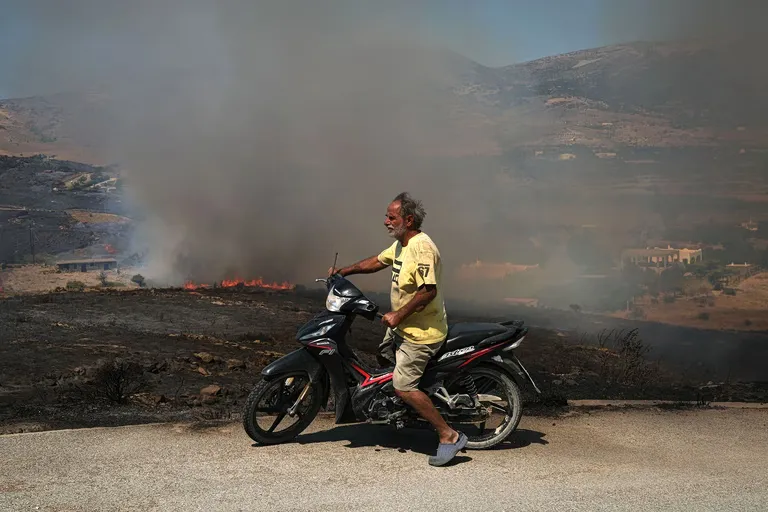
Greece has emerged as a primary concern in the recent study, exhibiting the most significant drop in social resilience among the countries analyzed. Since 2021, the nation's social resilience index has fallen by 11 points, a trend that stands in contrast to the general upward trajectory observed in other regions. This decline is part of a broader pattern affecting several European nations, including France, Estonia, and the Netherlands.
The data for Greece reveals a deep-seated crisis in both preparedness and public trust. While 55% of people affected by disasters in Greece received a warning, only 39% of those individuals were actually able to implement protective measures. This low response rate is compounded by a lack of confidence in state-led mitigation efforts.
Public perception of government readiness in Greece
The psychological and institutional landscape in Greece shows a significant disconnect between the state and its citizens. According to the research findings:
- Only 12% of Greeks believe their government is adequately prepared to handle a natural disaster.
- 70% of the population believes the government shows no interest in the well-being of its citizens.
This lack of trust may further hinder the effectiveness of emergency protocols, as successful disaster response often relies on public compliance with government directives and early warning systems.
Global trends in disaster impact and warning coverage
The Lloyd’s Register Foundation report, utilizing Gallup data, highlights the massive scale of human vulnerability to environmental shocks. Approximately 1.1 billion people—representing one in five adults globally—have experienced a disaster within the last five years. Crucially, nearly 220 million people reported receiving no warning at all during these events.
The distribution of warning coverage varies by economic status, creating a stratified landscape of risk. The following table compares the warning and response metrics between high-income and low-income demographics:
| Metric | High-Income Countries | Low-Income Countries |
|---|---|---|
| Percentage affected by disaster | 16% | 31% |
| Received a warning | 84% | 64% |
| Able to react to warning | 71% | <50% |
European preparedness and the role of economic wellbeing
Within the European Union, the situation presents a complex picture where economic prosperity does not always translate into disaster readiness. While 77% of people in the EU affected by disasters received a warning (compared to a global average of 80%), only 59% of those warned were able to respond. This is notably lower than the 64% global average and the 71% seen in high-income nations.
The study, titled "A resilient life: How wellbeing shapes the capacity to cope," suggests that social resilience is influenced by broader measures of wellbeing. Interestingly, high-income countries often show lower performance on social resilience indices compared to their performance in other evaluative sectors. This suggests that wealth alone is an insufficient buffer against the chaos of natural disasters.
Comparative household preparedness in Europe
Individual household planning remains low across much of the continent. Only 29% of households in the EU possess a formal disaster response plan. This lack of individual readiness is starkly illustrated when comparing specific nations:
- Austria: 60% of households have a disaster plan.
- Germany: 47% of households have a disaster plan.
- France: Only 22% of households have a disaster plan.
In France, the challenge is similar to Greece in terms of the response gap; although 80% of those affected received warnings, only 61% were able to act. Furthermore, France has seen its social resilience drop by six points since 2021, mirroring the downward trend seen in other developed economies.
The challenge of institutional trust and citizen engagement
A significant barrier to effective disaster management is the perceived indifference of governing bodies. On a global scale, 29% of citizens feel their government does not care about their welfare, but this figure rises to 44% within the European Union. This erosion of trust complicates the implementation of large-scale resilience strategies.
The research indicates that the challenge for policymakers is no longer just a matter of technical communication—sending the alert—but a matter of social infrastructure. Ensuring that citizens have the physical means, financial stability, and institutional trust required to act on an alert is the next frontier in disaster mitigation. Without addressing the capacity to respond, the mere act of warning remains an incomplete safety measure.