Why is social mobilization in Greece being framed as potential chaos?
The current wave of social mobilization in Greece is frequently characterized by political analysts and certain power structures as a precursor to disorder rather than a legitimate expression of civic grievance. This framing often targets political actors, suggesting that those advocating for change are actively seeking to destabilize the nation. Such rhetoric serves a dual purpose: it delegitimizes the underlying causes of the protests and creates a perceived necessity for increased police intervention and stricter state control.
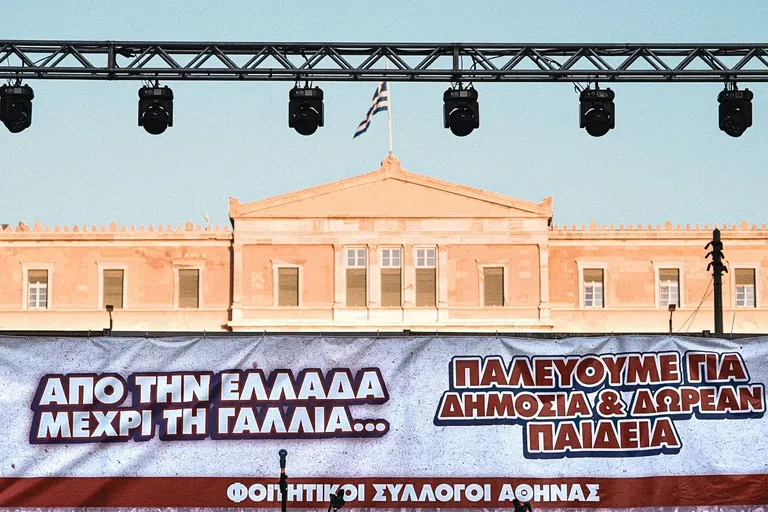
When students and educators organize demonstrations—such as the recent mobilizations regarding the education sector—the immediate media and political focus often shifts from the substance of the demands to the potential for 'incidents' or 'provocations.' This shift in narrative effectively bypasses the critical issues at hand, such as the chronic shortage of teaching staff or the severe lack of affordable student housing. By focusing on the threat of chaos, the discourse avoids addressing why these mobilizations are occurring in the first place.
The role of political rhetoric in managing dissent
Political rhetoric often utilizes the fear of instability to maintain the status quo. By labeling social movements as 'troublemakers' or 'disruptors,' authorities can justify a securitized response. This approach treats the symptoms of social dissatisfaction—the protests themselves—as the primary problem, rather than the systemic failures that trigger them. This tactic is particularly effective in societies where the collective memory of past movements is associated with economic or social setbacks.
What are the primary drivers of unrest in the Greek context?
The drivers of unrest in Greece are deeply rooted in a convergence of economic and institutional crises that affect the daily lives of citizens. While political discourse may focus on the fear of instability, the reality is a buildup of significant socioeconomic pressures that cannot be ignored indefinitely. These pressures act as 'explosive materials' within the social fabric, waiting for a catalyst to manifest as large-scale mobilization.
Key drivers include:
- The Cost of Living Crisis: Rapidly rising prices for essential goods and services have placed an unprecedented burden on households, fueling widespread anger.
- The Housing Crisis: The inability of the younger generation to secure affordable housing has created a sense of profound insecurity regarding their future.
- Erosion of Public Services: Chronic underfunding and staffing shortages in the education and healthcare sectors have degraded the quality of life and long-term prospects for citizens.
- Institutional Cynicism: A perceived undermining of democratic institutions and a growing sense of political cynicism have diminished trust in the government's ability to respond to public needs.
These issues are not isolated incidents but are interconnected symptoms of a broader systemic crisis. When the state fails to provide basic security—be it economic, residential, or institutional—citizens naturally look toward collective action to demand accountability.
How does the European context influence Greek social movements?
The social unrest observed in Greece is not an isolated phenomenon but is part of a wider European trend where citizens are reacting against neoliberal policies and the perceived inadequacy of the political establishment. The recent demonstrations in France serve as a significant point of comparison for the Greek public, offering a different perspective on what social mobilization can achieve.
In many European nations, including France, large-scale protests are interpreted as a necessary response to policies that prioritize market efficiency over social welfare. For many Greeks, these movements are seen not as a descent into chaos, but as a vital mechanism for resisting policies that exacerbate inequality. While the Greek electorate may be more cautious about mass mobilization due to the traumatic experiences of the 2010s, there remains a significant rejection of policies presented as 'inevitable' or 'self-evident.'
Is political change viewed as a threat or a necessity?
The perception of political change varies significantly between the governing elite and the general population. While some political actors attempt to frame any shift in power as a 'path to chaos,' public sentiment suggests a much higher appetite for transformation. Current sociological trends indicate that the Greek society is increasingly dissatisfied with existing policies, making the demand for change more urgent than the fear of instability.
The tension lies in the gap between the state's desire for order and the public's desire for reform. For those experiencing the brunt of the housing crisis or the decay of public education, the 'order' maintained by the current system is itself a source of instability. Consequently, the push for political change is often a defensive reaction against a status quo that no longer provides the basic requirements for a stable and dignified life.
Frequently asked questions
Why do protesters in Greece focus on the education sector?
Protesters focus on education because the sector faces critical systemic failures, including severe teacher shortages and a lack of student housing. These issues directly impact the future prospects of the youth, making education a central pillar of broader social and economic grievances.
How does the cost of living affect social stability in Greece?
The cost of living crisis acts as a primary driver of social tension. As essential goods become increasingly unaffordable, the resulting economic pressure creates widespread resentment, which can quickly transform into organized social mobilization and demands for political accountability.
Is there a link between French protests and Greek social movements?
Yes, there is a symbolic link. Many in Greece view the French protests as a legitimate resistance against neoliberalism. This provides a comparative framework that helps Greek citizens interpret their own struggles as part of a larger European fight for social welfare.
Why is there a fear of 'chaos' in political discourse?
The fear of chaos is often used as a rhetorical tool to discourage political change. By framing mobilization as a threat to public order, authorities can justify increased policing and deflect attention from the actual socio-economic problems being protested.
What role does the 2010s play in current Greek protest attitudes?
The collective memory of the economic crisis in the 2010s has made some demographics, particularly older citizens, more hesitant to engage in mass mobilization. This history is often used to suggest that large-scale movements lead to national instability rather than progress.
Key takeaways
- Social mobilization in Greece is driven by systemic issues including housing, education, and cost of living.
- Political rhetoric often reframes legitimate protests as potential 'chaos' to justify securitized responses.
- The current unrest mirrors broader European trends of resistance against neoliberal economic policies.
- A significant gap exists between the state's focus on order and the public's demand for reform.
Conclusion
The tension between social mobilization and political stability in Greece is a reflection of deeper, unresolved systemic crises. While the rhetoric of 'chaos' is frequently employed to manage dissent and maintain the status quo, it fails to address the fundamental grievances of the citizenry. From the crumbling public education system to the crushing weight of the cost of living, the drivers of unrest are grounded in material reality. Ultimately, the stability of the nation depends not on the suppression of protests, but on the state's ability to respond meaningfully to the urgent demands for social and economic reform.