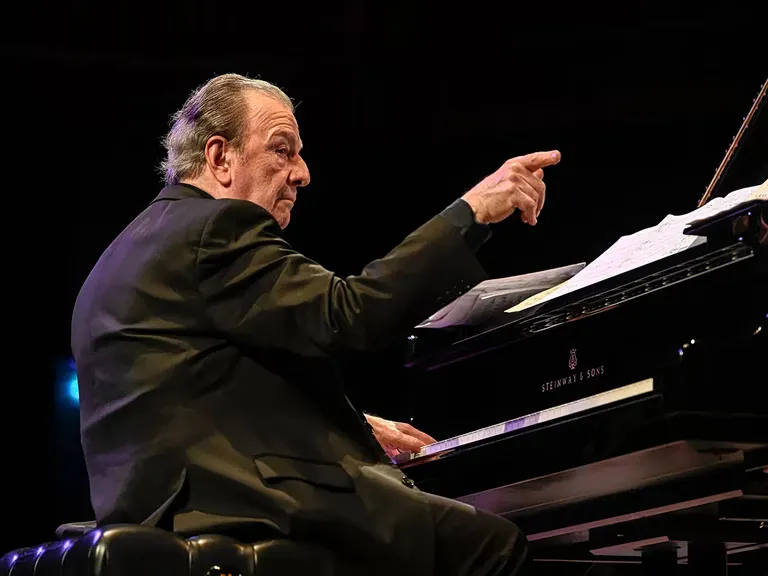
How did Pablo Ziegler shape the evolution of Nuevo Tango?
Pablo Ziegler is recognized as a musician who transitioned from a dedicated student of Astor Piazzolla to a master of the Nuevo Tango genre in his own right. While Piazzolla is considered the father of the movement, critics, including those from the Chicago Tribune, have noted that Ziegler brings a level of elegance and finesse to the music that may have even exceeded the original composer's vision. Ziegler's contribution lies in his ability to blend rigorous classical training with the improvisational freedom of jazz, creating a more sophisticated sonic palette.
His tenure with Piazzolla began in the early 1990s, a period when the legendary composer stepped back from the public eye due to health concerns. During this decade, Ziegler became an integral part of the musical landscape, helping to carry forward the complex arrangements that define the genre. This period was not merely one of apprenticeship but a transformative era where the boundaries of tango were pushed through a fusion of styles.
The intersection of classical discipline and jazz freedom
The unique character of Ziegler's music stems from his dual capability to navigate structured classical compositions and the spontaneous nature of jazz. This hybridity allows him to maintain the rhythmic integrity of tango while introducing harmonic complexities that keep the genre evolving. His work is characterized by a certain 'magical sophistication' that distinguishes his piano playing from traditional tango styles.
What was the nature of his collaboration with Astor Piazzolla?
The collaboration between Pablo Ziegler and Astor Piazzolla was a pivotal moment for both the artist and the genre. Piazzolla specifically sought out Ziegler because he required a pianist who possessed a strong classical foundation but was also capable of improvising within the music. This was a departure from the traditional tango pianist, as Piazzolla himself was not a frequent improviser, though he possessed the inherent ability to do so.
Ziegler describes the relationship as mutually influential. He notes that he actively encouraged Piazzolla to explore the improvisational side of his artistry, witnessing the master discover a new dimension of his musical self. This exchange helped solidify the 'Nuevo Tango' identity, moving it away from purely structured compositions toward a more fluid, living art form. The partnership lasted for more than ten years, providing Ziegler with an unparalleled education in the complexities of the genre.
What musical influences define the sound of Pablo Ziegler?
Pablo Ziegler's musical identity is a tapestry woven from classical, jazz, and traditional influences. While his work is inseparable from the legacy of Piazzolla, he cites a diverse range of icons as his primary inspirations. In the realm of jazz, he points to the legendary Miles Davis, while in classical music, the influence of Béla Bartók is evident in his complex rhythmic and harmonic structures. As a pianist, he draws inspiration from the foundational jazz sounds of Jelly Roll Morton.
His current listening habits reflect a deep appreciation for the Baroque era, specifically the works of Handel, Bach, and Pergolesi. This interest in Baroque precision and counterpoint likely informs the structural integrity of his tango compositions. By blending these historical influences with modern improvisational techniques, Ziegler creates a sound that is both timeless and contemporary.
Why does Pablo Ziegler maintain a strong connection to Greece?
Greece holds a significant place in Ziegler's life, serving as both a source of artistic inspiration and a site of profound human connection. While he finds the country's historical and cultural heritage deeply moving, it is the warmth and passion of the Greek people that compel his return. He describes the connection he feels with the Greek audience through music as something exceptionally unique and rewarding.
This emotional bond is a driving force behind his decision to perform in the country. For Ziegler, the musical exchange in Greece is not just a professional engagement but a meaningful interaction with a culture that resonates with his own artistic sensibilities. His upcoming residency at the Half Note Jazz Club is a testament to this enduring relationship.
What can audiences expect from his upcoming performances?
The upcoming performances at the Half Note Jazz Club, scheduled from October 30 to November 2, 2026, will feature a unique musical configuration. Ziegler will be joined by Quique Sinesi, a collaborator of over 35 years with whom he has co-developed much of his musical language, and Manu Comte, a frequent collaborator who has worked with him since their time with the Royal Philharmonic Orchestra of Liège. This marks the first time the three musicians will perform together as a trio.
The repertoire is expected to showcase the evolution of his style, blending the historical weight of Nuevo Tango with the fresh perspectives of his long-term collaborators. The tour represents a culmination of decades of shared musical exploration and the presentation of a newly formed ensemble designed to push the boundaries of the trio format.
Frequently asked questions
What is the significance of Pablo Ziegler's Grammy wins?
Pablo Ziegler has won two Grammy Awards, which serves as a formal recognition of his excellence and influence within the global music community. These awards highlight his success in elevating Nuevo Tango to a level of international prestige and technical sophistication.
How long did Ziegler work with Astor Piazzolla?
Pablo Ziegler worked with Astor Piazzolla for more than a decade. This period began in the early 1990s and was crucial in shaping Ziegler's musical identity and his mastery of the Nuevo Tango style under the guidance of the genre's creator.
What is the difference between traditional tango and Nuevo Tango?
Nuevo Tango, as championed by Piazzolla and refined by Ziegler, incorporates elements of jazz improvisation and classical structure. Unlike traditional tango, which is more strictly rhythmic and dance-oriented, Nuevo Tango emphasizes complex harmonies and a more concert-oriented, improvisational approach.
Who are Ziegler's current musical collaborators?
For his upcoming tour, Ziegler is performing with Quique Sinesi, a collaborator of 35 years, and Manu Comte. Together, they are presenting a new trio format that has not been showcased in this specific configuration before.
What inspired Ziegler's musical career?
Ziegler's musical journey began in early childhood when he began mimicking music he heard in films. Although he also studied medicine, his innate connection to the piano and the freedom found in jazz and classical music led him to a lifelong professional career.
Key takeaways
- Pablo Ziegler is a two-time Grammy winner and a key figure in Nuevo Tango.
- He served as Astor Piazzolla's permanent pianist for over ten years.
- His musical style blends classical training with jazz improvisation.
- He is performing a special trio set at the Half Note Jazz Club in late October 2026.
Conclusion
Pablo Ziegler stands as a vital bridge between the foundational era of Astor Piazzolla and the future of Nuevo Tango. His ability to synthesize the discipline of classical music with the spontaneity of jazz has not only preserved the legacy of his mentor but has expanded its expressive possibilities. As he returns to Greece to perform with long-time collaborators Quique Sinesi and Manu Comte, Ziegler continues to demonstrate that music is a profound vehicle for storytelling and human connection. His career remains a testament to the power of continuous evolution and the enduring strength of artistic passion.