How does robotic thyroidectomy function during surgery?
The robotic surgical system acts as a sophisticated extension of the surgeon's hands rather than an autonomous operator. Every movement of the specialized robotic instruments is precisely controlled by the surgeon from a dedicated console. This human-led approach ensures that the technology serves the medical expertise of the practitioner rather than replacing it.
The technology provides several technical advantages that enhance surgical precision. The system delivers a three-dimensional, magnified view of the operative field, allowing for much greater detail than conventional methods. Furthermore, the robotic instruments possess an exceptional range of motion, mimicking and even exceeding the dexterity of a human wrist. A critical feature of these systems is the ability to filter out natural hand tremors, which facilitates extremely delicate manipulations around highly sensitive anatomical structures.
Protecting vital structures
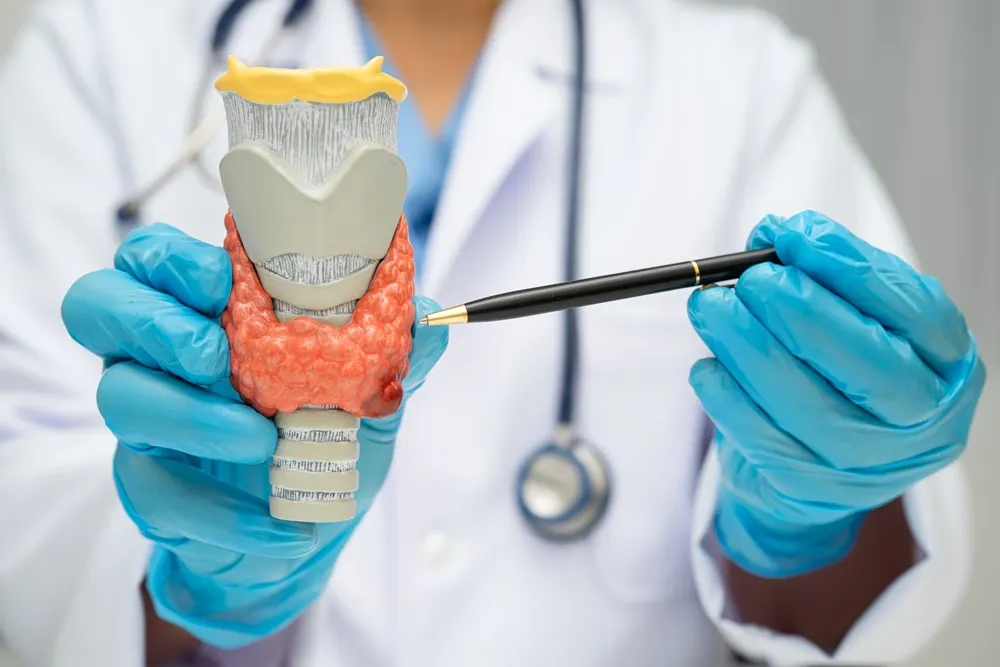
Precision is paramount in thyroid surgery due to the proximity of critical nerves and glands. The surgeon must identify and protect the recurrent laryngeal nerves, which govern vocal cord function, as well as the parathyroid glands, which regulate calcium levels in the body. The enhanced visualization and flexibility of robotic tools are designed to support the surgeon in the accurate identification and preservation of these vital components.
What are the different surgical access techniques?
Robotic thyroidectomy utilizes remote access, meaning the surgeon reaches the thyroid through an anatomical pathway that avoids the anterior neck. Depending on the specific technique chosen, incisions are placed in areas that are less visible or entirely hidden. This shift in approach changes the surgical landscape from a direct neck incision to a remote-access procedure.
Several distinct approaches are currently utilized in clinical practice:
- Axillary approach: Access is gained through the armpit, where the incision is hidden within the natural skin fold of the area.
- BABA (Bilateral Axillo-Breasts Approach): This technique uses small incisions in both the armpits and near the breasts to create a symmetrical approach to the thyroid.
- Retroauricular approach: The incision is placed behind the ear and may extend toward the hairline to remain discreet.
- Transoral approach: Instruments are introduced through small incisions on the inner surface of the lower lip within the oral cavity, resulting in no external skin scars.
The choice of technique is not universal; it depends heavily on the specific disease, the patient's unique anatomy, and the specialized experience of the surgical team.
Is robotic thyroidectomy always the best option?
Robotic thyroidectomy is not suitable for every patient and should not be viewed as a universal replacement for traditional surgery. It is primarily considered for specific cases, such as benign nodules requiring surgical intervention or certain low-risk cases of differentiated thyroid cancer. The decision to proceed with a robotic approach involves a complex evaluation of multiple medical factors.
Several criteria determine whether a patient is a candidate for this technology:
- The size of the thyroid gland and any existing nodules.
- The specific characteristics of potential malignancy.
- The presence of any lymph node disease.
- The patient's anatomical features and history of previous surgeries.
In many instances, conventional open surgery remains the gold standard. For patients with very large goiters, locally advanced or extensive malignancies, or other complex medical conditions, the traditional approach is often the most appropriate and safest method. Therefore, the desire to avoid a visible scar is not a sufficient medical reason to choose robotic surgery over more established protocols.
What role does surgeon expertise play in outcomes?
The safety and success of robotic thyroidectomy are inextricably linked to the specialized training and experience of the surgical team. Because this method involves navigating through non-traditional pathways to reach the thyroid, it requires a deep mastery of both endocrine surgery and the specific robotic remote-access techniques. The technology is a tool, but the clinical outcome relies on human expertise.
A successful procedure requires the surgeon to possess:
- Advanced training in robotic-assisted systems.
- In-depth knowledge of complex anatomical pathways.
- Proven experience in both traditional and remote-access endocrine surgery.
As the field evolves, the focus remains on personalized medicine. The goal is not simply to apply the latest technology to every case, but to select the most appropriate surgical method for the specific patient, prioritizing safety and effective disease management alongside aesthetic considerations.
Frequently asked questions
Does robotic thyroidectomy leave a scar on the neck?
No, one of the primary advantages of robotic thyroidectomy is the avoidance of a visible scar on the front of the neck. By using remote access through the armpit, chest, or mouth, the incisions are placed in areas that are either hidden or much less noticeable than traditional methods.
Can the robot perform the surgery by itself?
No, the robotic system does not perform the surgery autonomously. It functions as a highly advanced tool that allows the surgeon to perform the operation with greater precision. The surgeon remains in full control of every movement made by the robotic instruments through a control console.
Is this method safe for treating thyroid cancer?
Robotic thyroidectomy can be considered for specific, low-risk cases of differentiated thyroid cancer. However, for more advanced or extensive cancers, traditional open surgery is often the preferred and safer approach. A thorough medical evaluation is required to determine the best course of action for each individual.
How is the correct surgical technique chosen?
The choice of technique, such as the axillary or transoral approach, depends on the patient's anatomy, the nature of the thyroid condition, and the expertise of the surgical team. Surgeons evaluate the size of the nodules and the patient's medical history to select the most effective and safe pathway.
Is robotic surgery more invasive than traditional surgery?
It is not necessarily "less invasive" in the sense of total trauma, as a pathway must still be created from the entry point to the thyroid. It is more accurately described as a remote-access surgery. While it avoids the neck incision, it involves navigating through other parts of the body to reach the target organ.
Key takeaways
- Robotic thyroidectomy uses remote access to avoid visible scars on the front of the neck.
- The surgeon maintains full control of the robotic tools through a specialized console.
- Techniques include axillary, BABA, retroauricular, and transoral access methods.
- Suitability depends on nodule size, cancer risk, and the patient's specific anatomy.
- Traditional open surgery remains the standard for large goiters and advanced cancers.
Conclusion
Robotic thyroidectomy represents a significant evolution in endocrine surgery, offering a sophisticated alternative for patients prioritizing aesthetic outcomes. By utilizing advanced 3D visualization and high-precision instruments, surgeons can navigate alternative anatomical routes to treat thyroid conditions while minimizing visible scarring. However, this technology is a specialized tool rather than a universal replacement for traditional methods. The ultimate priority in thyroid surgery remains the safety of the patient and the effective management of the disease, requiring a highly personalized approach based on rigorous clinical assessment and surgical expertise.