
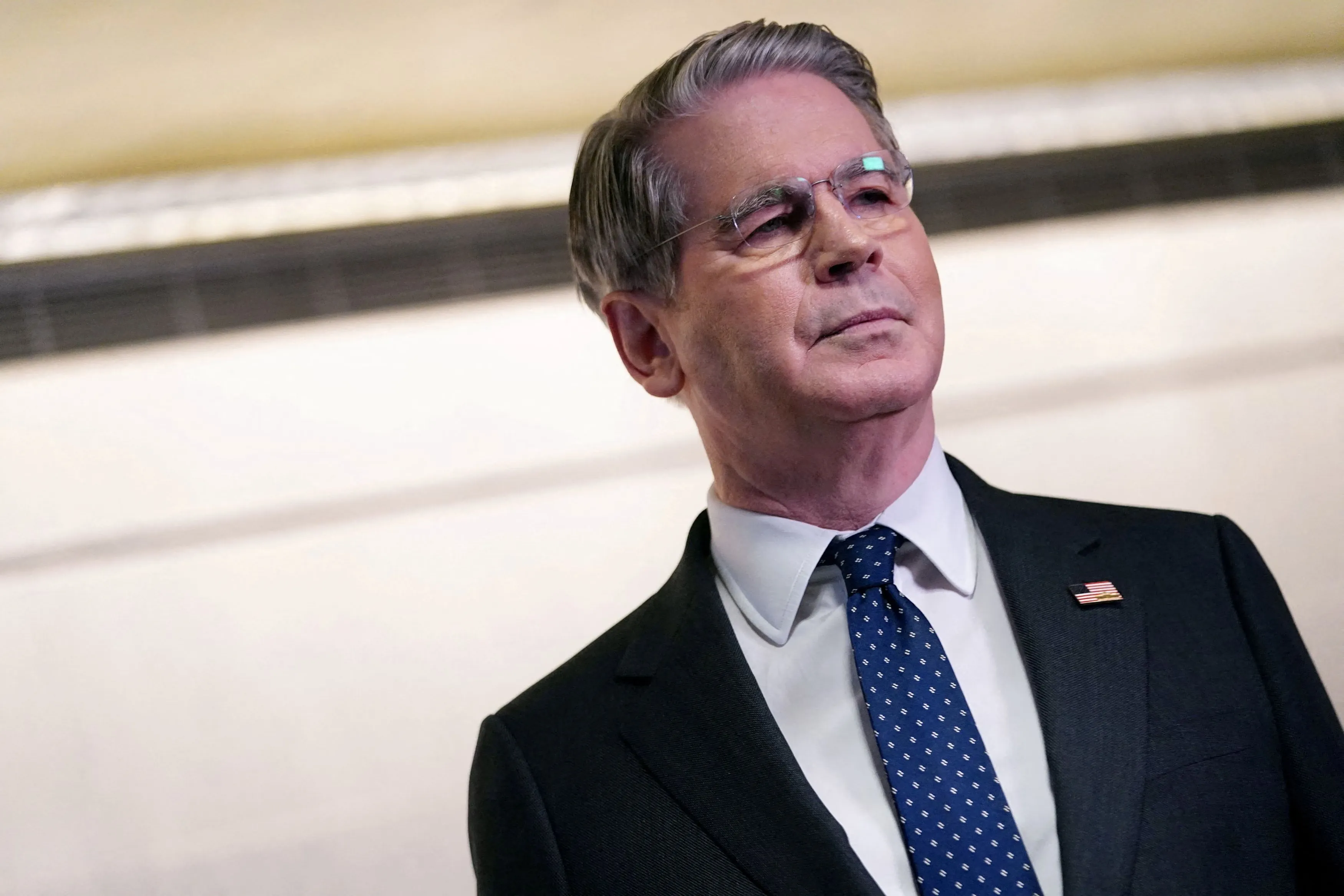
How has Scott Bessent consolidated power within the Treasury?
Scott Bessent has significantly expanded his influence over the past 20 months, moving well beyond the traditional mandate of the Treasury Secretary. His leadership is characterized by a close-knit circle of trusted allies, many of whom hail from his previous career in the financial sector. A notable example is Gene Lang, a former colleague from Key Square Capital Management, who assumed key responsibilities following the departure of high-ranking officials.
The consolidation of authority is evident in the breadth of his involvement in critical policy areas. Bessent does not merely oversee domestic finances; he plays an active role in shaping US trade relations with China, defining artificial intelligence policy, and influencing the selection of leadership for the Federal Reserve. This expansion suggests a centralized command structure where the Treasury's reach extends into various pillars of national security and technological advancement.
The shift in leadership and internal dynamics
The internal culture of the Treasury has been marked by significant shifts in personnel. According to reports from the Wall Street Journal, tensions between Bessent and high-ranking officials have led to notable departures. One such instance involved John Harley, the Under Secretary for Terrorism and Financial Intelligence, who reportedly entered a heated confrontation with Bessent during a January meeting. While Harley eventually transitioned to a role as the US Ambassador to the OSCE, Reuters noted that his departure was closely linked to friction with the Secretary.
What is the impact of Bessent's management style on the Treasury?
The management style of Scott Bessent is described by over 30 current and former government officials as highly demanding and frequently volatile. Critics argue that his aggressive approach has contributed to an unusually high rate of turnover among the department's leadership. These officials suggest that his tendency to reprimand both senior advisors and junior staff—on issues ranging from high-level policy formulation to the organization of daily briefing materials—creates an unstable working environment.
Conversely, supporters of the Secretary view this intensity as a necessary component of his leadership. They argue that his forceful method reflects a deep commitment to achieving results and meets the urgent tempo required by the Trump administration's economic agenda. From this perspective, the friction is not a sign of dysfunction but a byproduct of the high-stakes environment in which the Treasury operates.
How is the '3-3-3' strategy performing against economic realities?
The economic performance of the administration currently sits in tension with the ambitious goals proposed by Bessent. He originally advocated for a '3-3-3' strategy to guide the nation's fiscal trajectory. This plan aims to achieve a federal budget deficit of 3% of GDP by 2028, maintain an economic growth rate of 3%, and increase US oil production by three million barrels per day.
However, current data indicates a gap between these targets and actual outcomes. Economic growth is trending below the 3% threshold, and the increase in domestic oil production has failed to meet the projected three-million-barrel surge. These discrepancies present a significant challenge to the credibility of the administration's long-term fiscal planning.
Rising debt and the bond market challenge
The macro-economic landscape is further complicated by a ballooning national debt, which has surpassed $40 trillion. This surge in debt, coupled with rising yields on government bonds, has increased borrowing costs for the US public, businesses, and households alike. As of October 6, 2026, Treasury data showed that the 10-year US bond yield stood at 5.27%, while the 30-year yield reached 5.64%.
In response to these market pressures, Bessent has attempted to stabilize the market through bond buyback programs. While the Treasury increased the ceiling for these buybacks to $6 billion, the effectiveness of this intervention remains a subject of debate. Market observers note that the markets often absorb only about half of the offered buyback amounts, suggesting that investor confidence in these stabilization efforts is not absolute.
What role does Bessent play in international economic warfare?
Beyond domestic management, Bessent has taken a leading role in the administration's economic strategy toward Iran. On August 24, he announced 'Operation Economic Outcast,' a comprehensive campaign designed to sever the financial and commercial lifelines of the Iranian state. This operation represents a significant escalation in the use of economic tools to achieve geopolitical objectives.
Since the launch of this operation, the Treasury has systematically expanded sanctions to cover a wide array of sectors, including:
- Petroleum and energy exports
- Aviation and transport
- Digital assets and cryptocurrency
- Shipping and maritime activities
- Industrial manufacturing
What is the nature of the relationship between Bessent and President Trump?
Despite internal friction and market volatility, Scott Bessent has secured a position of profound trust with President Trump. The President reportedly communicates with him almost daily and views him as one of the few officials capable of persuading him on complex economic matters. This relationship has effectively placed the weight of the entire presidential economic agenda on the shoulders of the Treasury Secretary.
Bessent has remained defiant in the face of criticism, particularly from the financial community. He has dismissed detractors on Wall Street, using derogatory terms such as 'Bloomberg terminal bros' to characterize critics who he believes are disconnected from real-world economic drivers. His stance is one of extreme confidence, even suggesting that investors are welcome to bet against his policies. Ultimately, the measure of his tenure will not be his ability to command his subordinates, but whether his aggressive leadership translates into measurable economic stability, lower borrowing costs, and sustainable growth.
Frequently asked questions
What is the '3-3-3' strategy proposed by Scott Bessent?
The '3-3-3' strategy is a fiscal framework designed to guide the US economy. It targets a federal deficit of 3% of GDP by 2028, an annual economic growth rate of 3%, and an increase in domestic oil production by three million barrels per day to ensure energy independence.
How has Scott Bessent's management style been described?
Bessent's management style is described by numerous officials as highly demanding, aggressive, and occasionally volatile. While critics link this approach to high staff turnover within the Treasury, supporters argue that his intensity is necessary to drive the rapid results demanded by the current administration's economic agenda.
What is 'Operation Economic Outcast'?
Operation Economic Outcast is a broad economic pressure campaign announced by Bessent on August 24 to target Iran. The operation seeks to isolate Iran from the global financial system by expanding sanctions across sectors such as oil, aviation, shipping, and digital assets to restrict their financial lifelines.
Why are US bond yields rising?
Rising yields are linked to increasing federal debt, which has exceeded $40 trillion, and broader market conditions. As of October 2026, 10-year yields reached 5.27%, increasing the cost of borrowing for the US government, as well as for private businesses and individual households.
Who are the key allies of Scott Bessent in the Treasury?
Bessent relies heavily on a circle of trusted associates from his private sector background. A key figure is Gene Lang, a former colleague from Key Square Capital Management, who has taken on significant responsibilities within the department following previous leadership changes.
Key takeaways
- Scott Bessent has consolidated significant power, influencing trade, AI policy, and Federal Reserve leadership.
- The '3-3-3' economic strategy aims for 3% growth and a 3% deficit by 2028.
- US national debt has surpassed the $40 trillion milestone, impacting borrowing costs.
- Operation Economic Outcast targets Iran through extensive sanctions on oil, shipping, and digital assets.
- Bessent maintains a high-frequency advisory role with President Trump on economic matters.
Conclusion
Scott Bessent has transitioned from a financial sector professional to one of the most consequential architects of American economic policy. His tenure is defined by a dual reality: a highly centralized and aggressive command structure within the Treasury, and a challenging macroeconomic environment marked by rising debt and missed growth targets. While his 'Operation Economic Outcast' demonstrates his capacity for international economic maneuvering, his ultimate legacy will depend on his ability to stabilize the domestic economy. The ability to convert political influence into lower borrowing costs and sustainable fiscal health remains the definitive test of his leadership.







