
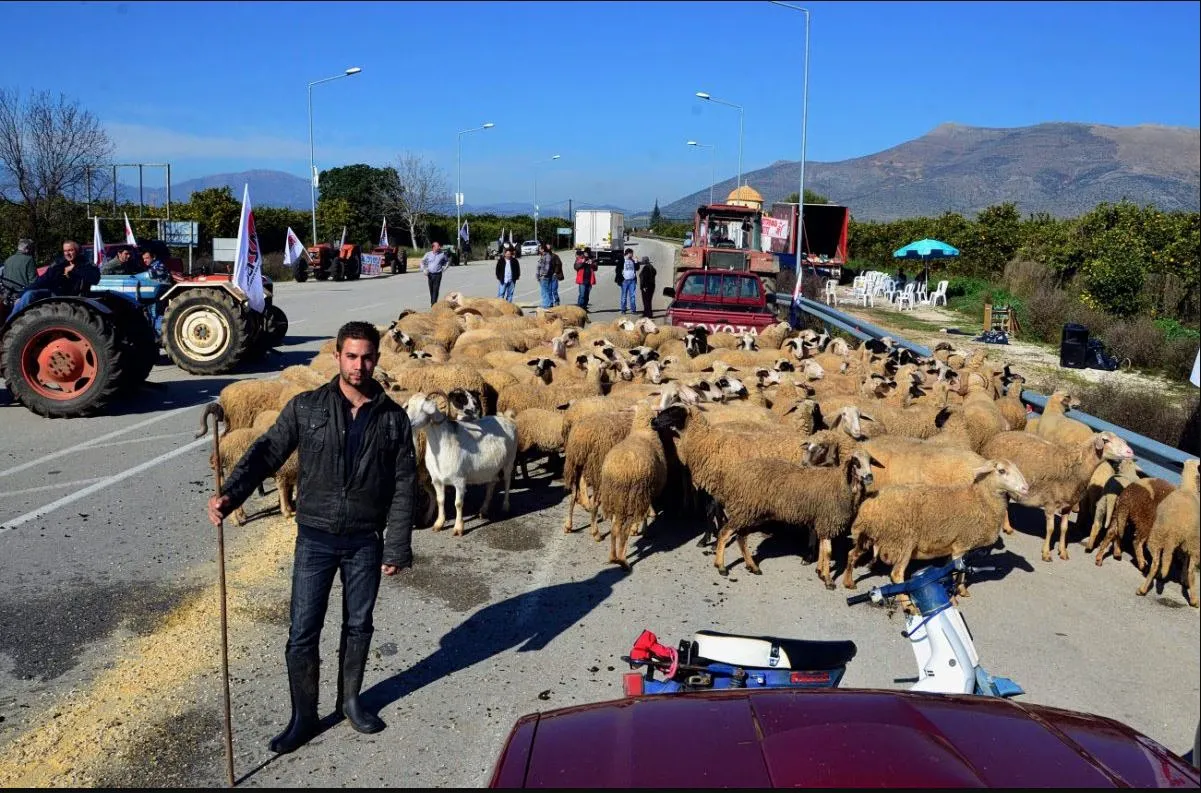
Why is the EU intervening in the sheep and goat plague crisis?
The European Union has stepped in to mandate stricter oversight because Greece has struggled to contain the Sheep and Goat Plague (SGP) virus for over two and a half years. Despite existing EU control regulations, new outbreaks continue to emerge in regions previously considered disease-free. The EU Veterinary Emergency Team (EUVET) expressed concerns that the national management model is failing to eradicate the virus.
The intervention follows a series of high-level meetings where European experts questioned the accuracy of the data provided by the Greek Ministry of Rural Development and Food. There is a growing suspicion that the virus is circulating undetected within herds, or that the official infection numbers do not reflect the true scale of the epidemic. The EU's primary objective is to establish a nationwide serological surveillance plan to provide definitive evidence of the virus's movement and to restore confidence in the country's biosecurity measures.
The role of EUVET in Greek veterinary oversight
The EU Veterinary Emergency Team provides technical assistance to Greece, specifically addressing the massive wave of animal mortality that began two and a half years ago. Their recent involvement stems from the fact that even as farmers requested the resumption of flock movements in areas like Kampou, new outbreaks were being registered in the World Animal Health Information System (WAHIS). This discrepancy between local reports and official data has forced the EU to demand more rigorous scientific verification.
What is the impact of serological surveillance on Greek farmers?
Serological surveillance involves laboratory analysis of blood samples to detect antibodies against the SGP virus, a measure that has caused significant anxiety among the Greek livestock community. The Ministry of Rural Development issued circular no. 250901/1-10-2026 to implement this program, which is scheduled to run from October 12 until December 31, 2026. While the Ministry suggests this is a routine measure, experts view it as a response to the potential classification of Greece as an endemic zone.
The program will target 153 livestock holdings per region, with testing conducted by specialized laboratories in Larissa, Thessaloniki, and the ELGO-DEMETRA Veterinary Research Institute. For farmers, the stakes are incredibly high. If the tests reveal a high prevalence of antibodies, it indicates either a previous undetected infection or the use of unauthorized vaccines. The Ministry has remained silent on the specific consequences for farms that test positive, leaving producers to fear potential sanctions or the mandatory culling of animals.
How has the SGP virus affected livestock numbers and regional stability?
The scale of animal mortality caused by the SGP virus is staggering, with official figures recording 495,918 deaths across 2,271 outbreaks as of September 2026. The virus has proven remarkably resilient, moving into geographically distant areas and bypassing existing protection zones. Recent outbreaks in Arta and Rodopi demonstrate that the disease is not contained, with some regions seeing hundreds of deaths within a single week.
The epidemiological map of Greece has been drastically altered by the virus. Regions such as Arcadia, Kastoria, Florina, Arta, and Messenia, which were once considered stable, have seen recent infections. The Ministry's own reports suggest that biosecurity failures, such as contaminated feed supply companies or inadequate movement controls, have facilitated the spread. In Rodopi, for instance, a single week saw the death of over 850 animals, highlighting the rapid and uncontrolled nature of the current wave.
What are the risks to Greece's dairy and PDO exports?
The most significant economic threat posed by the sheep and goat plague is the potential ban on Greek dairy exports, particularly Protected Designation of Origin (PDO) products. If serological surveillance confirms that the virus is endemic, international trade partners may restrict or prohibit the import of Greek dairy. This would have a devastating impact on the agricultural economy and the livelihoods of thousands of producers.
The comparison with Cyprus provides a stark lesson in crisis management. While Cyprus faced similar challenges with Avian Influenza, it managed to implement simultaneous eradication and vaccination protocols in high-risk zones, allowing it to continue exporting its PDO halloumi cheese. In contrast, the slow response in Greece—exemplified by the seven-month delay in tracing outbreaks on Lesvos—leaves the country's dairy sector vulnerable to international sanctions and market exclusion.
The connection between illegal vaccinations and trade risks
A critical factor complicating the trade situation is the admission of widespread illegal vaccinations. In November 2025, the head of the National Scientific Committee for Management and Control (EEEDE), Professor Christos Bilinis, revealed that there were reports of over one million unauthorized vaccine doses being administered. This lack of regulatory control undermines the credibility of Greece's veterinary reports. For international markets, the presence of unapproved vaccines is as much a biosecurity risk as the virus itself, as it masks the true epidemiological status of the herds.
Frequently asked questions
What is serological surveillance in the context of SGP?
Serological surveillance is a diagnostic process where blood samples from sheep and goats are analyzed in a laboratory to detect antibodies. This helps scientists determine if animals have been exposed to the SGP virus, even if they do not show clinical symptoms, providing a clearer picture of the virus's presence.
Why did the EU intervene in the Greek livestock situation?
The EU intervened because the Greek Ministry's management of the sheep and goat plague has been deemed ineffective. EUVET identified a disconnect between official data and the reality of new outbreaks in previously clean areas, necessitating stricter, EU-mandated monitoring to ensure regional biosecurity.
What are the economic consequences of the virus for Greece?
The primary economic risk is the potential prohibition of Greek dairy exports, especially PDO products. If the virus is classified as endemic due to high antibody levels in herds, international trade partners may ban Greek dairy to prevent the spread of the disease.
How many animals have been lost to the SGP virus?
According to Ministry data presented in September 2026, the outbreak has caused the death of 495,918 sheep and goats. This figure is part of a larger crisis involving over 2,271 identified outbreaks across the country.
What is the significance of the illegal vaccinations?
The admission of over one million illegal vaccine doses suggests a loss of control over veterinary protocols. This undermines international trust in Greek health certifications and complicates efforts to prove that the country is free from the SGP virus.
Key takeaways
- The SGP virus has caused nearly 500,000 animal deaths across Greece as of late 2026.
- EUVET has mandated serological surveillance to address suspected undiagnosed virus circulation.
- Illegal vaccinations, exceeding one million doses, have compromised national biosecurity credibility.
- The outbreak threatens the international export of Greek PDO dairy products.
Conclusion
The sheep and goat plague crisis in Greece has evolved from a local veterinary issue into a significant economic and diplomatic challenge. The intervention by the European Union highlights a profound lack of confidence in the national management strategies employed by the Ministry of Rural Development and Food. As serological surveillance begins, the results will determine whether Greece can restore its reputation for biosecurity or if it faces long-term restrictions on its vital dairy exports. The tension between regulatory necessity and the survival of the livestock sector remains the central conflict in this ongoing epidemic.







