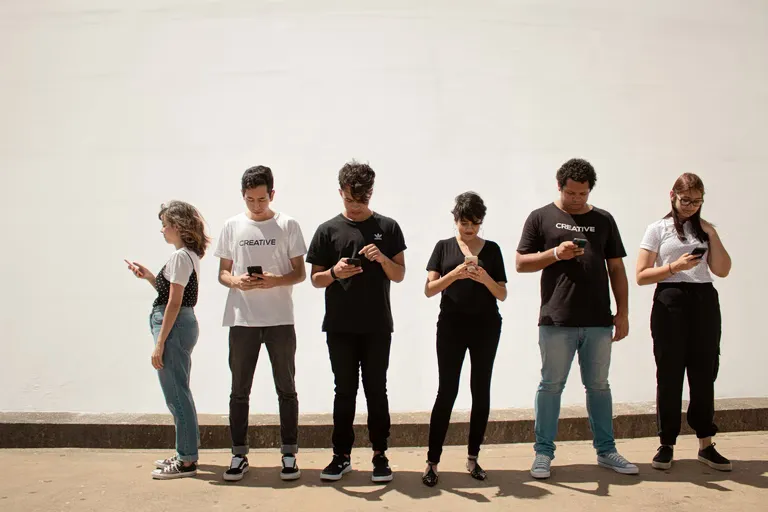
The measurable decline in daily verbal interaction
The volume of spoken language in everyday life is shrinking as digital habits evolve. Researchers analyzed data from over 2,000 individuals, ranging in age from 10 to 94, drawing from 22 distinct studies conducted between 2005 and 2019. The findings indicate a consistent downward trajectory in verbal output across the population.
Demographic variations in word loss
The impact of this communicative shift is not distributed equally across all age groups. While the general population sees a decline of 338 words per year, younger generations face a significantly steeper drop. For those under the age of 25, the annual loss reaches approximately 458 words. This suggests that the digital natives, who have grown up alongside the expansion of social media, may be experiencing the most radical changes in their linguistic habits.
The data suggests that the traditional mechanics of conversation—spontaneous, long-form verbal exchanges—are being compressed. As the frequency of these interactions drops, the complexity and length of daily communication appear to be diminishing alongside the word count.
Drivers of the communicative shift
Scientists suggest that the rise of social media and broader lifestyle changes are likely limiting opportunities for spontaneous, face-to-face communication. Although a direct causal link between social networks and the reduction in spoken words has not been proven, the correlation is a significant area of study. The shift is characterized by the replacement of traditional social moments with digital substitutes.
| Traditional Interaction | Digital Substitute |
|---|---|
| Conversations with neighbors | Instant messaging/SMS |
| Face-to-face friend meetings | Social media updates/scrolling |
| Workplace break discussions | Emojis and brief comments |
In the United States, research indicates that people are spending more time alone compared to previous decades. Younger demographics, in particular, appear to meet their friends in person less frequently. This isolation is not necessarily synonymous with loneliness, nor does increased social media use automatically equate to fewer meaningful relationships. In some instances, the relationship may be cyclical: individuals might turn to the digital world precisely because their opportunities for physical social contact have already diminished.
The dual nature of digital social impact
Social media communication does not function solely as a reductive force; it can also serve as a tool for social reinforcement. A study tracking children in Norway between the ages of 10 and 18 revealed that those who interacted actively on social media—specifically by posting and commenting—tended to spend more time with friends both online and offline. In these cases, digital interaction acted as a catalyst for physical social engagement rather than a replacement for it.
The role of social anxiety in skill development
While active engagement can boost social circles, the study also identified a critical caveat regarding social development. For children who exhibited higher levels of social anxiety, increased social media use was linked to a more difficult progression of social skills. This suggests that the medium's impact is heavily mediated by the user's existing psychological profile.
The distinction lies in how the technology is utilized. For some, the screen is a bridge to the physical world; for others, particularly those struggling with anxiety, it may become a barrier that hinders the development of essential interpersonal competencies.
Balancing digital and physical communication
Effective communication requires more than just a digital interface. While messaging can maintain connections over long distances and video calls can bridge geographical gaps, physical contact provides unique benefits that digital platforms struggle to replicate. Research shows that both online and in-person interactions contribute to mental well-being, especially when they involve close personal connections, but purely digital communication often provides fewer psychological benefits than face-to-face contact.
The core challenge is not the presence of social media, but the role it occupies within a person's broader social ecosystem. Meaningful communication is defined by attention and genuine interest rather than the volume of likes, followers, or messages received. To maintain robust social health, the focus must remain on ensuring that digital tools complement, rather than entirely substitute, the depth and presence required for real human connection.