What are the main drivers of the West Macedonia GDP decline?
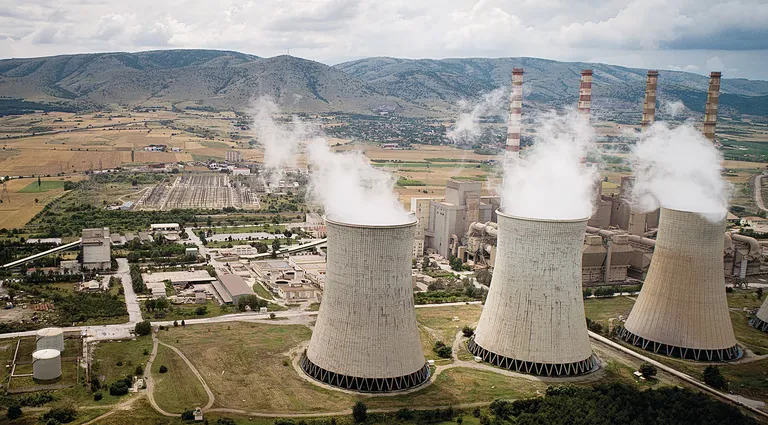
The primary driver of the 18% contraction in West Macedonia's real GDP is the rapid decarbonization process and the phasing out of lignite-based energy production. For decades, the regional economy was heavily reliant on the lignite industry, which provided a stable foundation for both local employment and regional wealth.
According to a 2021 study by the University of Western Macedonia, lignite activities accounted for 34% of the region's total GDP. Furthermore, nearly 25% of all jobs in the area were directly or indirectly linked to the lignite sector. This heavy industrial concentration meant that any shift in energy policy would have a disproportionate impact on the local economic structure.
The transition away from fossil fuels, while environmentally necessary, has created a significant economic vacuum. The loss of industrial output has not been immediately offset by new sectors, leading to the sharp decline observed in the Eurostat data. This phenomenon highlights the risks associated with rapid structural changes when the replacement economy is not yet fully operational.
The role of the energy transition
The transition from coal to renewable energy sources has fundamentally altered the economic landscape of Western Macedonia. While the European Union promotes a 'Green Transition,' the localized reality in this region has been one of industrial contraction. The economic dependency on a single sector made the region particularly vulnerable to the policy shifts mandated by EU climate goals.
How does West Macedonia compare to other EU regions?
West Macedonia's economic performance sits at the bottom of the European rankings for growth, following only Southeast Bulgaria. While much of the European Union experienced growth, certain regions faced significant structural setbacks.
According to the Eurostat 'Regions in Europe 2026' report, the contrast between the highest and lowest performing regions is stark. For instance, the Eastern and Midland region of Ireland saw a massive GDP increase of 38.0% between 2019 and 2024. In contrast, the following regions experienced the most significant declines:
- Southeast Bulgaria (Yugoiztochen): -20.5%
- West Macedonia (Dytiki Makedonia): -18.0%
- Groningen, Netherlands: -14.0% (due to the phase-out of natural gas extraction)
- Southern Muntenia, Romania: -13.5%
- Southwestern Oltenia, Romania: -11.3%
The data suggests that regions heavily dependent on a single, extractive, or carbon-intensive industry are the most susceptible to economic contraction during the current era of environmental regulation and resource depletion.
Which Greek regions face the highest economic vulnerability?
Five Greek regions are currently identified as among the most economically vulnerable in Europe, with real GDP per capita measured in Purchasing Power Standards (PPS) falling below 50% of the EU average. This indicates a deep-seated regional inequality within the country.
The ranking of these regions by their proximity to the EU average is as follows:
| Region | GDP per capita (% of EU average) |
|---|---|
| North Aegean | 42% |
| Eastern Macedonia – Thrace | 45% |
| Epirus | 45% |
| West Macedonia | 48% |
| Western Greece | 49% |
Beyond GDP per capita, the Peloponnese region faces a different but equally severe challenge. It is listed among the top ten poorest regions in the EU regarding social welfare, with 38.1% of its population at risk of poverty or social exclusion. These figures underscore a multi-dimensional economic crisis across various parts of Greece, ranging from low productivity to high social vulnerability.
Why has the Just Transition Fund failed to stabilize the region?
Despite the allocation of significant European funds, the economic stability of West Macedonia remains elusive, leading to accusations that the 'Just Transition' is not being implemented fairly. The region was promised substantial support to mitigate the impact of decarbonization, but the actual implementation has faced criticism from local professional bodies.
Local economic and scientific organizations, including the Chamber of Commerce and the Technical Chamber of Greece (TEE), have raised concerns regarding the Just Transition Fund (JTF). While a total of €1.61 billion was projected for the transition in West Macedonia and Megalopoli, the distribution of these funds has been a point of contention. According to a joint letter sent to EU institutions in July 2026, only 9.36% of the budget has been certified for actual expenditure, while 45.1% consists of legal commitments.
Critics argue that this discrepancy means the promised economic relief is not reaching the local economy in a timely or effective manner. The mismatch between the urgent need for job creation and the slow pace of fund deployment has exacerbated the sense of economic abandonment in the region.
The socio-economic risks of delayed investment
The delay in effective fund utilization carries long-term risks for the demographic and social fabric of West Macedonia. Scientific research from 2021 warned that without adequate compensatory measures, the decarbonization process could lead to the loss of over 21,000 jobs by 2028 and a total income loss of €9 billion between 2018 and 2028. If the Just Transition Fund does not bridge this gap, the region faces not just an economic downturn, but a permanent structural decline.
What are the broader trends in European regional growth?
The Eurostat 2026 report highlights a widening gap between the high-growth hubs of Europe and the struggling peripheral regions. While 197 of the 244 NUTS 2 regions surveyed recorded positive growth, the distribution of this wealth is highly uneven.
Growth has been concentrated in specific geographic clusters, particularly in Ireland and major capital cities. The most notable growth leaders include:
- Eastern and Midland Ireland: +38.0%
- Northern and Western Ireland: +36.4%
- Bucharest-Ilfov, Romania: +33.0%
- Malta: +32.9%
- Mayotte (France): +32.1%
Almost all EU capital regions have seen an expansion of economic activity, with the notable exception of Helsinki-Uusimaa in Finland, which saw a 1.9% decline. This trend suggests that economic prosperity in the EU is increasingly tied to urban centers and highly specialized service or technology hubs, leaving industrial and resource-dependent regions at a disadvantage.
Frequently asked questions
What caused the 18% GDP drop in West Macedonia?
The decline was primarily caused by the rapid decarbonization of the regional economy. As the region transitioned away from its heavy reliance on lignite-based energy production, the loss of industrial output and jobs in the mining sector led to a significant contraction in real GDP between 2019 and 2024.
How does Greece's GDP compare to the EU average?
Greece has faced significant challenges, with 2025 preliminary data showing it had the lowest real GDP per capita in the EU alongside Bulgaria, sitting at just 68% of the European average. Several specific Greek regions fall below the 50% threshold.
What is the 'Just Transition' in the context of West Macedonia?
The Just Transition refers to the European Union's strategy to ensure that the shift to a green economy does not disproportionately harm regions dependent on fossil fuels. It involves providing financial support through funds like the JTF to create new jobs and industries.
Is the Just Transition Fund working in Greece?
Local professional organizations have expressed concern that the fund is not working effectively. They point out that while billions are committed, only a small fraction (9.36%) has been certified for actual spending, leading to a gap between promised support and local economic reality.
Which EU regions are growing the fastest?
The fastest-growing regions are located in Ireland, specifically the Eastern and Midland region (+38%), and Northern and Western Ireland (+36.4%). Other high-growth areas include Bucharest-Ilfov in Romania and Malta.
Key takeaways
- West Macedonia's real GDP fell by 18% between 2019 and 2024 due to decarbonization.
- Five Greek regions have a GDP per capita below 50% of the EU average.
- Ireland's Eastern and Midland region recorded the highest EU growth at 38%.
- Only 9.36% of the Just Transition Fund for West Macedonia has been certified for expenditure.
Conclusion
The Eurostat 2026 report reveals a stark economic divide within the European Union, characterized by rapid growth in service-oriented hubs and significant contraction in industrial heartlands. West Macedonia serves as a primary example of the challenges inherent in the green transition; while the environmental necessity of decarbonization is clear, the economic fallout has been severe. The mismatch between the scale of industrial decline and the pace of fund deployment through the Just Transition mechanism poses a long-term risk to regional stability. Addressing these structural inequalities remains a critical priority for ensuring social cohesion across the continent.