How is Alexis Tsipras reshaping his political identity?
Alexis Tsipras is actively pivoting toward a more pronounced leftist stance to recover the political territory lost during the previous year. This strategic realignment follows what many analysts describe as a failed experiment with a centrist profile, which inadvertently allowed PASOK to capture the progressive narrative. By emphasizing traditional leftist themes, Tsipras seeks to consolidate the core voters who felt alienated by recent ideological shifts.
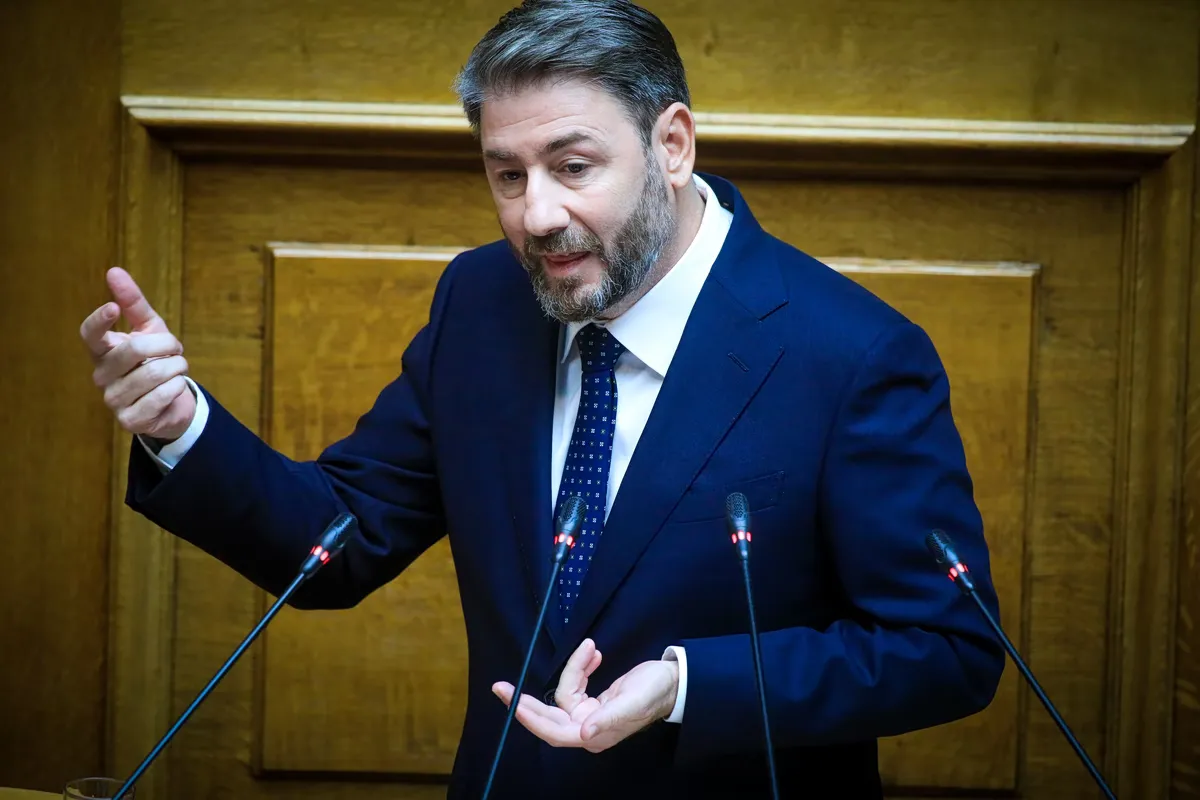
The move is not merely rhetorical but structural. The leadership of SYRIZA is focusing on a 'popular agenda' that prioritizes social welfare and the immediate problems of the citizenry. This includes a renewed emphasis on the issues that historically defined the party's strength, moving away from the attempt to compete directly in the center-ground occupied by Nikos Androulakis.
The failure of the centrist experiment
The decision to move left stems from the realization that a centrist approach did not resonate with the party's traditional base. Instead, it created a vacuum that PASOK successfully filled. When PASOK leadership introduced proposals regarding the 13th pension and private debt relief, they effectively strengthened their own leftist profile, leaving SYRIZA in a defensive position. Tsipras is now attempting to reclaim this territory by doubling down on the party's ideological roots.
Why is the rivalry with PASOK intensifying?
The relationship between SYRIZA and PASOK remains characterized by high levels of toxicity and strategic competition. While PASOK leadership, including Charilaou Tripitaki, has engaged in personal attacks against Tsipras, the SYRIZA leadership has chosen a path of tactical silence. Tsipras is deliberately avoiding direct confrontations with Nikos Androulakis, viewing such exchanges as a distraction from his primary goal of electoral recovery.
This tension is driven by the struggle for dominance within the opposition. PASOK appears to be adopting a hardline stance that leaves little room for potential cooperation, even in scenarios where a coalition would be necessary to unseat the New Democracy government. This refusal to discuss cooperation is seen by some as a strategic choice to maintain internal cohesion within PASOK, even at the risk of political fragmentation.
Internal dynamics and shifting allegiances
The political landscape is further complicated by the movement of key figures between the two parties. The migration of politicians like Alexandros Avlonitis and more recently, figures like Mr. Hurdakis, highlights a fluid environment where personal and ideological loyalties are constantly tested. For instance, Hurdakis's transition from Pleksi Eleftherias to the Kasellakis camp and eventually to PASOK illustrates the shifting currents of Greek politics, where the search for a stable political home remains ongoing.
What is the significance of the 'village to village' approach?
A central pillar of the current Alexis Tsipras political strategy involves a heavy emphasis on provincial Greece and rural communities. Recognizing a perceived lack of representation in the provinces compared to PASOK's well-established networks, Tsipras is personally leading a grassroots campaign described as 'village to village.' This approach aims to re-establish the party's presence in areas that have felt neglected by the political center.
By mobilizing experienced officials and returning former members to the fold, SYRIZA hopes to reinvigorate its provincial voter base. The goal is to replicate the electoral success of 2019, when the party secured 31% of the vote, by rebuilding the local connections that were severed during recent political shifts. This focus on the 'periphery' is intended to counter the perception that the party is exclusively focused on urban, metropolitan interests.
How do recent polls reflect these strategic changes?
Recent polling data suggests that the tactical shift toward the left and the focus on provincial outreach may be having a stabilizing effect on SYRIZA's numbers. According to an Opinion poll for action24, SYRIZA's support has held steady at approximately 15.9%. This indicates that the party has managed to arrest its downward trend, even as it faces intense competition from PASOK.
Despite the stabilization, a significant gap remains between the two major opposition forces. PASOK currently maintains a lead of nearly four percentage points over SYRIZA. The effectiveness of Tsipras's strategy will ultimately be judged by whether this 'left flank' maneuver can close that gap and transform the current stability into genuine electoral growth in upcoming contests.
FAQ: Alexis Tsipras and the Greek Political Shift
What is the main goal of Tsipras's new strategy?
The primary objective is to recover the political ground lost in late 2023 by moving back toward a traditional leftist profile. By doing so, Tsipras aims to reconnect with the core voters and the provincial electorate that moved away during the party's recent centrist phase.
How does PASOK view potential cooperation with SYRIZA?
PASOK leadership has maintained a confrontational stance, often avoiding discussions regarding potential cooperation. This approach is seen by some as a way to consolidate the PASOK base, though it creates uncertainty regarding the formation of an opposition bloc capable of challenging the current government.
Why did the centrist approach fail for SYRIZA?
The centrist experiment failed because it did not resonate with the party's traditional supporters and allowed PASOK to capture the progressive and social welfare narrative. This left SYRIZA without a clear ideological identity in the competition for moderate and left-leaning voters.
What role does the provincial electorate play in this strategy?
The provincial electorate is a critical target for SYRIZA's recovery. Recognizing that PASOK has a stronger presence in rural areas, Tsipras is personally conducting a 'village to village' campaign to rebuild local networks and address the perceived lack of representation in the provinces.
What do the latest polls indicate about SYRIZA's position?
Recent polls show that SYRIZA has stabilized its support at around 15.9%. While this suggests the new strategy is preventing further decline, the party still trails PASOK by approximately four percentage points in the current political landscape.
Key takeaways
- Tsipras is shifting SYRIZA toward a traditional leftist profile to reclaim lost voters.
- The previous attempt at a centrist political identity failed to secure a stable base.
- SYRIZA is focusing on a 'village to village' campaign to penetrate provincial Greece.
- Current polling shows SYRIZA stabilized at 15.9%, trailing PASOK by four points.
The future of the Greek opposition
The political landscape in Greece is currently defined by a dual struggle: the competition between PASOK and SYRIZA for dominance, and the effort to present a unified front against the government. Tsipras's decision to embrace the 'left flank' represents a high-stakes gamble to restore the party's former strength. Whether this ideological return can bridge the four-point gap with PASOK or if the toxicity between the two parties will lead to permanent fragmentation remains the central question for the Greek electorate in the coming months.