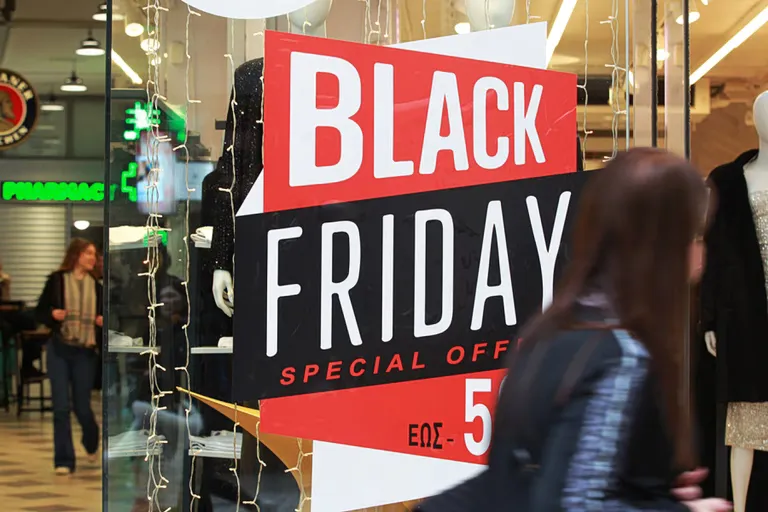
Black Friday consumer trends in Greece show a highly prepared and strategic shopper demographic despite ongoing inflationary pressures. According to the "The Black Friday 360°" survey conducted by NielsenIQ for the Hellenic Association of Retailers (SELPE), average spending is projected to remain consistent with 2025 levels, reaching an average of €258 per person. While 70% of consumers are willing to spend on products or services that would otherwise be more expensive, they do so with specific budgets and systematic price checks. This article examines consumer priorities, preferred product categories, and the evolving omnichannel shopping landscape.
What drives consumer participation in Black Friday sales?
The primary motivation for participating in Black Friday sales is the acquisition of essential goods at a reduced cost. According to the NielsenIQ study conducted for SELPE, 66% of respondents state that their main reason for participating is to purchase a product they already need at a lower price point. Furthermore, 34% of consumers use this period to replace old or broken items.
Despite the economic challenges posed by inflation and rising costs of living, there is a strong resilience in consumer intent. The survey indicates that 70% of Greeks are willing to allocate funds toward products or services that are typically sold at much higher prices under normal market conditions. This demonstrates that Black Friday is viewed not merely as an impulse-driven event, but as a strategic window for planned procurement.
Consumer familiarity with this commercial phenomenon is exceptionally high. The data shows that 84% of Greeks are fully acquainted with the discount institution, and approximately 80% have made at least one purchase during this period within the last three years. This level of maturity suggests that the 'Black Month' concept—where retailers extend promotions throughout November—has successfully integrated into the annual consumer cycle.
Which product categories dominate consumer spending?
Consumer spending priorities vary significantly between high-value electronics and spontaneous lifestyle purchases. The survey highlights a clear distinction between planned high-ticket items and impulsive fashion acquisitions.
High-value electronics and technology spending
Smartphones represent the top priority for Greek consumers during the Black Friday period, accounting for 19% of interest. The average expenditure for smartphones is estimated at €401. Interestingly, consumer patience is a notable factor in this category; 32% of respondents admitted they would be willing to wait up to 10 additional days to secure an even more substantial discount.
While smartphones lead in terms of popularity, laptops command the highest average expenditure. According to the NielsenIQ report, the average spend on laptops reaches €642, reflecting the significant investment required for computing technology. This suggests that while more people may look for phones, those purchasing laptops are committing higher individual amounts to the transaction.
Spontaneous purchases in fashion and beauty
In contrast to the calculated approach taken with electronics, the fashion and beauty sectors see much higher levels of spontaneous buying. The study reveals that 56% of consumers would purchase clothing and 46% would buy footwear if they encountered an attractive offer. This indicates that while the initial intent might be functional, the allure of deep discounts in apparel drives significant volume.
The beauty sector also shows strong momentum, particularly in the fragrance category. Perfumes emerge as a leader both in terms of purchase intent and the total amount consumers are willing to spend, marking them as a key driver for the retail sector during the promotional period.
How is the omnichannel shopping experience evolving?
The modern Greek consumer utilizes a hybrid approach to shopping, blending digital convenience with the tactile benefits of physical stores. The research shows that 70% of consumers will combine both online and physical retail channels during the Black Friday period. Only a small minority rely exclusively on one method: 16% shop only in physical stores, while a mere 10% shop exclusively online.
The consumer journey is characterized by different touchpoints for information and finalization. Search engines are the dominant starting point for information gathering, used by 49% of respondents. However, the physical store remains the most influential point for completing a transaction, with 30% of consumers choosing to finalize their purchase in person.
The motivations for using each channel are distinct:
- Physical Stores: 64% of consumers will visit a physical location, primarily to inspect or try on products (53%) or to take immediate possession of the item (45%).
- Online Platforms: Digital shopping is preferred for saving time (50%) and accessing exclusive online-only offers (42%).
Product categories also dictate the preferred channel. For instance, smartphones are predominantly purchased online, whereas televisions and perfumes are more frequently bought in physical retail environments.
What are the critical factors in logistics and delivery?
Logistics and delivery reliability have become more important to consumers than the cost of shipping itself. According to the NielsenIQ data, 76% of consumers consider an accurate delivery date—provided before payment—to be a highly important factor. This priority surpasses the demand for free shipping, which was cited by 60% of respondents.
Delivery methods are also shifting toward more flexible solutions. Parcel lockers have emerged as the preferred method for 37% of consumers, nearly doubling the popularity of traditional home delivery via courier, which stands at 20%. This shift suggests a growing demand for autonomy and convenience in the final stage of the shopping experience.
Consumer tolerance for logistical delays is conditional. In the event of a shipping delay, 66% of consumers expressed a willingness to wait for their order. However, 28% would only tolerate a delay if they received clear, updated information regarding a new delivery date. Only a small segment, 8%, would choose to cancel their order immediately upon encountering a delay.
Frequently asked questions
What is the average amount a Greek consumer spends during Black Friday?
The average spending per consumer is projected to reach approximately €258. This figure is expected to remain consistent with the spending levels observed during the 2025 Black Friday period, according to the NielsenIQ and SELPE research.
Which products have the highest average expenditure?
Laptops represent the category with the highest average expenditure, with consumers spending an average of €642 per unit. Smartphones follow as a high-priority item with an average spend of €401, while fashion items drive more spontaneous, lower-value volume.
Do consumers prefer online or physical shopping?
Most consumers prefer a hybrid approach, with 70% combining both online and physical stores. While search engines are used for research, physical stores are often used to try products, whereas online shopping is preferred for its time-saving benefits.
How important is free shipping compared to delivery dates?
Accurate delivery dates are more critical to consumers than free shipping. The survey found that 76% of shoppers prioritize knowing the exact delivery date before paying, compared to 60% who prioritize free shipping services.
What is the most popular delivery method?
Parcel lockers are the most preferred delivery method, chosen by 37% of consumers. This is significantly higher than traditional home courier delivery, which is utilized by 20% of the surveyed population.
Key takeaways
- Average Black Friday spending in Greece is projected at €258, matching 2025 levels.
- Laptops command the highest average spend at €642, while smartphones average €401.
- 70% of consumers utilize an omnichannel approach, combining online and physical retail.
- Parcel lockers (37%) are now more popular than home courier delivery (20%).
- Accurate delivery dates (76%) are more important to shoppers than free shipping (60%).
Conclusion
The 2026 Black Friday landscape in Greece reveals a consumer base that is both resilient and highly strategic. Rather than engaging in uncalculated spending, shoppers are using the period to fulfill specific needs—replacing essential technology or updating wardrobes—at optimized price points. The data from NielsenIQ and SELPE underscores a significant shift toward omnichannel sophistication, where the convenience of online research meets the tactile necessity of physical stores. As logistics expectations evolve, retailers must prioritize delivery transparency and flexible pick-up options, such as parcel lockers, to meet the demands of this increasingly discerning consumer base.