How has the energy crisis affected Greek purchasing power?
The surge in energy costs has fundamentally altered the economic stability of Greek households, with a vast majority feeling the strain. Data from the European Investment Bank indicates that 78% of the Greek population experienced a reduction in their purchasing power over the last 12 months due to price hikes in natural gas, electricity, heating oil, and transport fuels.
This impact is notably more acute in Greece than in the rest of the European Union. While the EU average for purchasing power reduction sits at 60%, the Greek figure of 78% marks one of the highest levels in the bloc. Furthermore, the intensity of this impact is also disproportionately high; 32% of Greeks reported being affected to a "very large extent," compared to an EU average of 20%.
The severity of inflation impacts
The data suggests that the inflation experienced by Greek citizens is not merely a marginal increase in costs but a significant disruption to their financial planning. When 32% of a population feels a "very large" impact, it indicates that a substantial portion of the workforce is struggling to maintain a standard of living comparable to previous years. This creates a systemic vulnerability where even minor fluctuations in global energy markets can lead to immediate domestic hardship.
What essential expenses are Greeks cutting to manage costs?
To compensate for rising energy bills, many Greeks are being forced to reduce spending on fundamental necessities such as nutrition and medical care. The survey reveals that 52% of respondents have limited their daily expenditures on food or health services. This is significantly higher than the EU-wide average of 38%, suggesting that the energy crisis is directly impacting the physical well-being and nutritional standards of the Greek population.
Heating is another area where significant concessions are being made. Approximately 41% of Greeks have reduced their heating consumption to save money, a figure that exceeds the EU average of 34%. These reductions in heating and nutrition represent a shift from discretionary spending cuts to the sacrifice of basic human needs.
Financial instability and debt risks
The pressure of energy costs is also driving a rise in financial delinquency. According to the EIB research, 33% of Greeks reported having to borrow money, seeking financial assistance, or delaying payments on electricity bills. This is more than double the EU average of 16%, highlighting a critical risk of energy poverty and increasing household debt levels within the country.
How are fuel costs changing mobility patterns in Greece?
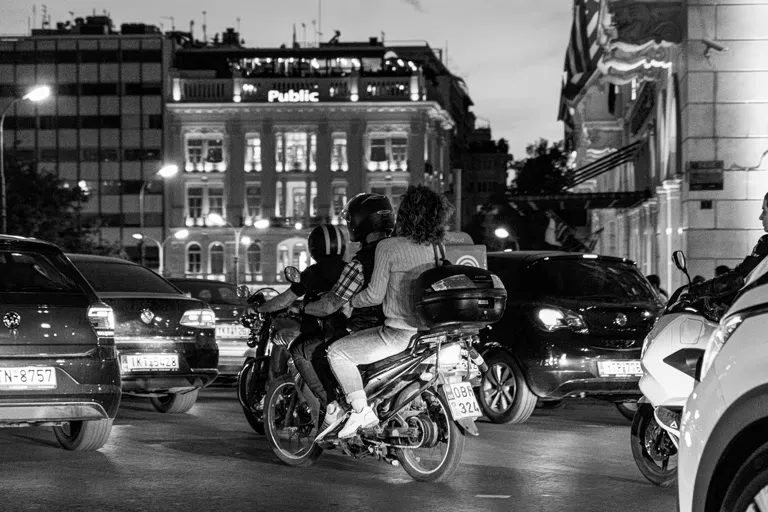
Transportation habits are undergoing a major transformation as Greeks attempt to mitigate the high cost of driving. Nearly three out of four Greeks (74%) stated that rising fuel prices have changed how they use their vehicles, a rate that is higher than the EU average of 60%. This shift is characterized by both a reduction in travel and a change in the mode of transport used.
The ways in which mobility is being restricted include:
- Essential travel limits: 45% of respondents have restricted travel to essential needs only, such as grocery shopping, medical appointments, or administrative tasks (compared to 31% in the EU).
- Social and leisure sacrifices: 34% reported being unable to take weekend trips, go on holidays, or visit friends and relatives (compared to 30% in the EU).
- Driving adjustments: 25% of drivers have started driving more slowly to optimize fuel efficiency (compared to 22% in the EU).
- Alternative transport: 31% have replaced individual car trips with carpooling, public transport, or cycling (compared to 22% in the EU).
The shift toward sustainable and collective transit
The high percentage of citizens turning to public transport, cycling, or carpooling suggests a forced transition toward more sustainable mobility. While this shift may align with long-term environmental goals, the EIB data implies it is currently a survival mechanism driven by economic necessity rather than purely environmental preference. The fact that 31% of Greeks are adopting these methods—well above the EU average—demonstrates the depth of the economic pressure on the transport sector.
Key takeaways
- 78% of Greeks reported a loss in purchasing power due to energy costs, exceeding the EU average of 60%.
- Over half of the population (52%) has cut spending on food and healthcare to manage rising prices.
- One-third of Greek citizens (33%) have faced difficulties paying electricity bills or have required financial aid.
- 74% of Greeks have altered their vehicle usage patterns due to the increased cost of fuel.
- The reduction in heating and essential travel is significantly higher in Greece than in the broader EU.
Frequently asked questions
How much has purchasing power dropped in Greece?
According to the EIB survey, 78% of Greeks have seen their purchasing power reduced due to rising costs for fuel, gas, and electricity. This is significantly higher than the 60% average reported across the European Union, indicating a more severe economic impact in Greece.
Are Greeks cutting food and health spending?
Yes, 52% of Greeks have reduced their daily spending on food and healthcare to cope with energy inflation. This figure is notably higher than the EU average of 38%, showing that energy costs are directly impacting essential living standards and health access.
How are energy costs affecting debt and bills?
Energy costs are driving financial distress for 33% of Greeks, who have had to borrow money, seek assistance, or delay electricity bill payments. This is double the EU average of 16%, highlighting a high risk of energy-related debt in the country.
What changes are being made to transportation?
Approximately 74% of Greeks have changed how they use their vehicles. This includes driving more slowly for fuel economy, limiting travel to essential errands like medical visits, and increasingly using public transport, cycling, or carpooling to avoid high fuel expenses.
How does Greece compare to the EU average in these trends?
Greece consistently shows higher rates of economic adaptation than the EU average. Whether in purchasing power loss (78% vs 60%), food/health cuts (52% vs 38%), or mobility changes (74% vs 60%), the data indicates that Greek households are facing more intense pressure from the energy crisis.
Conclusion
The findings from the European Investment Bank paint a sobering picture of the economic reality in Greece. The fuel price impact in Greece extends far beyond the gas pump, triggering a cascade of lifestyle adjustments that affect nutrition, health, and social connectivity. With 78% of the population feeling the squeeze on their purchasing power, the data suggests that the energy crisis has become a central driver of household instability. As citizens increasingly sacrifice essential services and mobility to manage rising utility and fuel costs, the long-term implications for social welfare and economic resilience remain a critical concern for the region.