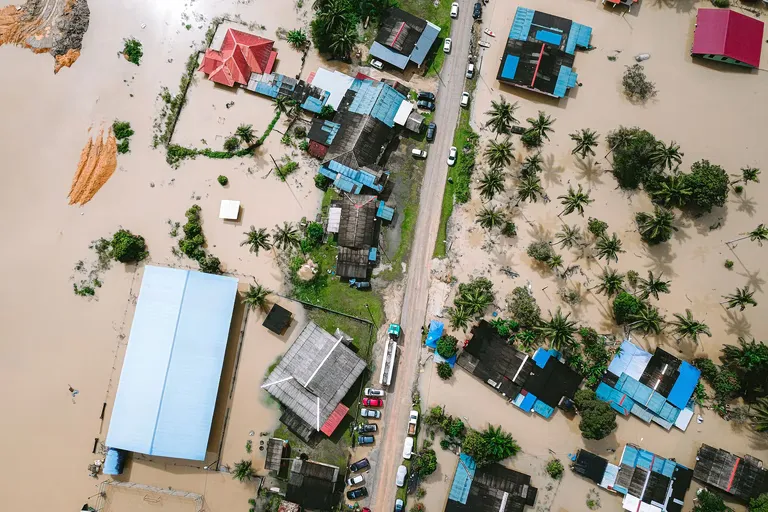
How do the ultra-rich achieve a "double benefit" from climate change?
The ultra-wealthy are uniquely positioned to capitalize on both the drivers of environmental instability and the massive markets created by its consequences. Oxfam identifies this as a two-pronged economic advantage that allows the most powerful individuals to maintain their status while the planet warms.
The first side of this benefit stems from continuous investment in high-emission industries. By maintaining significant stakes in fossil fuels and heavy polluting sectors, the wealthiest individuals benefit from the very activities that accelerate global warming. The second side involves the burgeoning "adaptation economy." As extreme weather events become more frequent, a massive market for recovery, reconstruction, and disaster preparedness has emerged. This includes services ranging from flood defenses and cooling devices to specialized insurance and reconstruction loans.
Jean McLain, Oxfam's Head of Influence, notes that these individuals are essentially turning chaos into profit. According to McLain, the wealthy are not just passive observers but active participants who invest in the "re-selling" of recovery services to a warming planet. This creates a cycle where the destruction caused by emissions provides the very market opportunities for their adaptation investments.
What is the scale of the inequality in carbon emissions?
The disparity in environmental responsibility is staggering, with the top 0.1% of the population exerting a disproportionate influence on the atmosphere. This group of 8 million people generates more carbon dioxide than 3.5 billion of the world's poorest residents combined.
Beyond total volume, the intensity of the impact is also highly skewed. Oxfam reports that this elite group contributes 125 times more to extreme heat events than the average person. Much of this footprint is driven by lifestyle choices, such as the use of private jets. For context, global private jet emissions can release more CO2 in just two seconds than the majority of the world's population emits in an entire year.
The role of investment portfolios
While personal lifestyle choices are visible, the most significant impact of the ultra-wealthy comes from their investment portfolios. Large-scale capital allocations toward carbon-intensive sectors drive the systemic emissions that fuel the climate crisis. This financial power allows the wealthy to shape the trajectory of global warming through market influence.
How does the "disaster and reconstruction" index work?
Oxfam has introduced a new "disaster and reconstruction" index to track the companies that are either exacerbating climate collapse or profiting from its adaptation. The index identifies 217 companies operating in sectors such as flood barriers, fire equipment, cooling technology, food supplies, and climate-related insurance.
The economic scale of this sector is immense. Last year, the companies identified in this index generated an average profit of $1.8 billion USD and paid out $1 billion in dividends to shareholders. The index also highlights the role of massive asset management firms that provide advisory services to wealthy investors.
| Entity Type | Role in Climate Economy | Economic Impact |
|---|---|---|
| High-Emission Industries | Drivers of climate instability | Direct profit from fossil fuels |
| Adaptation Companies | Providers of flood/fire/cooling tech | $1.8bn average profit (last year) |
| Asset Managers | Advisors to ultra-wealthy investors | Hold stakes in 92% of index companies |
| Food Corporations | Suppliers during climate shocks | Increased margins during shortages |
The index reveals that two of the world's largest asset managers, BlackRock and Vanguard, hold shares in 92% of the companies listed, with a total value exceeding $1 trillion. This concentration of ownership means that a vast portion of the global adaptation market is controlled by a very small number of financial institutions serving the ultra-rich.
Why does the climate crisis exacerbate global economic inequality?
The climate crisis functions as a regressive tax, where those least responsible for warming pay the highest price for its effects. While the wealthy can afford to insulate themselves, the poorest populations face rising costs for basic necessities.
When extreme weather strikes, such as droughts or floods, the impact on agriculture is immediate. This often leads to spikes in food prices. Oxfam points to the 2024 cocoa crisis in West Africa as a prime example: after extreme weather caused a 231% surge in cocoa prices, the local farmers saw none of the financial benefits, while large corporations and investors reaped the rewards. This pattern allows billionaire-controlled food companies to increase profits during periods of scarcity, while small-scale producers and consumers suffer.
Furthermore, the wealthy have the resources to mitigate personal risks. They can afford resilient housing, private healthcare, emergency evacuations, and enhanced personal security. This financial buffer reduces the immediate pressure on them to support aggressive climate action, as they are less likely to feel the direct sting of rising costs or environmental instability.
The human cost of emissions
The disparity in impact is not just financial; it is a matter of life and death. Oxfam estimates that the annual emissions of the richest 1% will lead to 1.9 million additional deaths due to heat-related issues, impacts on agricultural productivity, and rising sea levels. Crucially, three-quarters of these deaths are expected to occur in low- and middle-income countries. These nations contribute only 8% of global emissions yet bear the brunt of the mortality caused by the lifestyle and investments of the global elite.
What are the proposed solutions to mitigate this cycle?
To break the cycle of profiting from disaster, Oxfam and its contributors are calling for systemic changes to global taxation and climate finance. The goal is to limit the influence of the ultra-wealthy and redirect resources toward genuine climate mitigation rather than profitable adaptation.
Nafkote Dabi, Oxfam International's climate policy lead, argues that the conversation must shift from viewing climate change as a shared problem to recognizing it as a problem of power. The organization is advocating for several key interventions:
- Higher taxes on the ultra-wealthy and their accumulated assets.
- Specific levies on private jets and high-emission lifestyles.
- Increased taxation on oil, gas, and highly polluting corporations.
- A shift in international climate finance from loans to grants to prevent developing nations from falling into debt.
Alex Maitland, a lead author of the study, suggests that the current situation is not accidental. According to Maitland, the political influence of the wealthy allows them to orchestrate events and policies that protect their interests, making the current trajectory of "disaster capitalism" a deliberate outcome of existing power structures.
Frequently asked questions
What is the "double benefit" mentioned by Oxfam?
The double benefit describes how the ultra-wealthy profit from both the causes of climate change (through investments in polluting industries) and the consequences (through investments in the disaster recovery and adaptation markets). This allows them to gain financially regardless of whether the climate stabilizes or continues to deteriorate.
How much do the richest 0.1% emit compared to others?
The richest 0.1% of the global population, totaling about 8 million people, emit more CO2 than the bottom 3.5 billion people combined. This group also contributes significantly more to extreme heat events, estimated at 125 times the average person's contribution.
Who controls the climate adaptation market?
The market is heavily concentrated. Oxfam's index shows that major asset managers like BlackRock and Vanguard hold shares in 92% of the companies involved in climate adaptation, representing a total value of over $1 trillion. This centralizes control of the recovery economy within a few major financial institutions.
How does climate change impact food prices and farmers?
Extreme weather disrupts crops, causing supply shortages that drive up food prices. While large corporations often see increased profits during these shortages, small-scale farmers frequently do not see these gains. For example, during the 2024 cocoa price surge, local West African farmers saw no benefit from the 231% price increase.
What is Oxfam's recommendation for climate finance?
Oxfam recommends that international climate funding should be provided through grants rather than loans. This approach aims to protect low- and middle-income countries from accumulating debt while trying to manage climate impacts, and it calls for an end to profiting from climate-driven disasters.
Key takeaways
- The top 0.1% of the population emits more CO2 than 3.5 billion of the world's poorest people.
- The climate adaptation market is projected to reach $92 billion annually by 2029.
- Asset managers BlackRock and Vanguard hold stakes in 92% of companies in the disaster recovery index.
- Climate-related deaths are disproportionately concentrated in low-income nations that contribute only 8% of emissions.
Conclusion
The findings from Oxfam suggest that the climate crisis is not merely an environmental challenge but a profound driver of global economic inequality. By creating a "double benefit" where the ultra-wealthy profit from both pollution and reconstruction, the current economic system provides a financial incentive to delay meaningful climate action. This cycle places the heaviest burden on the world's most vulnerable populations, who face rising mortality and food insecurity. Addressing this requires more than just reducing emissions; it necessitates a fundamental restructuring of how wealth and political influence are managed in the face of a warming planet.