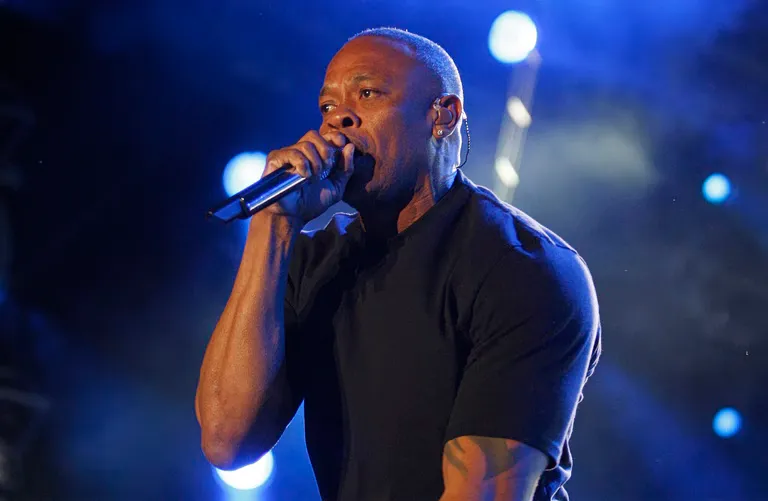
Dr. Dre retirement plans have become a central topic of discussion following the producer's recent comments regarding a potential departure from the music scene. During an appearance on the "Listen and Laugh" podcast, the legendary producer stated he is considering taking a break from his creative life for one to two years. This potential hiatus marks a significant shift for the artist, who has historically remained constantly connected to the studio environment since his beginnings in the 1980s, making this period of rest a notable turning point in his storied career.
A potential hiatus from the studio environment
Dr. Dre has expressed a desire to step away from his musical obligations for a period of one to two years, marking a departure from his lifelong pattern of constant creation. Speaking to Ice Cube and Mike Epps on their "Listen and Laugh" podcast, the producer revealed that for the first time in his adult life, he intends to distance himself from the industry.
For decades, the producer, who began his career in the 1980s with the World Class Wreckin’ Cru in Los Angeles, has maintained a state of perpetual creative readiness. He noted that even when not physically present in a studio, his surroundings—from shop windows to car stickers—served as constant triggers for musical ideas. This mental connection to production has been a defining characteristic of his career.
The prospect of stepping away is driven by a search for new emotional stimuli. Dr. Dre questioned whether a life outside of music might offer the same profound feelings he experienced when he first discovered the medium. He stated, "What if something else is waiting for me that could give me exactly the same feeling I felt when I discovered music?"
The psychological shift in creative engagement
The producer's comments suggest a fundamental change in how he perceives his relationship with music. Historically, he described himself as being "always tied" to the craft, implying that the creative process was an involuntary and constant state of being. By seeking a hiatus, he is testing whether his identity can exist independently of the studio cycle.
Embracing artificial intelligence as a creative tool
Dr. Dre has voiced strong enthusiasm for the integration of artificial intelligence (AI) within music and cinema, despite the ongoing debate within the industry. Rather than viewing the technology as a replacement for human artistry, he characterizes it as a "new level of creativity" that expands the possibilities for artists.
He highlighted specific applications where AI could allow creators to participate in projects without physical presence. For example, he suggested a scenario where an artist could be paid to perform in a film by providing their likeness and voice, allowing them to approve the output without being on set. He argued that this dynamic represents an evolution of the creative process rather than a loss of control.
| Perspective on AI | Dr. Dre's Stance |
|---|---|
| Industry View | Divided; some see it as a threat to traditional roles. |
| Dr. Dre's View | An exciting tool for expanding creativity in music and film. |
| Functional Application | Using likeness and voice for remote creative approval. |
Addressing resistance to technological evolution
The producer addressed the friction between veteran artists and the new generation of creators who utilize different technological workflows. During the podcast, he challenged the tendency of older artists to criticize modern methods, asking why the recording techniques of the past should dictate the standards of the present. He suggested that much of the industry's resistance stems from a reluctance to invest time in learning new technologies.
Dr. Dre compared current opposition to AI to the historical resistance faced by other transformative technologies. He noted that critics of AI today are similar to those who were once against the introduction of the drum machine or the synthesizer. In his view, these tools were initially met with skepticism before becoming fundamental components of music production.
Comparing technological eras in music
The comparison between AI and previous electronic innovations provides context for the current industry tension. The transition from analog to digital, and later to MIDI-based production, followed a similar pattern of resistance followed by total integration. Dr. Dre posits that the current hesitation is a failure to adapt rather than a valid critique of the technology itself.
The distinction between innovation and creative struggle
In a previous discussion with the New York Times, Dr. Dre reinforced his position that technology is a "tool of creativity" rather than a replacement for talent. He argued that the perception of AI as a threat is often linked to the proficiency of the user. According to the producer, those who view AI as a threat are often those who are struggling to maintain their creative output through traditional means.
He concluded that the technology does not pose an inherent danger to the industry, but rather serves as a litmus test for adaptability. His stance suggests that the future of music production will belong to those who can integrate these new tools into their existing skill sets. By framing AI as a tool for those who are capable of creating, he distances the technology from the idea of automated or low-effort production.