Eaton Square history is defined by a unique blend of extreme wealth and profound social transgression. Located in London's prestigious Belgravia district, this enclave has transitioned from a bohemian hub for artists to an exclusive playground for the global 0.01%. British journalist Alexander Larman, in his new book "The Secrets of Eaton Square," uncovers a timeline of high-stakes drama involving Nazi diplomats, disgraced Prime Ministers, and notorious gangsters. This investigation reveals how the square served as a stage for historical shifts, where the lines between political power and moral depravity frequently blurred. This article examines the scandalous figures, political entanglements, and the evolving social landscape of one of London's most famous addresses.
How has the social profile of Eaton Square changed over time?
The social composition of Eaton Square has shifted from a diverse mix of wealthy creatives to an ultra-exclusive enclave for the global elite. According to journalist Alexander Larman in his book "The Secrets of Eaton Square," the area was once accessible to successful artists and writers. Approximately 60 to 70 years ago, these cultural figures possessed sufficient wealth to purchase homes within the square.
Today, the real estate landscape has moved beyond the reach of the bohemian class. Larman notes that apartments in the area now command prices reaching up to $13 million (approximately €12 million). This economic shift has transformed the neighborhood into a dedicated playground for the world's top 0.01%, replacing the colorful, eccentric residents of the past with a more sterile, albeit wealthier, demographic.
The transition from bohemian to billionaire
The evolution of the square reflects broader trends in London's property market. While figures like Sharon Tate (residing at 65 Eaton Square in 1965) and Barry Gibb (at 68 Eaton Square in 1968) represented a period where fame and creativity met local residency, the modern era is defined by capital rather than character. The current residents are described by Larman as being less "exciting or eccentric" than their predecessors, marking the end of an era where the square's inhabitants were as much a part of its charm as its architecture.
What political scandals are linked to the square?
Eaton Square has served as a backdrop for some of the most sensitive political intersections of the 20th century, particularly involving the Second World War. The square's history is deeply entwined with the movements of high-ranking British officials and foreign diplomats during times of international crisis.
One notable instance involved Neville Chamberlain, the British Prime Minister during the war. Chamberlain maintained a residence in the area alongside political contemporaries such as Lord Halifax and Stanley Baldwin. In a move that highlighted the complex diplomatic tensions of the era, Chamberlain rented his property to Joachim von Ribbentrop, who was serving as the German Ambassador to Britain at the time. Chamberlain reportedly noted the irony of the situation to his sister, remarking on his general sympathy for the Germans and Ribbentrop in particular.
The square also hosted figures like Diana Mitford and her partner, the British fascist Oswald Mosley. Mitford's residence at Eatonry, located at number 2 Eaton Square, became a well-known social hub for the couple. Despite the public outcry and social disapproval from their peers, Mitford's memoirs suggest that the square remained a gathering place for "well-known faces" even amidst political turmoil.
How did moral transgressions manifest in the neighborhood?
The concept of "respectable immorality" has been a recurring theme throughout the history of Eaton Square, with residents often operating outside the strict social and legal codes of their time. The square provided a level of privacy and prestige that allowed high-profile individuals to engage in controversial behaviors with relative impunity.
Lord Boothby, a prominent politician and long-term resident of number 1 Eaton Square, epitomized this trend. He was known for his indiscreet relationships with young men at a time when such activities were illegal. His social circles even included the notorious gangster Ronnie Kray. Kray provided the peer of the House of Lords with access to a network of young men, a connection that resulted in a high-profile defamation lawsuit when the press attempted to imply a sexual relationship between the two men.
The dark legacy of Lord Lucan
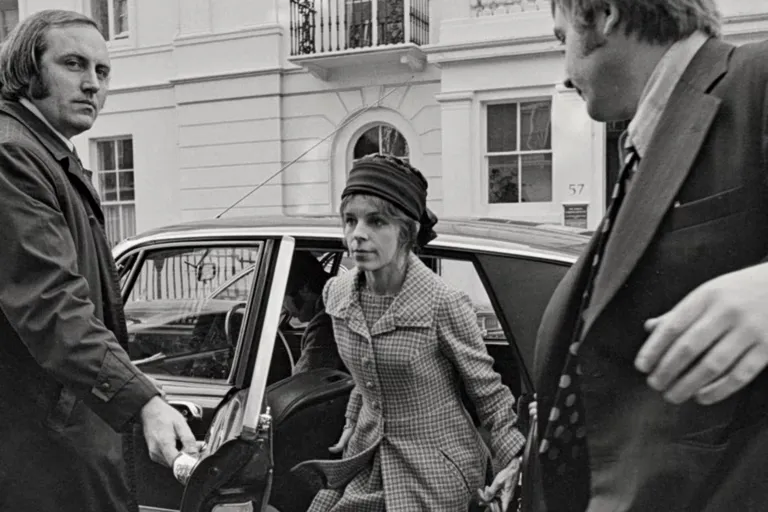
Perhaps the most chilling example of social transgression involves Lord Lucan. Raised in Eaton Square, Lucan's life ended in a cloud of suspicion and violence. While residing at 46 Lower Belgrave Walk, he was accused of attacking and killing the nanny of his children, Sandra Priestley, in 1974. He was also suspected of attempting to murder his wife, Veronica. Following the incident, Lucan fled and his ultimate fate remains a subject of intense debate, with many believing he committed suicide.
Who are the famous figures associated with the square?
The guest list of Eaton Square reads like a catalog of 20th-century history, spanning the worlds of politics, entertainment, and high society. Alexander Larman's research highlights how the square has hosted an array of individuals whose lives were as dramatic as the settings they inhabited.
The historical residents and visitors include:
- Political Figures: Neville Chamberlain, Joachim von Ribbentrop, Lord Halifax, Stanley Baldwin, Diana Mitford, Oswald Mosley, and Margaret Thatcher.
- Cultural Icons: Actress Vivien Leigh, writer Raymond Chandler, and musicians such as Andrew Lloyd Webber and Barry Gibb.
- Socialites and Notables: Sharon Tate and the controversial Lord Lucan.
This diverse cast demonstrates that Eaton Square was never merely a residential area; it was a stage where the influential shaped—and were shaped by—the events of the century. Whether through the glamour of Vivien Leigh or the infamy of political extremists, the square has consistently remained at the center of the global consciousness.
FAQ: Eaton Square history
What is the current value of property in Eaton Square?
Property values in Eaton Square have risen significantly due to its extreme exclusivity. According to Alexander Larman, apartments in the area can now sell for as much as $13 million, or approximately €12 million, catering to the ultra-wealthy global elite.
Who was the German ambassador to reside in Eaton Square?
Joachim von Ribbentrop, the German Ambassador to Britain, rented a house in Eaton Square from the British Prime Minister Neville Chamberlain. This arrangement occurred during a period of significant political tension leading up to and during the Second World War.
What is the significance of the "Upstairs, Downstairs" connection?
The famous television series "Upstairs, Downstairs" used a fictionalized version of Eaton Square (Eaton Place) to depict the lives of the British aristocracy. Larman uses this cultural touchstone to contrast the fictionalized glamour with the real, often scandalous, history of the area.
Why is Eaton Square described as a place of "respectable immorality"?
The term refers to the way high-status residents, such as Lord Boothby, engaged in socially or legally controversial behaviors—including illicit relationships—while maintaining their political standing and social prestige within the exclusive confines of the neighborhood.
How has the neighborhood changed from the mid-20th century?
In the mid-20th century, Eaton Square was more accessible to the bohemian and creative classes, including successful artists. Today, it has transitioned into an ultra-exclusive zone for the 0.01%, with property prices far exceeding the reach of the previous generation of residents.
Key takeaways
- Eaton Square has transitioned from a bohemian enclave to an ultra-exclusive zone for the global 0.01%.
- Property prices in the area now reach up to $13 million for individual apartments.
- The square hosted significant political figures, including Neville Chamberlain and Joachim von Ribbentrop.
- Historical scandals include the involvement of Lord Boothby with gangster Ronnie Kray and the crimes of Lord Lucan.
The enduring allure of London's most scandalous square
Eaton Square remains a symbol of the complex intersection between power, wealth, and human frailty. As Alexander Larman's research demonstrates, the square's history is far from a simple tale of aristocratic elegance. Instead, it is a layered narrative of political maneuvering, social rebellion, and intense personal drama. While the modern residents may be less eccentric than the figures of the past, the square's reputation as a place where history is made—and where secrets are kept—ensures its continued fascination in the global imagination.