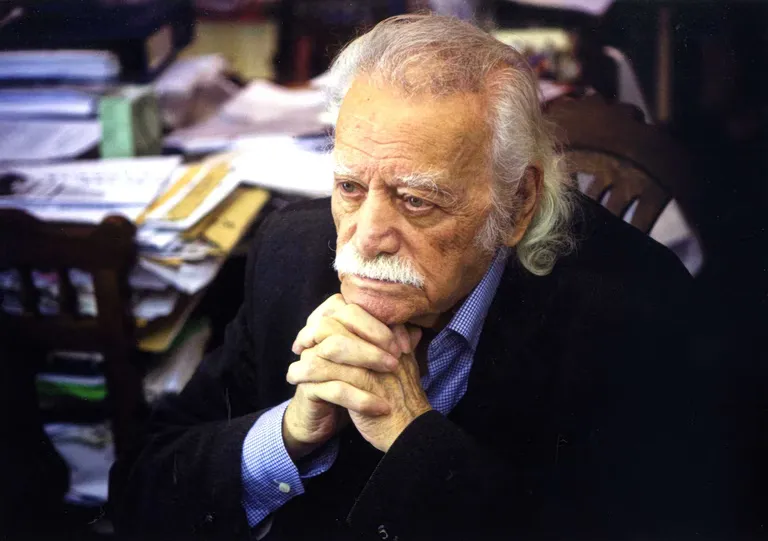
What is the significance of the Manolis Glezos archive?
The Manolis Glezos archive serves as a comprehensive historical record of one of Greece's most influential 20th-century figures. By consolidating personal documents, political papers, and media, the collection provides a multidimensional view of a man who was simultaneously a resistance fighter, politician, journalist, and intellectual. The archive is not merely a collection of personal papers but a structured resource that allows historians to trace the evolution of Greek political movements and the lived experience of resistance against occupation and dictatorship.
The donation to the Archives of Contemporary Social History (ASKI) ensures that these materials are preserved under professional standards. This institutional home allows for the cross-referencing of Glezos's personal accounts with other political and social collections held by ASKI, providing a more robust framework for historical interpretation. The archive documents his journey from the hardships of the post-war years to his active roles in modern Greek governance.
How does the archive document the Greek Resistance and political struggle?
A substantial portion of the collection focuses on the formative and most turbulent years of Glezos's life, particularly his involvement in the National Resistance and subsequent political persecution. The documents provide primary evidence of the era's most intense struggles, including his long periods of imprisonment and the legal battles he faced due to his political convictions.
Tracing the impact of political persecution
The archive includes specific evidence regarding the international campaigns that sought his release, highlighting the global dimension of the Greek political struggle during the mid-20th century. Furthermore, the documentation covers his activities within the EDA (United Democratic Left) during the 1960s and his eventual exile during the military junta (the Colonels' regime). These records offer a granular look at how individual resistance translated into broader political movements.
What does the collection reveal about his later political career?
Beyond his role as a resistance icon, the archive offers extensive documentation of Glezos's extensive parliamentary and European parliamentary career. This later period of his life is characterized by a transition from revolutionary struggle to institutional political engagement, where he remained a consistent voice for the Left and various social causes.
The materials reflect his work on several key fronts:
- Local Governance: His systematic involvement with local government and his deep connection to his home village of Apeirathos in Naxos.
- Social and National Movements: His advocacy for the rights of peoples and the principle of self-determination.
- War Reparations: His tireless and unyielding struggle for German war reparations for Greece.
- Political Ideology: His continuous alignment with the struggles of the Greek Left throughout his decades in public life.
What diverse roles are captured within the documentation?
The archive is uniquely multifaceted, mirroring the diverse professional and intellectual identities held by Manolis Glezos. It is rare for a single archive to encompass such a wide array of disciplines, making it a valuable resource for various academic fields beyond history.
The collection includes evidence of his work as a:
- Journalist and Author: Written texts and editorial materials.
- Linguist and Poet: Contributions to literature and linguistic studies.
- Scientist: Documentation of his self-taught expertise in geology and hydrogeology.
- Visual Artist: A collection of photographs and audiovisual materials that capture his life and the eras he witnessed.
This breadth of material ensures that researchers can study Glezos not just as a political figure, but as a polymath whose intellectual interests were as varied as his political actions.
Who is involved in the presentation and preservation of the archive?
The presentation of the archive is a collaborative effort involving the family of Manolis Glezos, the Archives of Contemporary Social History (ASKI), and the Manolis Glezos Memorial and Action Association. This partnership ensures that the transition from private family ownership to public historical resource is handled with both academic rigor and personal respect.
The presentation event at the Parnassos Literary Society in Athens features several key contributors who will discuss different facets of the collection:
- Family Perspective: Nikos Glezos will discuss the preservation and organization of the archive.
- Scientific Context: ASKI associates, including Angeliki Christodoulou and Anda Kapola, will address the scientific value and the archival cross-referencing possibilities.
- Historical Context: ASKI Director Manos Avgeridis will provide a lecture on Glezos's role within the history of the National Resistance.
Frequently asked questions
Who donated the Manolis Glezos archive to ASKI?
The archive was donated by Maria and Nikos Glezos, the children of Manolis Glezos. They took the initiative to collect, organize, and transfer the materials to the Archives of Contemporary Social History (ASKI) to ensure their long-term preservation and accessibility for research.
What kind of materials are included in the collection?
The collection is highly diverse, containing correspondence, written texts, printed materials, photographs, and audiovisual records. These items document Glezos's personal life, his political activities, his scientific interests, and his various roles as a journalist, poet, and politician.
Why is the archive important for historians?
The archive is vital because it provides primary source evidence for studying the Greek Resistance, the political persecution of the post-war era, the military junta, and the evolution of the Greek Left. Its presence at ASKI allows for essential cross-referencing with other contemporary political archives.
Does the archive cover his entire life?
Yes, while it focuses heavily on his political and resistance activities from the post-war period through his parliamentary career, it also contains documents that reconstruct his earlier life, including his experiences during the occupation and his subsequent legal and political struggles.
Where is the archive located?
The archive is housed at the Archives of Contemporary Social History (ASKI) in Greece. This institutional setting provides the necessary professional environment for the cataloging, preservation, and academic study of such a significant historical collection.
Key takeaways
- The Manolis Glezos archive has been officially donated to ASKI by his children, Maria and Nikos.
- The collection documents Glezos's life from the Greek Resistance through his parliamentary career.
- Materials include correspondence, photographs, audiovisuals, and scientific documentation.
- The archive supports research into political persecution, the Greek Left, and war reparations.
Conclusion
The presentation of the Manolis Glezos archive represents a landmark moment for Greek historiography. By transitioning from a private family collection to a public academic resource, the archive ensures that the complex legacy of a man who lived nearly a century of intense political change remains available to the world. As a record of both individual resilience and collective national struggle, the collection will undoubtedly serve as a cornerstone for future studies into the Greek Resistance, the evolution of democratic movements, and the multifaceted life of one of Greece's most enduring historical symbols.