Iran's Revolutionary Guards Corps (IRGC) announced on Wednesday, August 26, 2026, an agreement with Oman concerning the sharing of revenues derived from the management of the Strait of Hormuz. This development comes amid continued closure of the vital waterway. The IRGC also attributed responsibility for the strait's closure to the United States.
Details of the Announced Agreement
The recent announcement by the Revolutionary Guards outlines a framework for revenue distribution between Iran and Oman, specifically targeting funds generated from activities within the Strait of Hormuz. While the specific terms of the agreement were not immediately disclosed, the focus is on the financial aspects of managing this critical maritime passage. The agreement aims to formalize how both nations benefit from the economic activities linked to the strait.
Accusations Against the United States
In their statement, the Revolutionary Guards explicitly blamed the United States for the ongoing closure of the Strait of Hormuz. This accusation highlights persistent tensions in the region, with Iran frequently pointing to US policies and military presence as destabilizing factors. The IRGC's stance suggests a direct link between the US actions and the current status of the strait, framing it as a point of contention in international relations.
Context of the Strait of Hormuz
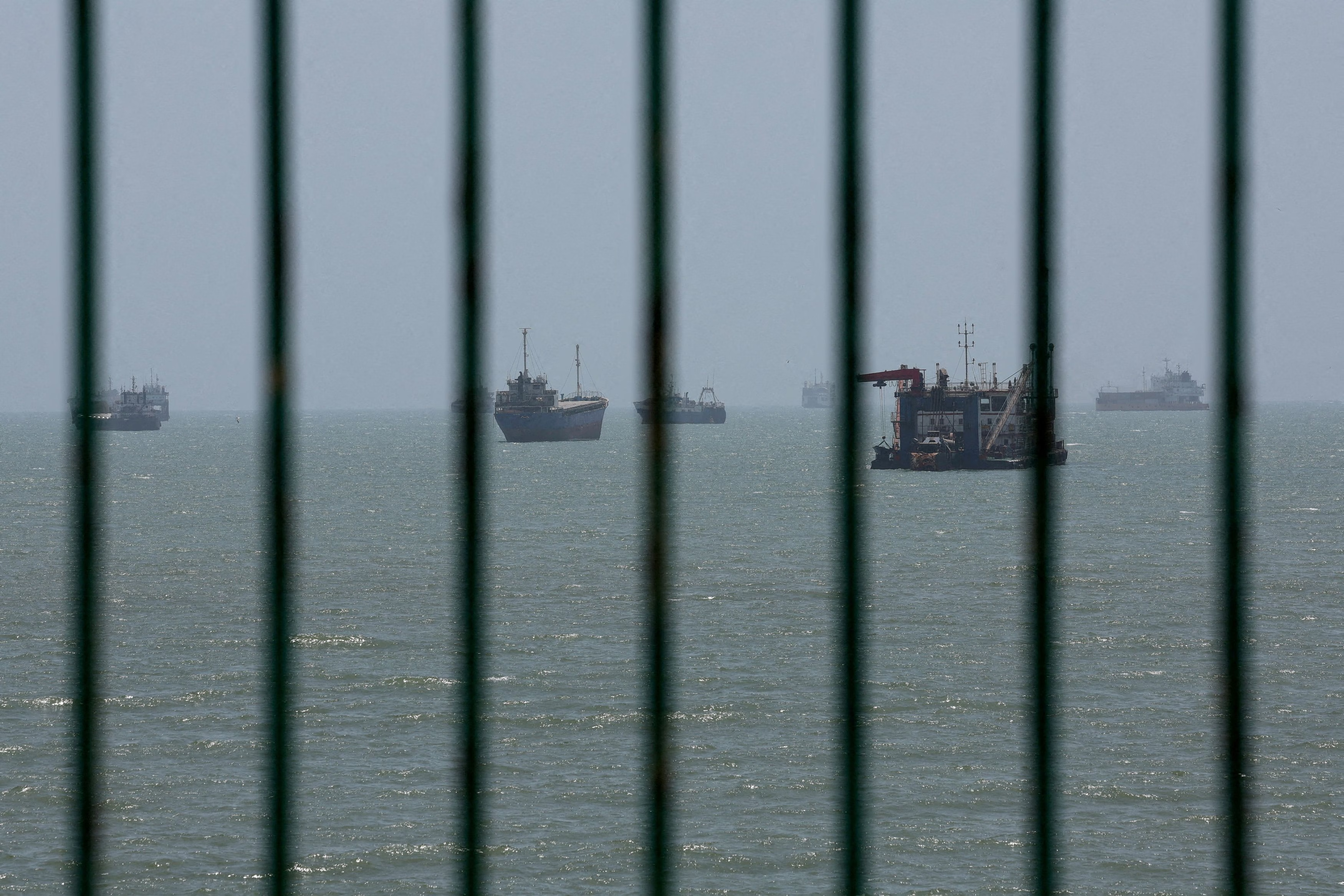
The Strait of Hormuz is a strategically vital maritime chokepoint, connecting the Persian Gulf with the Arabian Sea and the open ocean. It is a crucial route for global oil shipments, with a significant portion of the world's seaborne crude oil passing through it daily. Its closure, or any disruption to its free navigation, has profound implications for international energy markets and global trade. The strait has historically been a flashpoint for geopolitical tensions, particularly involving Iran and Western powers.
Next Steps and Regional Implications
The announcement of this agreement and the accompanying accusations are likely to further complicate the already delicate geopolitical landscape of the Middle East. Observers will be watching for further details on the revenue-sharing arrangement and any potential reactions from the United States or other international actors. The ongoing closure of the strait, if prolonged, could lead to significant economic repercussions globally. [TO VERIFY: The RSS source does not provide details on the specific terms of the agreement or the exact nature of the strait's closure. Further information is needed to confirm these details.]