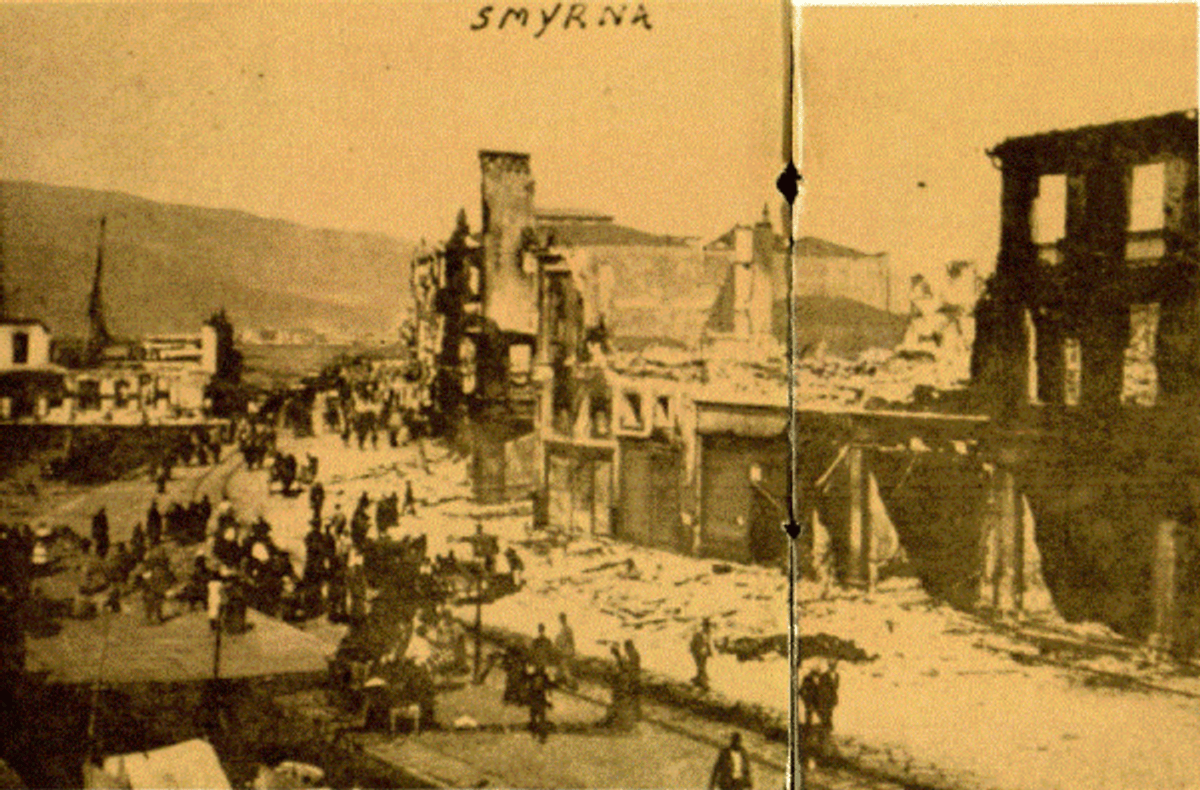
The Smyrna Catastrophe, a pivotal and tragic event in modern Greek history, unfolded in August 1922, marking the devastating conclusion of the Greco-Turkish War. This period witnessed the collapse of the Greek military front in Anatolia, leading to the entry of Kemalist forces into Smyrna and subsequent widespread destruction and ethnic cleansing. Eyewitness accounts from the time describe a city gripped by fear and chaos as the military situation deteriorated rapidly. This article delves into the historical context, the sequence of events leading to the catastrophe, and its profound, enduring consequences.
Historical Context: The Precarious Greek Front in August 1922
By early August 1922, the Greek military presence in Anatolia, particularly in the region around Afyonkarahisar extending to the Aegean, faced significant challenges. Despite previous successes, the front was characterized by a lack of unified command and internal divisions within the Greek forces. In contrast, the Turkish forces, under the command of Mustafa Kemal Atatürk, were reportedly well-informed about the Greek military's vulnerabilities. Historical accounts suggest that some Allied powers, notably France and Italy, were supplying the Turkish side with military equipment, including machine guns, trucks, and automobiles, further tipping the balance. The Greek army, while strong in infantry, suffered from a significant lack of cavalry and horses, hindering its mobility and strategic flexibility. This period of complacency on the Greek side, coupled with the meticulous planning by Kemalist forces, set the stage for a major offensive.
The Collapse of the Greek Front and the Entry of Kemalist Forces
A large-scale offensive launched by Turkish forces on August 13, 1922, initiated the rapid collapse of the Greek front. This military action led to a swift and devastating retreat, fundamentally altering the geopolitical landscape of the region. As the Greek military disintegrated, the path to Smyrna lay open for the advancing Kemalist army. Contemporary reports detail the swiftness of the Turkish advance and the ensuing panic among the Christian populations of Smyrna. By Saturday, August 27, 1922, Kemalist cavalry units, described as well-organized and disciplined, entered Smyrna's waterfront. While initial entry did not immediately result in violence, the presence of these forces signaled a profound shift, causing widespread fear and disarray among the city's inhabitants, who began to flee or barricade themselves in their homes.
Portents and Forewarnings: Unheeded Signs of Impending Disaster
Before the full onset of the catastrophe, many residents of Smyrna reportedly observed various ominous signs, which were interpreted as divine or supernatural warnings of impending doom. These included widespread sightings of 'black panthers' in the cobbled streets during twilight hours, an increasing number of dogs howling mournfully throughout the night, with their cries escalating into wolf-like howls by dawn. A particularly significant event occurred on August 15, the Feast of the Dormition of the Theotokos, when a piece of bread offered during the Divine Liturgy at the Metropolis of Agia Fotini was found to be putrid and black, resembling a venomous substance rather than sacred bread. Metropolitan Chrysostomos of Smyrna and his congregation reportedly viewed this as a dire omen. Despite these perceived warnings and growing public anxiety, local authorities, including Governor Aristeidis Stergiadis, reportedly downplayed the threats, reassuring the populace of their safety. This official reassurances, coupled with the reluctance of many to abandon their homes and heritage, led many to remain in the city until it was too late.
The Onset of Violence and Destruction: The Massacres and Plunder
The arrival of irregular Turkish forces, including Chetes and other paramilitary groups, from all directions of the city on the evening of Saturday, August 27, marked the beginning of widespread violence and plunder against the Christian population. Accounts from the time describe systematic massacres and looting, with homes and businesses ransacked and properties seized. The Greek fleet had already withdrawn from Smyrna, leaving only European and American warships in the harbor, unable or unwilling to intervene directly in the unfolding tragedy. Remnants of the Greek army attempted to evacuate from Çeşme to Chios, abandoning the civilian population to their fate. Metropolitan Chrysostomos, who had remained in Smyrna to offer solace and support to his flock, distributed bread, olives, and rice to children, urging hope despite the dire circumstances. However, the scale of the violence, which included executions and widespread destruction, indicated a deliberate campaign of ethnic cleansing.
The Enduring Legacy of the Smyrna Catastrophe
The Smyrna Catastrophe of 1922 represents a profound rupture in the history of Asia Minor, leading to the displacement of hundreds of thousands of Greeks and other Christian minorities. The events of August and September 1922, including the Great Fire of Smyrna, resulted in immense human suffering, loss of life, and the destruction of a vibrant, multicultural city. The subsequent population exchange between Greece and Turkey formalized the demographic changes, permanently altering the cultural and ethnic landscape of the region. The tragedy left an indelible mark on the collective memory of the Greek nation, influencing its identity and foreign policy for decades. It also stands as a stark reminder of the devastating consequences of war, ethnic nationalism, and the failure of international diplomacy to protect civilian populations during conflict. The narratives of survivors, often passed down through generations, continue to serve as powerful testimonies to the human cost of this historical cataclysm.
Frequently Asked Questions
What was the primary cause of the Smyrna Catastrophe?
The primary cause was the collapse of the Greek military front in Anatolia during the Greco-Turkish War, leading to the rapid advance of Kemalist forces into Smyrna in August 1922.
When did the main events of the Smyrna Catastrophe take place?
The critical events, including the entry of Turkish forces and the onset of violence, began on Saturday, August 27, 1922, and continued through early September with the Great Fire.
Who was Metropolitan Chrysostomos of Smyrna?
Metropolitan Chrysostomos was the Greek Orthodox bishop of Smyrna who remained with his flock during the catastrophe, offering spiritual support until his tragic death at the hands of Turkish forces.
What role did Allied powers play during the events in Smyrna?
While European and American warships were present in Smyrna's harbor, they largely did not intervene militarily to protect the civilian population from the unfolding violence.
What were the long-term consequences of the Smyrna Catastrophe?
The catastrophe led to the displacement of hundreds of thousands of Greeks, a massive refugee crisis, and ultimately the compulsory population exchange between Greece and Turkey, fundamentally altering the region's demographics.
Key Takeaways
- The Greek military front in Anatolia collapsed in August 1922 due to internal divisions and external military support for Turkish forces.
- Kemalist forces entered Smyrna on August 27, 1922, leading to widespread massacres and looting targeting Christian populations.
- Ominous signs and warnings, such as black panther sightings and dog howls, were reported by residents before the full extent of the disaster.
- Metropolitan Chrysostomos of Smyrna remained with his community, providing spiritual guidance amidst the escalating violence.
- The Smyrna Catastrophe resulted in a massive refugee crisis and a forced population exchange, permanently altering the demographic landscape of Asia Minor.